
Description
-
Product Overview
Xanthan Gum (E415) is a high-performance microbial polysaccharide rheology modifier and stabilizer used across industrial formulations. Primarily deployed to control viscosity, improve suspension stability, and provide shear-thinning behavior in water-based systems, it delivers predictable flow and texture control at low dosages. Its key value proposition is consistent, reproducible thickening and stabilization across variable process conditions, enabling formulation robustness and cost-effective reduction of solids or polymer loadings. Strategically, Xanthan Gum is a critical enabling raw material for manufacturers seeking improved process yields, extended product shelf stability, and easier scale-up from lab to production. -
Key Specifications & Technical Characteristics
-
Chemical composition: Fermentation-derived heteropolysaccharide (repeating pentasaccharide units of glucose, mannose, and glucuronic acid, with acetyl and pyruvyl substitutions).
-
INCI / E number: Xanthan Gum / E415.
-
Grade / Purity: Industrial food-grade / technical-grade available; typical purity ≥ 88–95% (depending on grade).
-
Molecular weight: Broad range typical for xanthan gum, providing high viscosity at low concentration (batch-specific data available upon request).
-
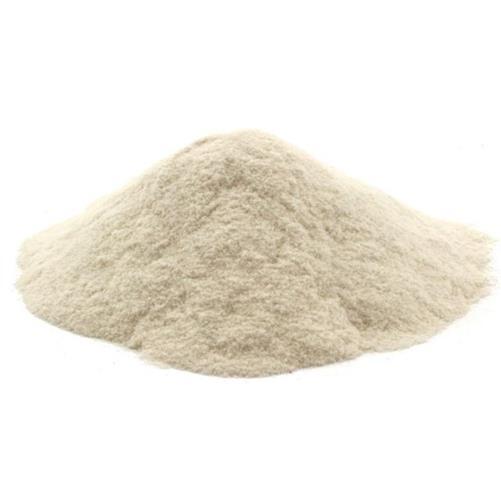
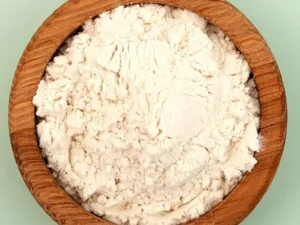
Appearance / Form: Free-flowing powder; off-white to pale yellow.
-
Particle size: Nominal D50 typically 80–250 µm (custom milling available).
-
Bulk density: Approx. 450–650 kg/m³ (dependent on packing and grade).
-
Solubility: Hydrophilic, dispersible in cold or hot water with rapid hydration and hydration aids; forms stable aqueous gels/solutions.
-
Rheology: Pseudoplastic (shear-thinning) with high low-shear viscosity and good recovery after shear.
-
pH stability: Functional across pH ~2–12 (grade and formulation dependent).
-
Temperature stability: Functional performance maintained across typical process temperatures; consult technical data sheet for extremes.
-
Microbial limits: Meets industrial microbial specifications; specific certificate of analysis (CoA) provided per batch.
-
Heavy metals and contaminants: Compliant with supplier QA limits; CoA issued showing trace metal analysis.
-
Packaging: 25 kg multiwall paper bags with PE liner; 500–1,000 kg FIBC (big bag); octabin options; shrink-wrapped palletized loads.
-
Storage / Shelf life: Recommended 24 months when stored in cool, dry conditions in original sealed packaging; protect from moisture and contamination.
-
Regulatory support: Documentation available for regulatory compliance (MSDS, CoA, allergen statements, and certifications on request).
-
Core Industrial Applications
-
Paints & Coatings: Controls sag, improves pigment suspension, enhances brushability and leveling; enables lower volatile-organic-compound (VOC) formulations while maintaining application performance.
-
Oil & Gas (Drilling Fluids): Provides viscosity and suspension at low concentrations, aids cuttings transport, and stabilizes polymer blends under shear.
-
Agrochemicals: Stabilizes suspension concentrates (SCs) and improves sprayability and tank-mix compatibility; reduces sedimentation and nozzle clogging.
-
Construction & Cementitious Systems: Enhances mortar workability, water retention, and adhesion in tile adhesives, plasters, and grouts; reduces segregation and improves open time.
-
Personal Care & Cosmetics (industrial supply): Thickening and stabilizing aqueous gels, shampoos, and lotions with superior shear-thinning for pumpability and texture control.
-
Food & Beverage Manufacturing (industrial suppliers): Emulsification support, texture modification, and stability in sauces, dressings, and dairy analogues (food-grade variants).
Why it outperforms alternatives: -
High efficiency at low dosage reduces raw material costs and formulation weight.
-
Strong shear-thinning delivers pumpability and application ease without sacrificing low-shear stability.
-
Broad pH and salt tolerance compared with many natural gums, providing formulation flexibility.
-
Consistent lot-to-lot rheological behavior supports predictable process scale-up and reduces reformulation risk.
-
Competitive Advantages
-
Quality consistency: Tight QC and batch traceability with full CoA for viscosity, moisture, microbial counts, and heavy metal screening.
-
Supply reliability: Sourced from established fermentation producers with contracted capacity; dual-source options available to mitigate supply disruption.
-
Logistics capability: Multiple packaging formats and palletization optimized for container and bulk shipments; regional warehousing for expedited delivery.
-
Price competitiveness: Economical cost-in-use through low effective dosages and high performance; flexible commercial terms for bulk buyers.
-
Sustainability: Produced via controlled fermentation with options for suppliers offering renewable feedstocks and wastewater management disclosures; lower carbon footprint vs. petrochemical thickeners when sourced responsibly.
-
Technical support: Formulation guidance, rheology data, stability testing, and troubleshooting support available from technical service team; sample testing and custom milling/grading offered.
-
Commercial & Supply Information
-
Minimum order quantity (MOQ): BULK 20MT.
-
Loading capacity (MT per container): 20 ft container (bulk palletized bags): up to 20 MT depending on packaging; 40 ft container (FIBC or palletized): up to 24–26 MT depending on stowage and packaging.
Reviews
There are no reviews yet.