
Description
-
Product Overview
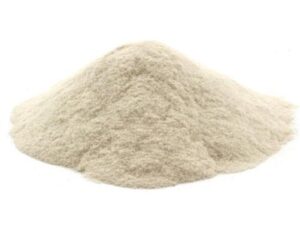
Pectin (E440) is a high-purity, industrial-grade polysaccharide extracted from citrus peel and apple pomace, supplied as a fine, free-flowing powder for formulation and process use. It functions primarily as a gelling, stabilizing, thickening, and emulsifying agent in food processing, pharmaceuticals, personal care, and specialty industrial formulations. Pectin delivers consistent rheological control, rapid solubility, and predictable batch-to-batch performance, enabling manufacturers to reduce formulation risk and accelerate time-to-market. Strategically, Pectin (E440) is a critical functional excipient for companies seeking cost-efficient texture control, clean-label formulation, and scalable production across global supply chains. -
Key Specifications & Technical Characteristics
-
Chemical composition: High-methoxyl and low-methoxyl pectin fractions derived from citrus/apple pectin (predominantly homogalacturonan with rhamnogalacturonan regions).
-
Functional designation: E440 (Pectin) — gelling and stabilizing agent.
-
Purity/grade: Food/pharmaceutical grade available; typical galacturonic acid content ≥ 65% (varies by grade).
-
Degree of esterification (DE): Specifiable ranges (High-methoxyl: DE ≥ 50%; Low-methoxyl: DE ≤ 50%).
-
Ash content: Typical ≤ 10% (grade-dependent).
-
Moisture content: Typical ≤ 12% (controlled for storage stability).
-
pH (1% solution): Typically 3.5–4.5.
-
Viscosity/functional strength: Specified Brookfield viscosity ranges or gel strength on request; reproducible gelling at target solids and sugar/acid/calcium conditions.
-
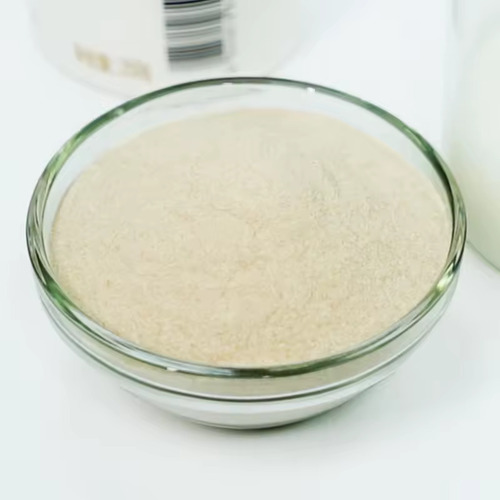
Physical form: Free-flowing fine powder.
-
Color: Off-white to light cream.
-
Particle size: Typical D50 in range 50–250 µm (custom milling available).
-
Bulk density: Typically 300–450 kg/m³ (tunable via grade/processing).
-
Solubility/dispersion: Rapid hydration in hot water; optimized grades for cold dispersion available.
-
Microbiology: Compliance with specified microbiological limits for food/pharma applications; certifiable HACCP/ISO processes.
-
Heavy metals: Compliant with relevant regulatory limits (specify target limits upon request).
-
Packaging options: 25 kg multi-wall kraft paper bags with inner PE liner, 500 kg FIBCs (big bags), 20 MT bulk tank/container loads.
-
Shelf life: 24 months when stored in cool, dry conditions in original sealed packaging.
-
Core Industrial Applications
-
Food & Beverage: Fruit preparations, jams, jellies, confectionery, dairy stabilizers (yogurt, desserts), low-sugar/clean-label formulations — provides reliable gelation, mouthfeel and syneresis control where pectin outperforms synthetic thickeners for clean-label claims.
-
Beverage & Nutrition: Clarification and stabilization of fruit juices, protein-stabilized beverages, and nutraceutical gels — effective at low dosages for turbidity control and mouthfeel enhancement.
-
Pharmaceutical & Nutraceutical: Tablet binders, controlled-release matrices, edible films, and suspension stabilizers — pharmaceutical-grade pectin offers biocompatibility and regulatory acceptance versus synthetic polymers.
-
Personal Care & Cosmetics: Emulsions, lotions, gels and film-forming applications — provides natural-texture modification and stabilizes oil/water systems while supporting “natural” branding.
-
Specialty Industrial: Adhesives, biodegradable packaging formulations, and soil conditioners — biodegradable and renewable alternative to petrochemical binders.
Why it performs better than alternatives: Pectin offers a unique combination of natural origin, recognized food/pharma regulatory status (E440), tunable gelation behavior (via DE and calcium sensitivity), and favorable sensory profile. Versus synthetic gums (e.g., carbomers) it enables clean-label positioning; versus other hydrocolloids it can provide stronger gel networks at equivalent solids in sugar/acid systems. This translates to formulation flexibility, lower dosages in specific use-cases, and improved consumer acceptance.
-
Competitive Advantages
-
Quality consistency: Production under controlled extraction and standardized testing ensures batch-to-batch reproducibility in DE, galacturonic acid content, and functional performance.
-
Supply reliability: Secured raw-material sourcing (citrus/apple processing by-products) and scalable processing capacity support predictable lead times for industrial buyers.
-
Logistics capability: Available in 25 kg bags, 500 kg FIBCs, or bulk container loads (20 MT), with coordinated loading and export documentation for global shipping.
-
Price competitiveness: Economies of scale and optimized extraction processes deliver competitive per-kg pricing for bulk procurement while preserving technical performance.
-
Sustainability: Sourced from renewable agricultural by-products, biodegradable, and suitable for clean-label and low-carbon supply-chain claims; traceability options available.
-
Technical support & documentation: Full technical data sheets (TDS), certificates of analysis (COA), regulatory declarations (e.g., E440 compliance), HACCP/ISO documentation, and formulation support available from technical service teams.
-
Commercial & Supply Information
-
Minimum order quantity (MOQ): BULK 20MT
-
Loading capacity (MT per container): Standard 20 MT per 20-foot container (depending on packaging configuration and local loading practices)
Reviews
There are no reviews yet.