
Description
Product Overview
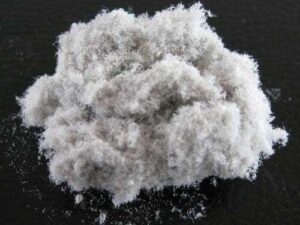
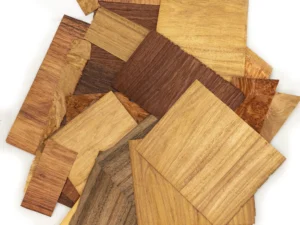
Wood Biomass Fuel is a high-energy, industrial-grade wood-derived solid fuel produced from sustainably sourced forestry residues and clean mill by-products. Engineered for large-scale thermal processes, it provides a reliable, low-ash heat source for boilers, kilns, dryers, and power generation. The key value proposition is consistent calorific output and low operational contamination, delivering predictable combustion performance that reduces downtime and maintenance costs. Strategically, Wood Biomass Fuel enables decarbonization and fuel-cost diversification for energy-intensive industries while meeting growing corporate sustainability mandates.
Key Specifications & Technical Characteristics
-
Material composition: Mixed hardwood and softwood forestry residues, clean sawmill chips, shavings, and screening fines; no treated wood or painted timber.
-
Typical proximate analysis: Moisture 8–12% (as-delivered), Volatile Matter 70–78%, Fixed Carbon 15–20%, Ash 1–3% (typical; species-dependent).
-
Calorific value: Gross calorific value (GCV) typically 17–19 MJ/kg (as-received); higher heating value on dry basis ~19–20.5 MJ/kg.
-
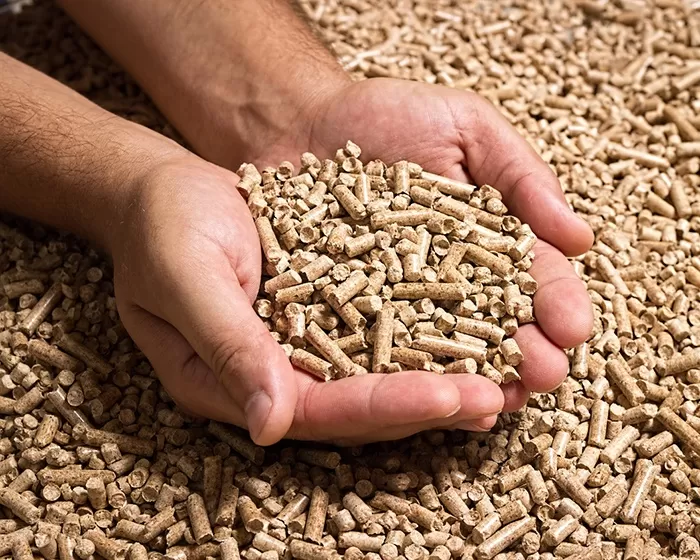
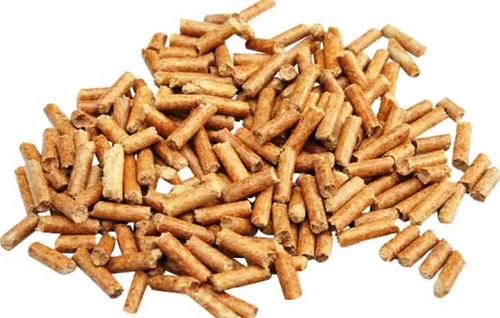
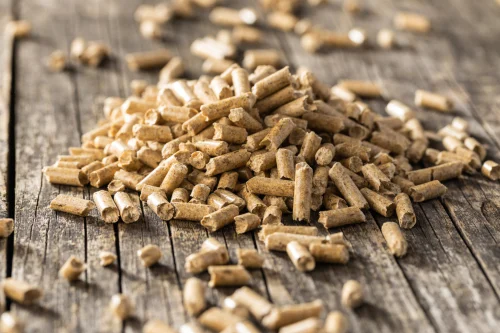
Particle form and size: Homogeneous chip/granule form; particle size distribution tailored to client spec (typical 10–40 mm for chips; 6–25 mm for pellets/granules).
-
Bulk density: 250–450 kg/m3 (loose chips), 600–700 kg/m3 (compressed pellets/briquettes); bulk density adjustable via compaction.
-
Ash characteristics: Low and non-corrosive ash, minimal slagging propensity when handled within specified moisture and feed parameters.
-
Contaminant limits: Free from metal pieces, plastics, and halogenated compounds; screening to <0.1% foreign matter.
-
Packaging and delivery: Loose bulk (open-top truck, pneumatic offload), bulk bags (1–2 MT big bags), compressed bulk (palletized tonnes), containerized loads per customer; also available in bulk rail hoppers.
-
Shelf life and storage: Stable for 6–12 months under covered, dry storage; best practice: kept <15% moisture and protected from prolonged wet exposure.
-
Quality control: Lot-based sampling, ISO-style proximate and ultimate testing on request, certificates of analysis (CoA) with each shipment.
Core Industrial Applications
-
Power generation: Co-firing with coal or stand-alone biomass boilers for utility and captive power plants; optimized for steady heat release and predictable fuel handling.
-
Industrial thermal processes: Cement kilns, paper mills, food dryers, textile drying ovens, and ceramic kilns where consistent heat profile and low-ash fuel reduce process variability.
-
District heating and CHP: Fuel for combined heat-and-power systems delivering baseload thermal output with reduced fossil fuel dependency.
-
Pellet/briquette feedstock: Raw input for on-site densification to produce uniform pellets or briquettes for downstream sale or controlled combustion systems.
Why it outperforms alternatives -
Predictable combustion: Narrow moisture and particle-size specifications reduce flame instability and unplanned idling.
-
Lower maintenance: Reduced ash and contaminants decrease fouling, corrosion, and cleaning frequency versus mixed municipal waste or low-grade alternative fuels.
-
Cost-efficiency: Typically lower delivered cost per GJ than liquid fossil fuels when accounting for predictable handling and lower emissions penalties.
-
Sustainability advantage: Sourced from residue streams, making it preferable to virgin timber or fossil alternatives for corporate ESG objectives.
Competitive Advantages
-
Quality consistency: Rigorous sourcing protocols and on-site preprocessing ensure uniform calorific value and moisture profile across lots.
-
Supply reliability: Long-term forestry partnerships and multi-sourcing across regions reduce single-point risk and support contractual volumes.
-
Logistics capability: Flexible delivery modes (bulk truck, rail, containers), experienced export handling, and local unloading solutions minimize demurrage and supply interruptions.
-
Price competitiveness: Economies of scale and low-cost residue feedstocks enable competitive USD/MT and USD/GJ pricing structures, with multi-year contract discounting available.
-
Sustainability credentials: Traceable chain-of-custody, open to third-party certification (e.g., FSC residual sourcing or equivalent), low net CO2 lifecycle impact relative to fossil fuels.
-
Technical support: Comprehensive documentation (CoA, handling guides, combustion optimization recommendations), on-request fuel testing, and supply chain KPIs to support industrial buyers’ procurement teams.
Commercial & Supply Information
-
Minimum order quantity (MOQ): BULK 20 MT
-
Typical container loading capacity: 20–22 MT per 20’ container (densified product/palletized); up to 25–28 MT per 40’ high-cube container with optimized packing for compressed product; loose bulk shipments by truck/rail per local regulations and vehicle capacity.

Reviews
There are no reviews yet.