
Description
1. Product Overview
The Ultra High Modulus Carbon Fiber 60MSI (UHM60-6K) is a premium continuous filament tow engineered for applications demanding exceptional stiffness-to-weight ratio, with a tensile modulus of 60 million psi (414 GPa). Primary industrial use spans aerospace primary structures, satellite components, and high-performance robotic arms where dimensional stability under load is critical. The key value proposition is enabling weight reduction of 30–40% versus standard high-modulus fibers while maintaining near-zero thermal expansion. Strategically, this product is vital for OEMs seeking to meet next-generation performance targets in defense, space, and automated manufacturing—markets projected to grow at 12% CAGR through 2030.
2. Key Specifications & Technical Characteristics
-
Material composition: Polyacrylonitrile (PAN)-based carbon fiber, graphitized, surface-treated, with epoxy-compatible sizing (1.2–1.5% by weight)
-
Tensile modulus: 60 MSI (414 GPa) nominal
-
Tensile strength: 650 ksi (4.48 GPa) minimum
-
Strain to failure: 1.1–1.2%
-
Filament count: 6,000 (6K) ±2%
-
Filament diameter: 5.0 µm ±0.2 µm
-
Linear density: 0.22 g/m (220 tex) ±3%
-
Density: 1.92 g/cm³
-
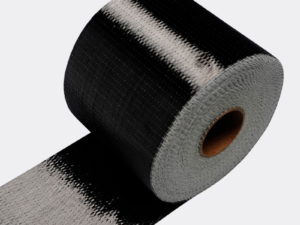
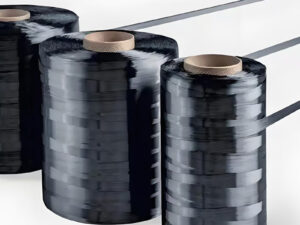
Physical form: Continuous tow, flat ribbon wound on plastic spools
-
Color: Matte black
-
Packaging options:
-
Spool sizes: 1 kg, 4 kg, 10 kg net
-
Bulk packs: 24 spools per carton (palletized)
-
Custom winding: upon request for automated layup lines
-
-
Shelf life: 24 months from date of manufacture when stored in original sealed packaging at 20±5°C, 40–60% RH
3. Core Industrial Applications
-
Aerospace & Defense
Use case: Primary load-bearing structures (wing spars, drone fuselage frames, satellite bus panels)
Advantage: UHM60’s 60 MSI modulus reduces flexural deflection by 35% compared to 33 MSI standard-modulus fibers, enabling thinner laminates and lower radar cross-section. -
Robotics & Automation
Use case: Industrial robot arms, gantry pick-and-place systems, and collaborative robot links
Advantage: Higher stiffness-to-weight reduces settling time by 25–40% in high-speed positioning, improving throughput without increasing motor torque. -
Precision Mandrels & Tooling
Use case: Composite layup mandrels for autoclave curing
Advantage: Near-zero coefficient of thermal expansion (CTE < 0.2 ppm/°C) maintains tooling tolerance across cure cycles, reducing rework costs by estimated 15–20%.
4. Competitive Advantages
-
Quality consistency: Process capability index (Cpk) ≥ 1.33 on tensile modulus and tow strength; 100% laser-based filament inspection before spooling.
-
Supply reliability: Dual-source manufacturing lines (Japan and South Korea) with 6-month rolling capacity commitment and safety stock held in regional hubs (Americas, EMEA, APAC).
-
Logistics capability: Expedited air freight available within 48 hours; standard LCL/FCL ocean freight with real-time trackable packing slips.
-
Price competitiveness: Tier-1 volume pricing (20+ MT annually) is 8–12% below equivalent Toray T1100G or Mitsubishi MR60H, with no minimum annual contract penalty.
-
Environmental & technical support: ISO 14001-certified production; each lot includes full SGS-certified Certificate of Analysis (CoA), cure cycle recommendations, and 24/7 engineering support for pre-preg or filament winding process integration.
5. Commercial & Supply Information
-
Minimum Order Quantity (MOQ):
-
Sample qualification: 10 kg
-
Standard commercial: 200 kg per order line
-
Strategic pricing: 20 MT bulk annual commitment (delivered quarterly)
-
-
Loading capacity (per 20FT container):
-
Fully palletized spooled goods: 18 MT net fiber weight
-
Bulk wound packages (custom): up to 20 MT when using industrial reels
-
Note: Each 20FT container yields 24–26 pallets of finished spools; 18 MT ensures compliance with road weight limits in most jurisdictions.
-
Reviews
There are no reviews yet.