
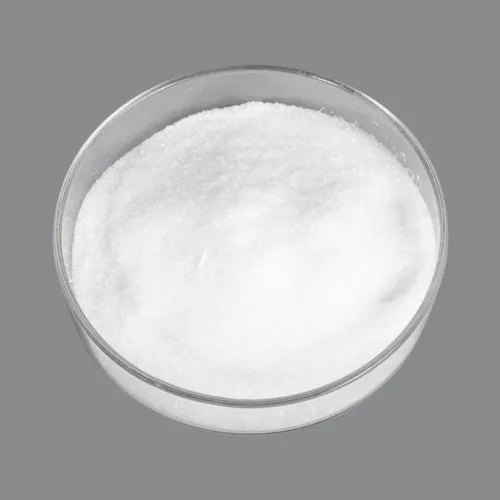
Description
-
Product Overview
Potassium metabisulfite (E224) is a high-purity inorganic sulfite salt supplied for industrial and food-processing use as a preservative, antioxidant, and sanitizing agent. Its primary functions include sulfur dioxide generation for microbial control, oxidative protection, and bleaching across beverage, food, chemical processing, and water treatment operations. The product delivers reliable, reproducible SO2 release and rapid antimicrobial action, enabling process control, extended product shelf life, and regulatory-compliant preservation. For strategic procurement teams, this grade offers predictable performance, simplified handling, and scale advantages that reduce operational risk and total cost of ownership in large-volume manufacturing. -
Key Specifications & Technical Characteristics
-
Chemical name: Potassium metabisulfite (E224), K2S2O5
-
Chemical formula: K2S2O5
-
Purity / grade: Industrial / Food-processing grade options; typical assay ≥ 95.0% (adjustable to customer spec)
-
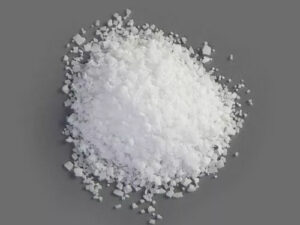
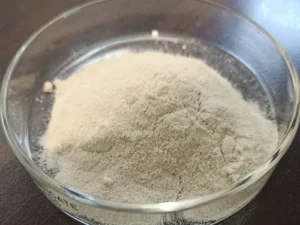
Appearance: White to off-white crystalline powder or granules
-
Moisture content: ≤ 1.5% (typical; spec-based options available)
-
SO2 equivalent: Specified per batch to support required antimicrobial dosing
-
Particle size: Standard mesh available (e.g., 80–200 mesh); custom milling on request
-
Bulk density: ~0.7–0.9 g/cm³ (typical; bulk density certificates provided with shipment)
-
Solubility: Readily soluble in water; hydrolyzes to release SO2 in aqueous systems
-
pH (1% aqueous): mildly acidic due to SO2 release (batch certificate specifies exact range)
-
Impurities: Heavy metals and sulfates controlled to meet industrial and food-contact limits; Certificates of Analysis (CoA) supplied per lot
-
Packaging options: 25 kg multi-ply kraft bags with PE liner; 500 kg–1,000 kg FIBCs; bulk tanker/blower-loads for pelletized/bulk shipments (packaging certified for export)
-
Shelf life: 12 months in unopened, dry, climate-controlled storage (recommend storage < 25°C, < 60% RH); CoA includes manufacture date and recommended use-by window
-
Regulatory markings: Labeled as E224 for food use where applicable; MSDS, declaration of conformity, and regulatory compliance documents provided on request
-
Core Industrial Applications
-
Beverage and winemaking: Controlled SO2 dosing for microbial control and antioxidant protection during fermentation, clarification, and bottling. Preferred for consistent SO2 release and ease of dosing compared with liquid sulfites.
-
Food preservation and processing: Use as an antioxidant/antimicrobial for dried fruits, processed vegetables, and select food intermediates; reduces spoilage, color loss, and off-flavor formation.
-
Water treatment and sanitation: On-site generation of disinfecting SO2 and reducing agent for specific small-scale industrial processes; used in wastewater neutralization and dechlorination where applicable.
-
Chemical manufacturing and intermediates: Reducing agent and sulfite source in synthesis pathways, sulfur-based intermediate production, and as a bleaching aid in certain process streams.
-
Textile and pulp & paper: As a reducing/bleaching agent for selected applications where controlled sulfite chemistry is required.
Why it outperforms alternatives: -
Solid-form handling reduces spillage and volumetric shipping costs versus compressed gases or liquid SO2.
-
Predictable SO2 release profile improves process control compared with ad-hoc sulfite additions.
-
Easier storage and dosing flexibility versus gaseous or corrosive liquid alternatives, lowering CAPEX for containment and dosing systems.
-
Competitive Advantages
-
Quality consistency: Lot-to-lot assay testing with CoA and trace impurity reporting ensures process reproducibility for regulated manufacturing.
-
Supply reliability: Long-term production planning, safety-stock strategies, and multiple logistics routes reduce risk of interruption for high-volume industrial buyers.
-
Logistics capability: Flexible packaging (bags, FIBCs, bulk) and containerized or bulk-loading options support direct-to-plant deliveries; export-ready documentation and export packaging reduce lead times.
-
Price competitiveness: Economies of scale for bulk MOQs, competitive CIF and FOB pricing tiers, and supply contracts available for fixed pricing over negotiated terms.
-
Sustainability & environmental considerations: Solid formulation reduces transport emissions per unit of active SO2 delivered versus gaseous alternatives; supplier can provide information on emissions profile for Scope 3 calculations on request.
-
Technical support and documentation: Full MSDS, handling guidance, dosing calculators, shelf-life guidance, and application notes available; technical consultation for process integration and regulatory compliance for food-grade use.
-
Commercial & Supply Information
-
Minimum order quantity (MOQ): BULK 20 MT
-
Loading capacity (MT per container): Typical loading per 20’ container: 20–22 MT (bag/FIBC depending on packing configuration); 40’ HC container: 24–26 MT; flexible by packing type and stowage plan.
-
Lead times, payment, and incoterms: Available on request and negotiable per contract; standard commercial terms supported for global B2B buyers.
Reviews
There are no reviews yet.