
Description
-
Product Overview
Nisin (E234) is a highly effective, bacteriocin-based antimicrobial peptide produced by Lactococcus lactis, formulated for industrial food preservation and biosecurity applications. Its primary industrial use is as a natural preservative to inhibit Gram-positive bacteria, including Listeria and Clostridium species, across food processing, feed, and certain pharmaceutical and cosmetic formulations. Nisin delivers measurable shelf-life extension and pathogen control while enabling reduced reliance on synthetic preservatives and thermal processing. Strategically, it offers manufacturers a regulatory-compliant, clean-label antimicrobial that supports product safety, waste reduction, and market differentiation in global B2B supply chains. -
Key Specifications & Technical Characteristics
-
Active ingredient: Nisin (bacteriocin produced by Lactococcus lactis)
-
Identification: Nisin A (primary homolog), conforms to E234 designation
-
Chemical nature: Ribosomally-synthesized polypeptide (lanthipeptide class)
-
Purity/grade: Food-grade and technical-grade options available; typical purity range 2.5%–95% depending on grade (specify grade at order)
-
Assay/activity: International Units (IU) per mg or per g provided; batch certificate includes potency assay
-
Form: Powder (spray-dried or lyophilized) or liquid concentrate (aqueous solution) on request
-
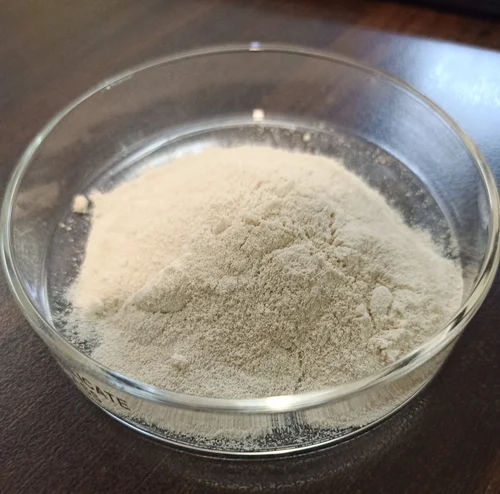
Color/appearance: Off-white to pale beige powder; clear to slightly opalescent liquid
-
Particle size: Powder median particle size typically 10–200 µm (mill options for defined specs)
-
Density: Bulk density ~0.2–0.6 g/cm³ (varies by formulation and carrier)
-
Solubility: Soluble in water under recommended conditions; stability profile provided
-
pH stability: Active in pH range suitable for many foods (manufacturer datasheet details pH-performance map)
-
Thermal stability: Retains activity under moderate pasteurization; detailed thermal degradation curve available
-
Impurities: Heavy metals, microbial load, and residual solvents tested per specification
-
Packaging options: Food-grade multi-layer kraft drums with PE liners (10–25 kg), industrial fiber drums (25–50 kg), bulk flexible intermediate bulk containers (FIBC, 500–1250 kg), ISO tank or stainless steel tankers for liquid concentrates; custom packaging available
-
Shelf life: Typical shelf life 12–36 months depending on grade, storage temperature, and packaging; shelf-life data and recommended storage conditions supplied with each lot
-
Regulatory status: E234 designation recognized in many jurisdictions; compliance documentation and certificates (COA, SDS, GMP, HACCP support) supplied per shipment
-
Core Industrial Applications
-
Food processing industry: Used in dairy (cheeses, processed cheese), canned foods, ready-to-eat meats, seafood, and beverages to control spoilage and pathogenic Gram-positive bacteria; enables lower sodium or reduced preservative formulations while maintaining safety.
-
Animal feed and aquaculture: Inclusion in feed formulations to reduce bacterial load, improve gut health, and reduce reliance on antibiotics in livestock and aquaculture operations.
-
Beverage and fermentation sectors: Microbial control in fermented and non-fermented beverages where Gram-positive spoilage organisms threaten shelf life.
-
Pharmaceutical and cosmetic formulations: Antimicrobial protection in select topical formulations and preservative systems where regulatory clearance exists.
Why it outperforms alternatives: -
Targeted efficacy: Potent activity against key Gram-positive pathogens at low doses, reducing impact on organoleptic properties.
-
Clean-label positioning: Natural origin supports consumer demand and regulatory trends away from synthetic preservatives.
-
Process efficiency: Effective at lower concentrations than many chemical preservatives, enabling cost-in-use advantages and reduced process changes.
-
Compatibility: Broad formulation compatibility in many food matrices vs. alternatives that require pH or additive adjustments.
-
Competitive Advantages
-
Quality consistency: Manufactured under controlled fermentation and purification processes with batch-specific COAs, ensuring repeatable potency and impurity profiles.
-
Supply reliability: Scalable fermentation supply chain with contingency capacity to meet large B2B demand; options for contract manufacturing to secure long-term supply.
-
Logistics capability: Multiple global packaging formats and cold-chain/ambient shipping options; experienced export documentation and regulatory support for cross-border distribution.
-
Price competitiveness: Multiple grades (technical vs. premium food-grade) and scalable supply reduce unit cost at higher-volume contracts; cost-in-use typically favorable due to low effective dosing.
-
Sustainability: Fermentation-derived, low-energy purification routes available; reduced need for thermal processing (energy savings) and lowered food waste through extended shelf life.
-
Technical support: Comprehensive technical dossiers including formulation guidance, dosing charts, stability studies, regulatory dossiers, application trials, and on-request lab support for pilot trials and scale-up.
-
Commercial & Supply Information
-
Minimum order quantity (MOQ): BULK 20MT
-
Loading capacity (MT per container): Typical 20-foot container configuration up to 20 MT (palletized drums/FIBCs), 40-foot high-cube up to 24–25 MT depending on packaging density; ISO tank or tanker arrangements for liquid concentrates per vessel capacity and route.
-
Lead times: Standard lead 4–8 weeks from PO for contracted volumes; expedited production and inventory programs available for repeat buyers.
-
Documentation supplied: Certificate of Analysis (COA), Safety Data Sheet (SDS), Certificate of Origin, regulatory compliance statements, and storage/handling instructions.
-
Commercial terms: CIF/FOB/EXW negotiable; long-term supply agreements with fixed pricing tiers and volume rebates available for strategic partners.

Reviews
There are no reviews yet.