
Description
-
Product Overview
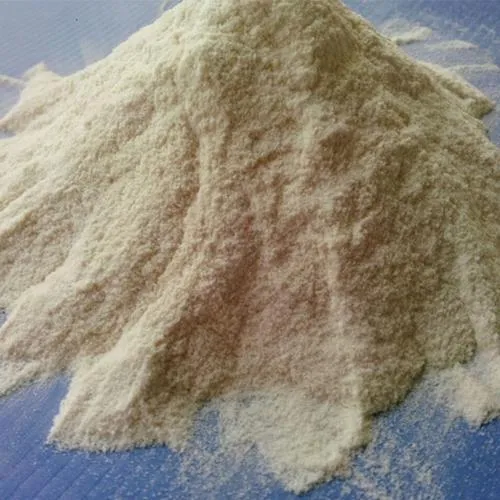
Agar Agar (E406) is a high-purity, food- and industrial-grade hydrocolloid derived from red seaweed (Gelidium and Gracilaria species) used as a reliable gelling, stabilizing, and thickening agent. Its primary industrial use spans food production, microbiological media, pharmaceuticals, cosmetics, and industrial formulations where predictable gel strength and thermal stability are critical. The key value proposition is consistent functional performance—strong gel formation, clear gels, and thermal reversibility—delivered at scale with traceable quality control. Strategically, Agar Agar (E406) enables manufacturers to standardize formulations, reduce batch variability, and meet stringent regulatory and hygienic requirements across global supply chains. -
Key Specifications & Technical Characteristics
-
Chemical composition: Polysaccharide complex primarily composed of agarose and agaropectin (sulfated galactans).
-
Functional designation: E406 (Agar Agar), food- and pharma-compatible grade.
-
Purity/grade: Industrial/Food Grade; typical assay for total solids ≥ 95% (specify per batch certificate).
-
Gel strength: Typical 700–1,200 g/cm² (adjustable by grade selection; batch-specific certificate of analysis provided).
-
Bloom / viscosity: Controlled per grade; consistent lot-to-lot performance (COA supplied).
-
Moisture content: Typically ≤ 12% (batch variability noted on COA).
-
pH (1% solution): Generally 6.0–7.5 depending on grade.
-
Appearance / physical form: Fine to medium powdered flakes or granular white-to-cream solid, low-odor.
-
Particle size: Customizable (standard industrial ranges available; e.g., 60–200 mesh options).
-
Bulk density: Approximately 0.25–0.45 g/cm³ (dependent on form and packing).
-
Solubility & thermal properties: Dissolves in boiling water; sets on cooling; thermostable to typical processing temps; reversible melting/setting transition.
-
Microbiological criteria: Meets industrial hygienic standards; low total plate count and pathogen-free per COA for food/pharma applications.
-
Heavy metals & contaminants: Conforms to international limits (lead, arsenic, mercury, cadmium) as per supplied test reports.
-
Packaging options: 25 kg kraft paper bags with inner polyethylene liner; 500 kg / 1,000 kg bulk sacks (FIBCs) available; also 20 MT palletized bulk containers for export.
-
Shelf life: 24 months when stored in a cool, dry, ventilated area away from direct sunlight and moisture; shelf-life extension subject to storage validation.
-
Core Industrial Applications
-
Food & Beverage: Gelling agent in confectionery, dessert gels, dairy analogues, clarification/stabilization in brewing; delivers clean, firm gels and improved mouthfeel with lower usage levels versus some alternatives.
-
Microbiology & Life Sciences: Solidifying agent for culture media, molecular biology matrices, and diagnostic plates; offers superior clarity and thermal stability compared with gelatine, enabling high-quality laboratory results.
-
Pharmaceuticals & Nutraceuticals: Controlled-release matrices, capsule/lozenge binders, and excipient for plant-based formulations where animal-free ingredients are required.
-
Cosmetics & Personal Care: Stabilizer and texture modifier in creams, masks, and suspensions; provides stable, pleasant textures with low irritation risk.
-
Industrial Formulations: Thickener and stabilizer in paints, adhesives, and specialized industrial emulsions where non-toxic, biodegradable rheology control is needed.
Why it performs better: Agar Agar provides higher gel strength per unit weight, thermal reversibility, neutral taste and clarity (critical in food and lab uses), and is plant-derived—making it preferable over animal-derived gelatins and many synthetic thickeners for regulatory, sensory, and sustainability reasons. This translates into lower effective usage, predictable processing, and reduced reformulation risk.
-
Competitive Advantages
-
Quality consistency: Rigorous incoming raw material testing and batch Certificate of Analysis ensure reproducible gel strength, viscosity, and purity.
-
Supply reliability: Sourced from established seaweed suppliers with supply-chain traceability and long-term contracts to minimize seasonal variability.
-
Logistics capability: Export-ready bulk packing (20 MT per bulk shipment), palletized container loading, and experience with global cold-chain-adjacent handling; lead times optimized for industrial procurement cycles.
-
Price competitiveness: Competitive factory pricing scaled for bulk (20 MT) orders with tiered discounts for ongoing contracts and multi-container bookings.
-
Sustainability: Plant-based, biodegradable, and non-animal origin; supplier practices include sustainable harvest monitoring and compliance with regional environmental regulations.
-
Technical support & documentation: Full technical datasheets (TDS), Certificates of Analysis (COA) per lot, safety data sheets (SDS), and application notes; formulation support and small-scale sampling for process validation available on request.
-
Commercial & Supply Information
-
Minimum order quantity (MOQ): BULK 20 MT.
-
Loading capacity (MT per container): Standard 20-foot container up to 20 MT (palletized/bulk optimized); 40-foot container capacity subject to packing configuration and export regulations—typical max 24–25 MT for dense palletized loads (confirm per booking).
-
Packaging: 25 kg bag or 500–1000 kg FIBC options; palletized for container export.
-
Lead time & logistics: Lead times configurable based on contract (standard lead: consult sales for current availability and shipping windows).
-
Documentation: COA, TDS, SDS, and export compliance paperwork provided with each shipment upon confirmation.


Reviews
There are no reviews yet.