
Description
Product Overview
Multi-domain Protease (engineered catalytic stability enzyme) is an industrial-grade, engineered proteolytic enzyme formulated for high-performance protein hydrolysis in continuous and batch processes. Primarily used to accelerate controlled proteolysis in sectors such as food processing, leather, detergents, bioprocessing, and waste treatment, it delivers reproducible activity across wide pH and temperature ranges. The key value proposition is sustained catalytic stability under industrial stresses—higher active lifetime, reduced dosing frequency, and predictable process outcomes compared with native proteases. Strategically, it reduces operating cost, increases throughput, and de-risks scale-up for manufacturers that require robust, consistent enzymatic performance at industrial scale.
Key Specifications & Technical Characteristics
-
Enzyme type: Multi-domain engineered serine/ metalloprotease family (recombinant origin).
-
Active unit definition: Activity expressed in standardized protease units per gram (specific activity provided on COA).
-
Chemical composition: Recombinant protease protein preparation with minimal excipients; formulation contains stabilizers (non-ionic polyols and buffer salts) to preserve catalytic stability.
-
Purity/grade: Industrial biochemical grade; typical total protein purity ≥ 70% (batch COA supplied). Low residual host-cell proteins and nucleic acids meeting industrial enzyme purity standards.
-
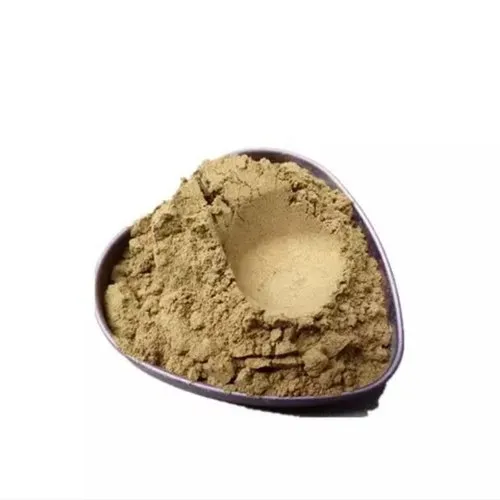
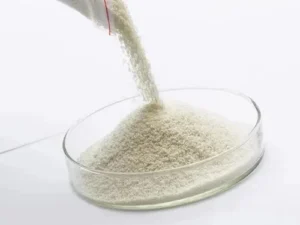
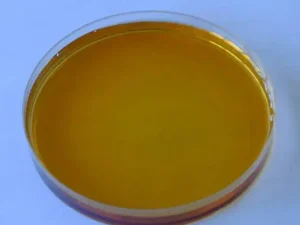
Physical form: Liquid concentrate (viscous aqueous formulation) and lyophilized powder options available.
-
Color/appearance: Clear to pale amber liquid; off-white to light tan powder.
-
Activity stability: Maintains >80% activity after 72 hours at process-relevant temperatures; retains significant activity across pH 4–10 (application-specific activity profiles available).
-
Particle size (powder): D50 typically 50–150 µm (custom milling on request).
-
Density (liquid): Approx. 1.02–1.12 g/mL depending on formulation.
-
Solubility: Readily soluble and dispersible in process waters and common buffer systems.
-
Impurities & endotoxin: Low endotoxin and contaminant levels; COA includes detailed analytics.
-
Packaging options: 25 kg fiber drums (powder), 200 kg steel/HDPE drums (liquid), IBC 1000 L (liquid), and BULK ISO-tank supply for large volumes.
-
Shelf life: Powder—24 months when stored dry at 2–25°C; Liquid—12 months refrigerated (2–8°C); stability under ambient shipping validated for standard transit durations.
-
Regulatory/quality: Supplied with batch Certificate of Analysis (COA), SDS, and traceability documentation. Manufacture under GMP/ISO/industry-specific quality systems available on request.
Core Industrial Applications
-
Food & Beverage: Controlled protein hydrolysis for flavor development, protein modification, and allergen management in dairy, brewing, and meat processing. Improves yield and creates consistent sensory profiles versus native enzymes.
-
Detergents & Cleaning: High-stability protease for formulation of laundry and industrial cleaners, delivering stain removal across variable wash conditions and extended shelf life in detergent matrices.
-
Leather & Textile Processing: Enzymatic dehairing, bating, and fiber modification with reduced chemical load and improved uniformity compared with harsh chemical treatments.
-
Bioprocessing & Downstream: Controlled digestion of fusion tags, host proteins, and process intermediates with predictable kinetics for scale-up and continuous operations.
-
Wastewater & Industrial Effluent: Accelerates biodegradation of proteinaceous waste in high-strength streams, reducing biological oxygen demand (BOD) and improving sludge digestibility.
Why it performs better: -
Engineered multi-domain architecture provides enhanced substrate binding and catalytic resilience, giving higher cumulative turnover before activity loss.
-
Broad pH and temperature tolerance lowers need for strict process control and reduces enzyme dosing.
-
Formulation options (liquid/lyophilized) enable seamless integration into varied process flows and dosing systems.
Commercially relevant benefits: -
Lower total enzyme cost per unit of protein hydrolyzed due to extended functional life.
-
Reduced process downtime and fewer enzyme changeouts in continuous systems.
-
Predictable scale-up profiles backed by application data and on-request pilot trials.
Competitive Advantages
-
Quality consistency: Tight batch-to-batch specification control and full analytical traceability via COA.
-
Supply reliability: Contract manufacturing and multi-site production readiness to mitigate single-source risk and support long lead-time industrial programs.
-
Logistics capability: Multiple packaging formats, refrigerated chain options, and containerized bulk (ISO-tank) shipping for high-volume customers.
-
Price competitiveness: Economies of scale for BULK purchases (20 MT+), volume-tiered pricing, and total-cost-of-use modeling to demonstrate cost savings versus native enzymes and chemical alternatives.
-
Sustainability: Enables reduction of harsh chemicals (e.g., in leather/textile processing), lower energy consumption through milder operating conditions, and improved effluent profiles, supporting corporate ESG targets.
-
Technical support: Comprehensive documentation (SDS, COA, technical datasheet), application protocols, enzyme dosing calculators, and pilot testing support from technical service teams to accelerate deployment.
Commercial & Supply Information
-
Minimum order quantity (MOQ): BULK 20 MT.
-
Loading capacity (MT per container): Standard 20-foot container (dry bulk/drums) up to 20 MT depending on packaging; 1 x 20’ ISO-tank/IBC configurations support up to ~18–24 MT liquid product depending on density and packaging constraints.
Reviews
There are no reviews yet.