
Description
-
Product Overview
Titanium Dioxide (E171) is a high-purity inorganic pigment primarily supplied as anatase/rutile phase TiO2 for industrial-scale applications. It is engineered to deliver exceptional opacity, whiteness, and scattering efficiency for use in coatings, plastics, inks, paper, and food-contact formulations where E171 compliance is required. The product’s key value lies in its consistent optical performance and process stability, enabling lower formulation loading while improving finished-product appearance and durability. Strategically, sourcing high-quality Titanium Dioxide (E171) reduces formulation cost, enhances product differentiation, and secures regulatory-compliant raw material supply for global manufacturing chains. -
Key Specifications & Technical Characteristics
-
Chemical composition: Titanium Dioxide (TiO2), E171 grade, manufactured via controlled sulfate or chloride-route processes as specified in commercial agreement.
-
Purity/assay: Typical TiO2 content ≥ 99.0% (by weight).
-
Impurities: Iron (Fe) ≤ 0.05% (max), Alkaline earth metals and residual sulphates/chlorides controlled to industry limits; heavy metals (Pb, Cd, Hg, As) below trace regulatory thresholds.
-
Phase: Available in Anatase or Rutile phase on request; phase specification confirmed in certificate of analysis (CoA).
-
Particle size: D50 typically 150–350 nm (custom milling available to meet application-specific PSD targets).
-
Specific surface area: Typical BET range 5–20 m2/g depending on grade and milling.
-
Bulk density: 300–650 kg/m3 (tamped and untamped values available).
-
Morphology: Spheroidal to near-spherical particles with controlled agglomeration characteristics to optimize dispersibility.
-
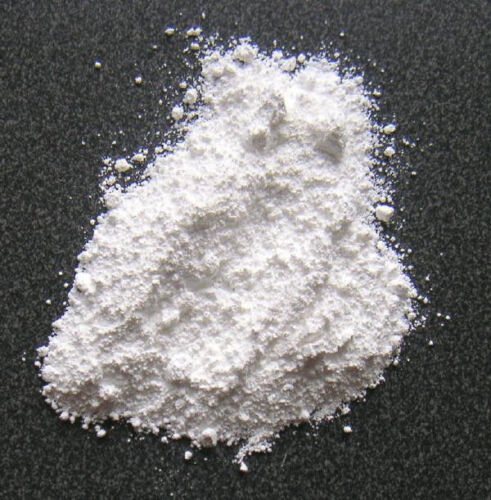
Color/appearance: Fine white free-flowing powder.
-
Surface treatment: Untreated and surface-treated variants available (e.g., Al, Si, Zr, or organic coatings) to enhance dispersion, weathering resistance, and compatibility with polymeric matrices.
-
Solubility: Insoluble in water and organic solvents.
-
Packaging options: Bulk FIBC (flexible intermediate bulk containers) 1,000 kg, multi-layer kraft paper bags 25 kg/50 lb, or sealed drums; also available in isotainers/ISO-bulk containers for large shipments.
-
Shelf life: Stable under dry, ambient storage for 24 months; store in sealed, dry conditions away from direct sunlight.
-
Documentation: Full Certificate of Analysis (CoA), Safety Data Sheet (SDS), and regulatory compliance documentation (E171 specification, REACH/SVHC declarations where applicable) provided with each shipment.
-
Core Industrial Applications
-
Paints & Coatings: Primary whitening and opacity pigment for architectural, industrial, and automotive coatings; improves hiding power, tint strength, and weathering resistance. Outperforms lower-grade fillers by enabling reduced film thickness for equivalent coverage, lowering material cost per m2.
-
Plastics & Polymers: Used in masterbatches and compounding for PVC, PE, PP, and engineering plastics to deliver high whiteness, opacity, and UV-blocking functionality; surface-treated grades improve dispersion and mechanical retention, reducing cycle times and scrap.
-
Inks & Printing: Provides high opacity and color brightness in gravure, flexo, and offset inks; tight particle size distribution ensures consistent rheology and printability, minimizing press downtime.
-
Paper & Board: Delivers improved brightness, opacity, and print receptivity in coated and uncoated paper; enables lower coat weights while maintaining optical quality, improving cost-per-sheet economics.
-
Food & Pharmaceutical (E171 use cases): Where regulatory-approved, used as a whitening/colorant in food, confectionery, and pharmaceutical coatings; supplied with food-grade documentation and traceability.
Why it performs better: Controlled particle size distribution and optional surface treatments produce superior dispersion and optical efficiency versus commodity TiO2 or alternative fillers, enabling lower loadings, better mechanical properties, and improved long-term stability.
-
Competitive Advantages
-
Quality consistency: Strict process controls and batch-level CoA ensure tight variability in whiteness, particle size, and impurity profile—critical for repeatable downstream processing.
-
Supply reliability: Forecast-driven production scheduling, multi-modal logistics, and strategic inventory positioning reduce lead-time risk for large industrial buyers.
-
Logistics capability: Flexible packaging (FIBC, ISO-bulk, bags) and container-loading optimization allow efficient export and on-site handling; loading plans support 20 MT bulk palletization per 20’ container where applicable.
-
Price competitiveness: Economies of scale and flexible product variants enable competitive per-ton pricing while preserving specification integrity.
-
Sustainability & environmental: Options for lower-carbon supply (supplier-specific emissions data on request), recycling-ready packaging, and process waste controls to meet corporate sustainability procurement standards.
-
Technical support: Application support from technical service teams, dispersion protocols, troubleshooting guides, and batch-level analytical data to accelerate customer qualification and reduce time-to-market.
-
Commercial & Supply Information
-
Minimum order quantity (MOQ): BULK 20MT.
-
Loading capacity: Typical loading capacity per container: up to 20 MT for bulk/packed 20’ container, subject to packing configuration and local regulations.
-
Lead times: Standard lead time 4–8 weeks from order confirmation for bulk orders; expedited production options available subject to confirmation.
-
Terms: FOB, CIF, or EXW incoterms available; payment and contractual terms to be mutually agreed.
-
Documentation provided: Commercial invoice, packing list, CoA, SDS, regulatory compliance certificates, and shipping documents.


Reviews
There are no reviews yet.