
Description
Product Overview
Xanthan Gum (E415) is a high-performance, microbial polysaccharide used as a thickener, stabilizer, and rheology modifier across industrial formulations. Primarily deployed in food processing, oil & gas (drilling fluids and enhanced recovery), paints & coatings, adhesives, and specialty chemicals, it delivers predictable viscosity control and shear-thinning behavior. Its key value proposition is reliable, batch-to-batch viscosity performance that improves process control, reduces formulation variability, and extends product stability. Strategically, xanthan gum enables manufacturers to lower formulation costs by reducing active solids while improving handling and end-product quality, making it a core ingredient for scalable industrial production.
Key Specifications & Technical Characteristics
-
Chemical composition: High-molecular-weight heteropolysaccharide produced by Xanthomonas campestris fermentation (primarily glucose, mannose, glucuronic acid repeating units).
-
Functional designation: E415, food- and industrial-grade xanthan gum.
-
Purity/grade: Specified industrial grade with typical assay ≥ 95% total polysaccharide (adjustable to higher purity on request).
-
Moisture content: Typically ≤ 12% (specifiable).
-
pH stability range: Functional across pH 1–13 (viscosity varies with pH and ionic strength).
-
Viscosity (typical): Grade-specific Brookfield viscosity ranges available; controlled to customer target (e.g., 100–1,000,000 mPa·s equivalent when hydrated at specified concentrations).
-
Particle form: Fine powder for rapid dispersion; mean particle size distribution specified on certificate of analysis.
-
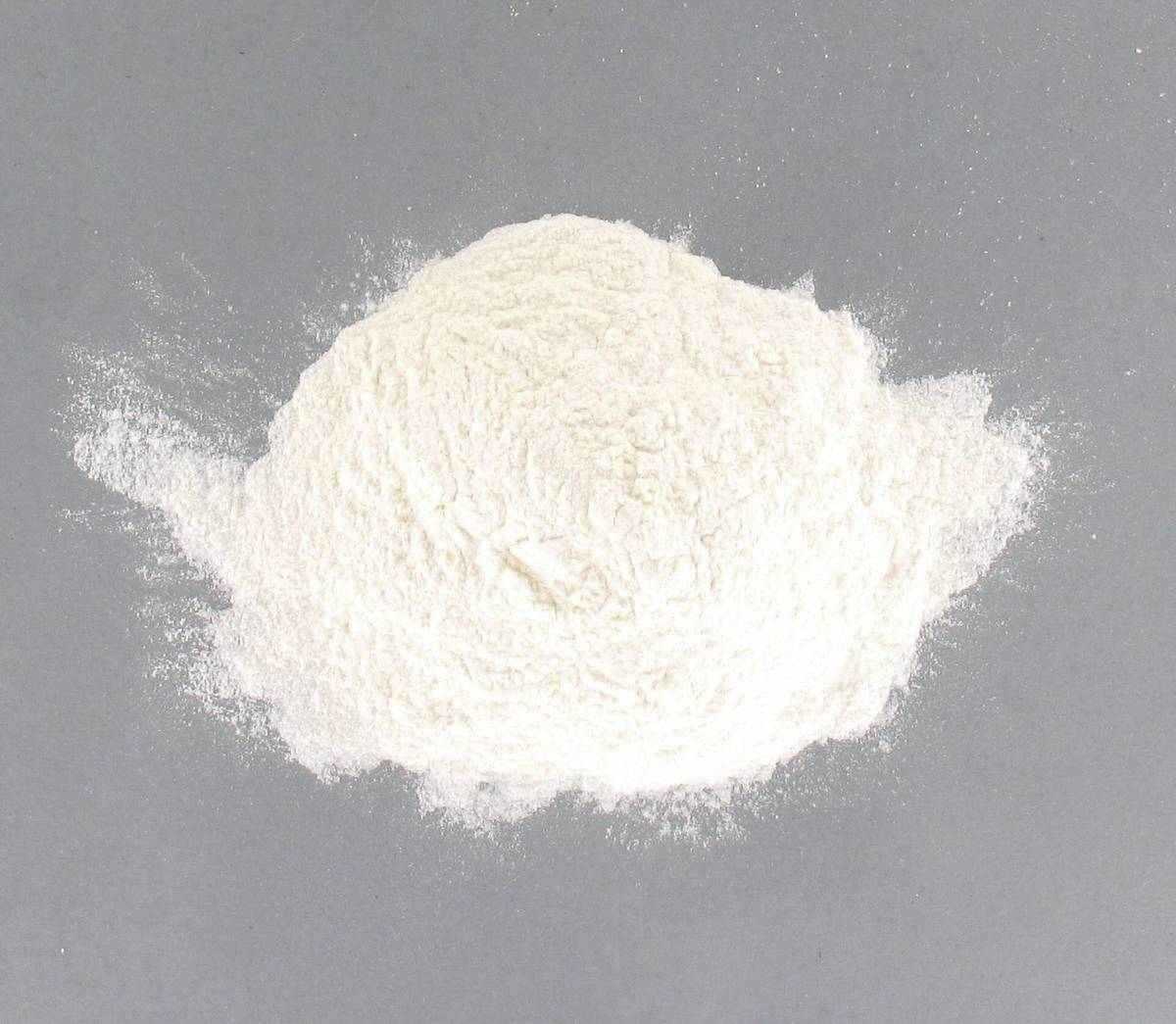
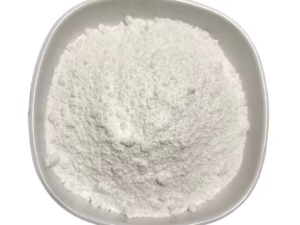
Appearance/color: Off-white to cream powder.
-
Bulk density: Typically 0.40–0.60 g/mL (packed), bulk density options available by request.
-
Solubility/dispersion: Hydrates in cold or hot water with shear; produces stable solutions and suspensions.
-
Microbiological limits: Supplied to meet industrial microbiological specifications; GMP/food-grade microbiology available.
-
Additives/impurities: Low-salt, low-protein profile available; heavy metals and residual solvents tested to meet industrial thresholds.
-
Packaging options: 25 kg kraft bags with inner polyethylene liner; 500 kg FIBC bulk bags; palletized and container-ready.
-
Shelf life: Standard 24 months when stored dry, in original sealed packaging, at <25°C and <65% RH; extended shelf-life options available with controlled packaging.
-
Compliance documentation: Certificate of Analysis (CoA), Material Safety Data Sheet (MSDS), and technical datasheet supplied per shipment.
Core Industrial Applications
-
Food & Beverage: Viscosity control in sauces, dressings, dairy analogues, and gluten-free systems; stabilizes emulsions and prevents phase separation, delivering consistent mouthfeel and yield improvements compared with starches and modified celluloses.
-
Oil & Gas (Drilling & Completion): Rheology modifier for water-based drilling fluids and enhanced oil recovery (EOR) formulations; provides shear-thinning behavior, improved cuttings transport, and thermal stability, outperforming many synthetic polymers under high-shear downhole conditions.
-
Paints & Coatings: Thickener and sag/resistance control agent that yields stable rheology, improved film formation, and enhanced pigment suspension at lower loading than many traditional thickeners.
-
Adhesives & Sealants: Controls flow and open time, improves sag resistance and gap-filling without compromising tack or cure profiles.
-
Personal Care & Pharmaceuticals: Stabilizer and suspending agent in creams, gels, and topical formulations where clean-label or biobased rheology modifiers are preferred.
-
Industrial Processing: Employed in ceramics slip casting, mining flotation, and textile printing for consistent viscosity, reduced waste, and improved process throughput.
Why it outperforms alternatives -
Produces stable, long-lasting viscosity at low concentrations, giving cost-in-use advantages vs. high-load fillers.
-
Exceptional shear-thinning and recovery properties deliver easier processing and pumpability.
-
Wide pH and temperature tolerance allows use across diverse process conditions, reducing need for multiple functional additives.
Competitive Advantages
-
Quality consistency: Tight in-house QC and lot release criteria delivering reproducible rheological performance and full traceability.
-
Supply reliability: Production volumes and multi-origin sourcing minimize single-point failure; scheduled allocation for contract customers and priority fulfillment for long-term partners.
-
Logistics capability: Standardized packaging and container-ready palletization; local warehousing and consolidated LCL/FCL shipping options to reduce lead times and freight costs.
-
Price competitiveness: Economical cost-in-use due to low required dosages and potential for volume-based pricing and long-term contract discounts.
-
Sustainability: Biobased, non-petrochemical origin; available from certified, controlled fermentation processes with reduced environmental footprint versus synthetic polymers.
-
Technical support: Application-focused technical service including formulation trials, rheology profiling, CoA/MSDS, and tailored recommendations for dispersion, hydration, and optimization.
-
Documentation: Full regulatory and compliance support (CoA, MSDS, technical datasheets) to facilitate qualification and procurement.
Commercial & Supply Information
-
Minimum order quantity (MOQ): BULK 20MT.
-
Typical loading capacity: 20–22 MT per 20’ FCL (dependent on packaging configuration), up to 24 MT per 40’ HC where palletization and packaging allow.
-
Lead times: Standard lead time and expedited production options available; confirm at time of inquiry.
-
Shipping terms: FOB, CFR, CIF options; export packaging optimized for international freight.
-
Payment & contract: Volume discounts, long-term supply agreements, and technical partnership terms negotiable for industrial purchasers.
Reviews
There are no reviews yet.