
Description
-
Product Overview
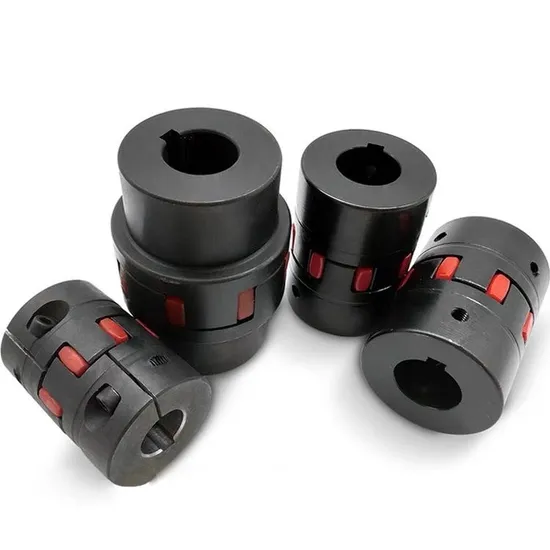
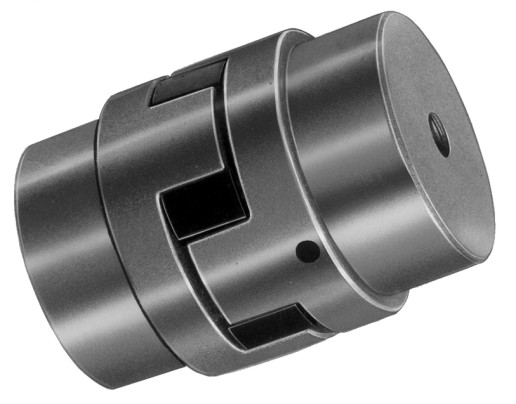
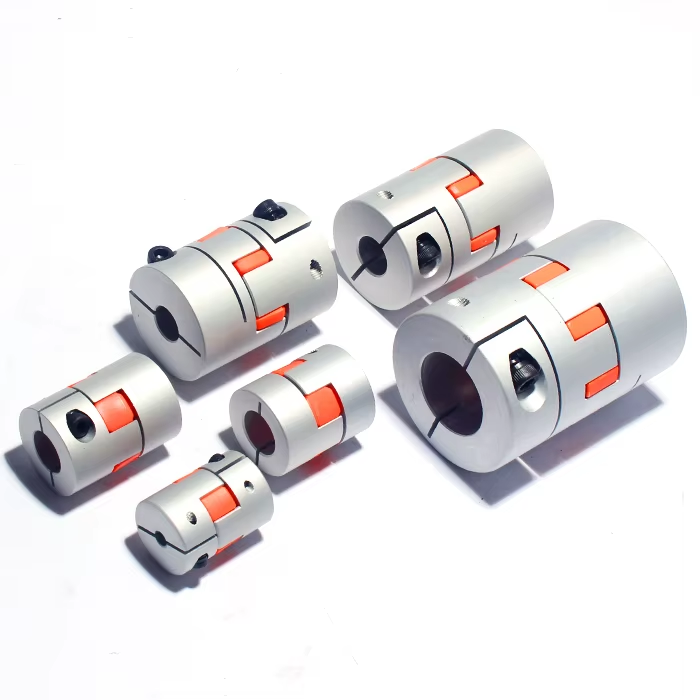
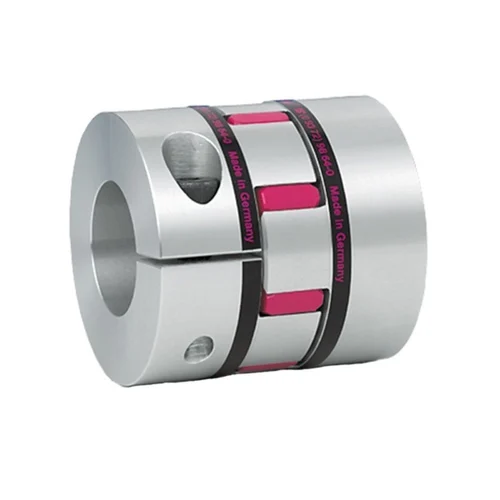
Flexible Coupling Jaw Type is a precision-engineered mechanical coupling component designed to transmit torque between shafts while accommodating misalignment and dampening shock and vibration in rotating equipment. Primarily used in pumps, compressors, gearboxes, and industrial drive trains, it provides reliable torque transfer with low backlash and maintenance simplicity. Its key value proposition is high torsional flexibility combined with positive jaw engagement, enabling smoother start-up, reduced drivetrain wear, and extended service intervals. Strategically, this coupling addresses uptime and lifecycle-cost priorities for large-scale industrial operators and OEMs seeking robust, low-risk drivetrain components for continuous-process and heavy-duty applications.
-
Key Specifications & Technical Characteristics
-
Material composition: High-strength ductile iron hubs, grade 40/46 (or optional steel alloy 42CrMo4 hardened and ground); elastomeric spider element made from nitrile rubber (NBR) standard, polyurethane (PU) or EPDM available on request.
-
Hardness and treatment: Hubs shot-peened and surface-coated (zinc or phosphate) for corrosion resistance; steel variants quenched and tempered to specified HRC range upon request.
-
Tolerances: Hub bore concentricity ≤0.05 mm; keyway tolerances to DIN/ANSI standards; balance grade G6.3 (rotating assemblies).
-
Dimensions and sizes: Available in standard jaw-coupling sizes (e.g., 50–400 mm outer diameter range); custom bore and flange configurations supported.
-
Torque ratings: Standard models rated from 50 Nm to 50,000 Nm depending on size and material selection; dynamic and static safety factors specified per model.
-
Misalignment capability: Angular misalignment up to 1–3°, axial compensation up to 1–3 mm, and radial offset tolerance per model.
-
Operating temperature range: NBR spider: -30 °C to +80 °C; EPDM: -40 °C to +120 °C; PU: -30 °C to +90 °C.
-
Surface finish: Hubs finished to Ra ≤1.6 µm on shaft contact surfaces.
-
Weight and density: Weight varies by size; material densities: ductile iron ~7.1 g/cm³, steel ~7.85 g/cm³, elastomeric elements per compound spec.
-
Packaging options: Industrial wooden crate for bulk/sensitive shipments, standard palletized carton packs, or export-grade steel crating for project orders.
-
Shelf life and storage: Elastomeric elements recommended storage under 25 °C, away from UV and ozone; nominal shelf life 36 months for rubber components if stored per guidelines.
-
Certification & standards: Manufactured to ISO 9001 quality systems; dimensional compliance to DIN 740 or ANSI-equivalent specifications; material certificates (3.1/EN10204) available on request.
-
Core Industrial Applications
-
Primary industries: Oil & gas (rotating compressors, pumps), power generation (auxiliary drives, fans), mining and minerals processing (crusher drives, conveyors), marine propulsion and auxiliary systems, heavy manufacturing and steel mills, water and wastewater treatment.
-
Specific operational use cases: Coupling between motor and gearbox in continuous-process plants; connection for reciprocating or vibrating equipment where shock absorption is required; retrofit replacements to reduce vibration and maintenance downtime; temporary or permanent solution for misaligned shaft installations.
-
Why it outperforms alternatives: The jaw-type flexible coupling combines positive mechanical engagement with a replaceable elastomeric element, delivering higher torsional damping than rigid couplings and lower maintenance and cost than fully flexible grid or gear couplings. Its modular spider element isolates wear to a single replaceable part, reducing mean time to repair and spare-part inventory.
-
Practical commercial relevance: Reduced bearing and seal wear lowers operating costs; tolerant misalignment decreases need for precision shaft alignment at installation, saving upfront engineering hours; standardized sizes and interchangeability make it suitable for OEMs and aftermarket stocking.
-
Competitive Advantages
-
Quality consistency: Produced under ISO 9001 quality control with material traceability and batch testing to ensure repeatable performance across orders.
-
Supply reliability: Robust manufacturing capacity with safety-stock policies and contract manufacturing options to support long-term projects and rapid replenishment.
-
Logistics capability: Export-ready packaging, coordinated container loading plans, and preferred freight partnerships for timely global delivery; pre-shipment inspection and documentation support for customs clearance.
-
Price competitiveness: Multiple material and elastomer grades allow tuning of cost vs. performance; volume pricing and long-term supply agreements available for enterprise buyers.
-
Sustainability benefits: Option for low-VOC elastomer compounds and recyclable metal hubs; long service life reduces total lifecycle material consumption compared with frequent-replacement alternatives.
-
Technical support & documentation: Comprehensive datasheets, installation and maintenance manuals, torque-sizing charts, CAD models, and on-request engineering support for shaft-bore customization and dynamic balancing recommendations.
-
Commercial & Supply Information
-
Minimum order quantity (MOQ): BULK 20MT.
-
Loading capacity (MT per container): Typical 20-foot container capacity up to ~20 MT; 40-foot container capacity up to ~27–28 MT, subject to packaging and size mix. Exact loading plan provided per order to maximize container utilization and comply with weight limits.
Reviews
There are no reviews yet.