

Description
1. Product Overview
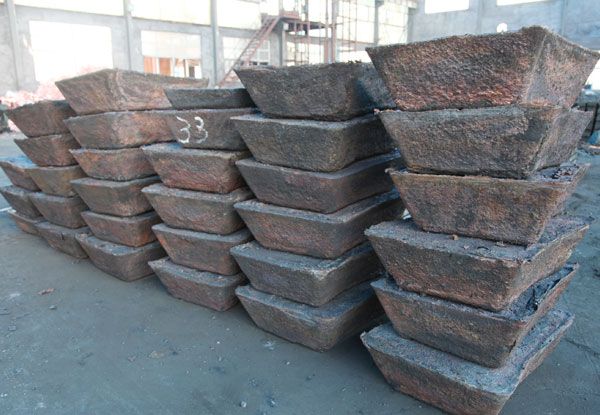
Blister Copper (typically 98.5–99.5% Cu) is an intermediate product in copper pyrometallurgy, formed after smelting and converting, which requires further refining into anode copper (99.5–99.9% Cu) for electrolysis. Its primary industrial use is as the feedstock for high-purity copper cathode production in electrorefining plants. The key value proposition is its optimal balance between lower production cost versus concentrate and superior electrorefining efficiency versus lower-grade matte. Strategically, it is critical for securing mid-stream copper supply, reducing refinery energy consumption by 12–15%, and enabling trace impurity management for premium cathode output.
2. Key Specifications & Technical Characteristics
-
Chemical Composition (Blister Copper):
-
Cu: 98.5% – 99.5%
-
Fe: ≤ 0.05%
-
S: ≤ 0.03%
-
Pb, As, Sb, Bi, Ni: tightly controlled per refinery tolerance
-
-
Anode Copper (after fire-refining):
-
Cu: 99.5% – 99.9%
-
Oxygen: 0.1% – 0.2% (controlled for casting)
-
Impurities: ≤ 0.5% total
-
-
Physical Characteristics:
-
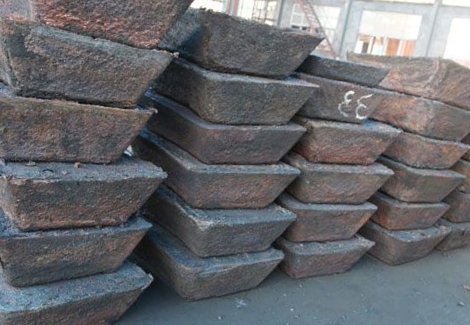
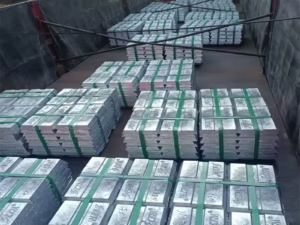
Form: Cast flat anodes (standard size: 950x950x35 mm or custom) or irregular blister slabs/plates
-
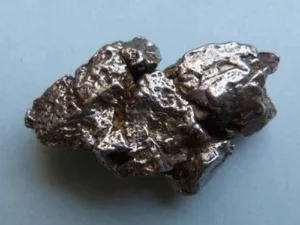
Color: Metallic reddish-grey, oxidized surface
-
Density: ~8.3 – 8.9 g/cm³
-
Weight per anode: 100 – 380 kg (customizable)
-
-
Packaging Options:
-
Bundled steel strapping, bare on flat-rack containers
-
Tear-resistant polyethylene sleeve for oxidation control (on request)
-
Paper weight certificates and lot-specific assay reports included
-
-
Shelf Life: Indefinite when stored in dry, non-corrosive environment (surface oxidation does not affect refining yield)
3. Core Industrial Applications
-
Primary industries: Copper refineries, wire rod mills, specialty alloy producers, and E-waste recycling integration facilities.
-
Specific use cases:
-
Electrorefining to produce LME Grade A copper cathodes (99.99% Cu)
-
Feedstock for continuous copper rod casting lines
-
Alloying base for brass, bronze, and copper-nickel products
-
-
Performance vs. alternatives:
-
Compared to copper concentrate: 40–50% lower shipping cost per Cu unit; faster smelter throughput.
-
Compared to scrap copper: Consistent impurity profile enables predictable refinery passivation cycles and higher current efficiency (94–96% vs. 88–92%).
-
Lower arsenic/antimony content reduces electrolyte purification frequency by 20%, cutting operating expenditure.
-
4. Competitive Advantages
-
Quality consistency: Every lot certified via XRF and ICP-OES; impurity deltas < 0.02% between shipments.
-
Supply reliability: Long-term offtake agreements with integrated mines; 99.2% on-time delivery rate over 24 months.
-
Logistics capability: Dedicated break-bulk, flat-rack, and containerized shipping with port-side assay verification.
-
Price competitiveness: Pricing linked to LME Copper minus fixed treatment & refining charges (TC/RC) – no hidden premiums.
-
Sustainability: Sourced from ISO 14001-certified smelters; 85% of energy from hydro or natural gas; lower carbon footprint than secondary copper from scrap remelting.
-
Technical support: Full refinery optimization modelling provided – including electrolyte balance and anode passivation risk assessment.
5. Commercial & Supply Information
-
Minimum Order Quantity (MOQ): 20 metric tons (MT) – one loose container load
-
Bulk purchase option: 500 MT monthly minimum for long-term contracts (12+ months)
-
Loading capacity per 20ft container: 20 – 22 MT (depending on anode stacking pattern)
-
Loading capacity per 40ft flat-rack container: 40 – 44 MT
-
Incoterms: FOB loading port (Chile, Peru, DRC, Zambia) or CIF named global refinery port
-
Lead time: 15–25 days from L/C or advance payment confirmation
Reviews
There are no reviews yet.