
Description
-
Product Overview
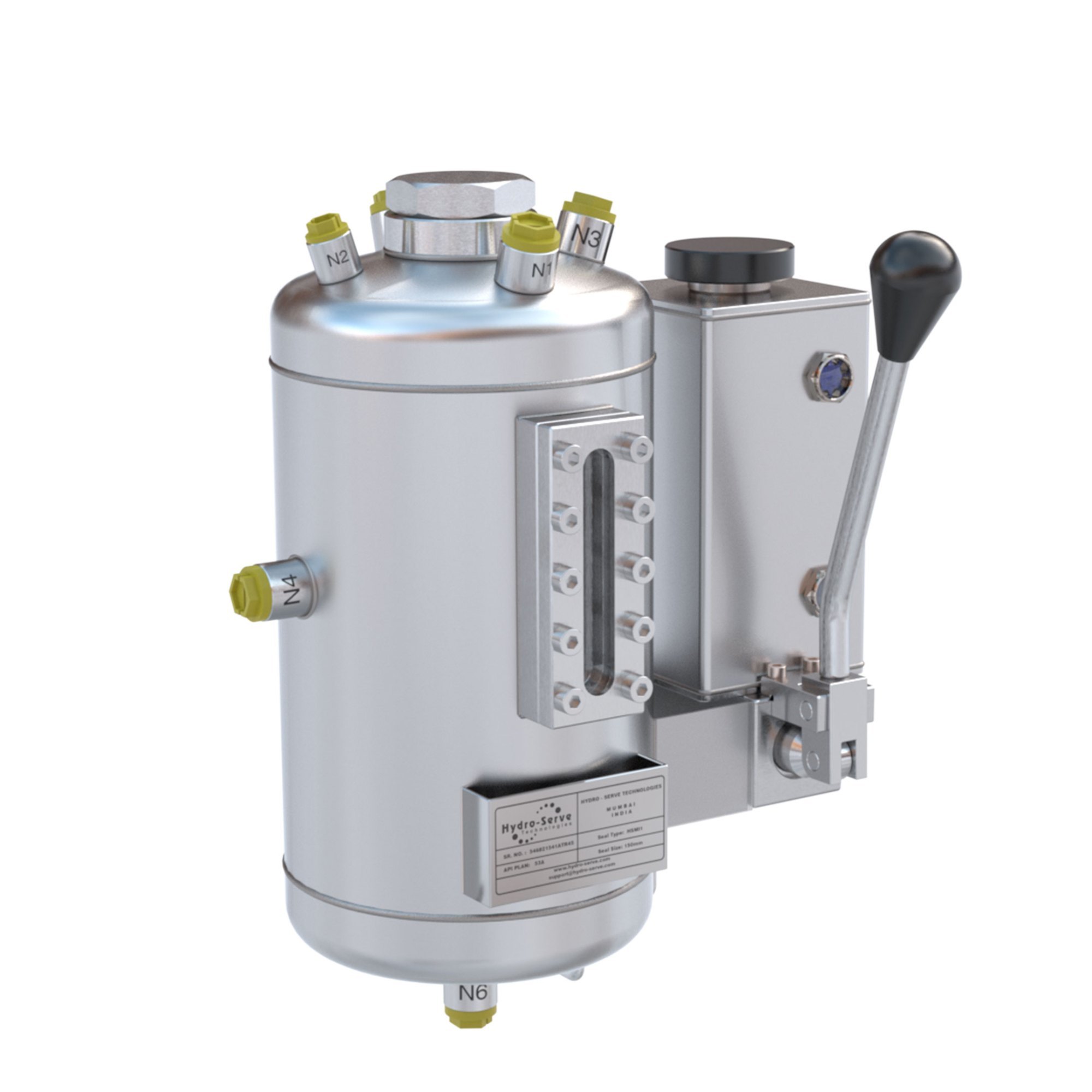
API 682 Seal Plan 52 is a standardized gland-sealing system designed to provide auxiliary barrier fluid circulation and reservoir management for mechanical seals in rotating equipment. Primarily used in oil, gas, petrochemical, chemical processing, and power-generation plants, it ensures controlled heat dissipation and contamination prevention for seals operating under moderate pressure differentials. The key value proposition is reliable, low-maintenance seal protection that prolongs seal life, reduces unplanned downtime, and simplifies compliance with safety and emissions standards. Strategically, adopting API 682 Plan 52 standardizes sealing system performance across fleets, lowers total cost of ownership, and de-risks rotating-equipment operation in critical industrial assets. -
Key Specifications & Technical Characteristics
-
System type: API 682 Seal Plan 52 (buffer/flush reservoir circulation using an external reservoir and piping).
-
Materials of construction: Carbon steel (CS) or 316/316L stainless steel (SS316/SS316L) reservoir and wetted components; optional duplex stainless steels or Hastelloy for corrosive service.
-
Sealing fluid compatibility: Supports standard barrier/buffer fluids (compatible with process fluid; e.g., mineral oil, synthetic hydrocarbon fluids); specify fluid grade per application.
-
Pressure rating: Designed for atmospheric to low positive differential pressures per API 682 guidance (application-dependent).
-
Temperature range: Typical reservoir and piping rated for -20 °C to +120 °C (service-specific materials extend range).
-
Physical characteristics: Reservoir volumes commonly sized from 5 L to 100 L depending on seal size and piping layout; connections per ASME/ANSI (flanged or threaded) as specified.
-
Flow characteristics: Gravity or low-head circulation with external piping and heat dissipation via reservoir surface; engineered venting and breather filtration.
-
Instrumentation options: Sight glass, level switches, pressure/vacuum relief valve, thermostatic valve, temperature sensors, drain and sample ports.
-
Surface finish: Internal wetted surface machined/finished and passivated for SS; protective coatings for carbon steel.
-
Packaging options: Industrial skidded assemblies, loose-packed components, or containerized units; export crating available for ocean freight.
-
Documentation: API 682-compliant datasheets, P&IDs, material certificates (MTC), pressure test certificates, operation & maintenance manual.
-
Shelf life: Not applicable to mechanical assembly; storage guidance provided to prevent corrosion (dry, covered, ambient conditions).
-
Core Industrial Applications
-
Primary industries: Oil & gas (upstream, midstream, downstream), petrochemical, chemical processing, refining, LNG, power generation, pulp & paper, mining.
-
Operational use cases:
-
Buffer fluid reservoir for dual seals where process containment and contamination prevention are critical.
-
Cooling and heat dissipation for seals on high-temperature or high-speed pumps.
-
Short-term containment during upset conditions or planned maintenance to reduce emissions and risk.
-
-
Why it outperforms alternatives:
-
Standardized API 682 design ensures interoperability with industry-standard mechanical seals, reducing engineering customization costs.
-
Passive, low-complexity circulation lowers failure modes versus active systems, improving uptime and reducing maintenance frequency.
-
Material and instrumentation options allow tailoring for corrosive or high-temperature environments, extending service life compared with generic reservoirs.
-
-
Competitive Advantages
-
Quality consistency: Manufactured to API 682 guidance with traceable material certificates and quality inspection protocols.
-
Supply reliability: Scalable production and inventory strategies to support single-vendor procurement or JIT delivery for large fleets.
-
Logistics capability: Modular skids and export packaging optimized for global freight, with container loading plans and pre-shipment inspection.
-
Price competitiveness: Configurable BOMs (standard vs. premium materials) allow buyers to balance capital expenditure and lifecycle costs.
-
Sustainability benefits: Passive system design minimizes energy consumption; optional reusable fluids and recyclable materials reduce environmental footprint.
-
Technical support: Comprehensive documentation, P&IDs, commissioning checklists, and aftermarket spares; engineering support for integration and API 682 compliance validation.
-
Commercial & Supply Information
-
Minimum order quantity (MOQ): BULK 20MT
-
Loading capacity (MT per container): Dependent on packaging and unit weight; standard 20-foot container capacity up to ~20 MT, 40-foot container capacity up to ~25–27 MT (confirm with final packing list and unitized skid weights).
-
Lead times: Subject to configuration and material selection; standard builds typically delivered within industry lead-time windows (confirm at RFQ).
-
Terms: Export-ready packaging, documentation for customs, and optional project logistics support available.
Reviews
There are no reviews yet.