
Description
-
Product Overview
Hydroxypropyl Methylcellulose (HPMC) is a non-ionic, water-soluble cellulose ether used as a film former, thickener, binder, and rheology modifier across multiple industrial processes. It delivers reliable viscosity control, improved workability, and controlled hydration for applications in construction, coatings, pharmaceuticals, adhesives, and oilfield fluids. The product’s primary value proposition is consistent, batch-to-batch performance that improves process stability, product quality, and yield while simplifying formulation adjustments. Strategically, HPMC is a critical enabling material for manufacturers seeking predictable rheology, enhanced end-product properties, and regulatory-compliant formulations at scale. -
Key Specifications & Technical Characteristics
-
Chemical composition: Hydroxypropyl methyl ether of cellulose (cellulose backbone with hydroxypropyl and methyl substituents).
-
Typical substitution range: Methoxyl (MS) and hydroxypropyl (DS) substitution tuned per grade for tailored solubility and viscosity.
-
Grade / Purity: Industrial grade (pharmaceutical and food-contact grades available on request); typical purity ≥ 99% insoluble residue compliant.
-
Viscosity (typical grade examples): 3,000–100,000 mPa·s (Brookfield, 2% aqueous at 20°C), selectable to specification.
-
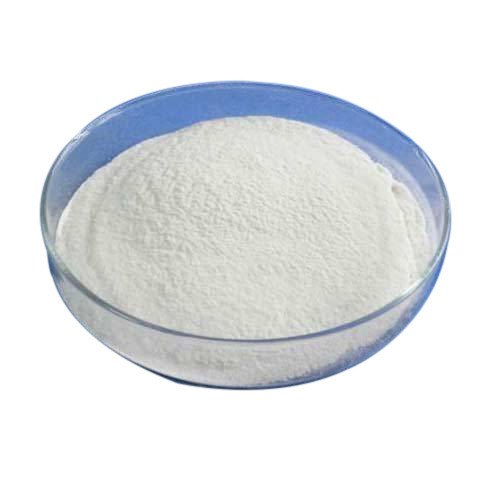
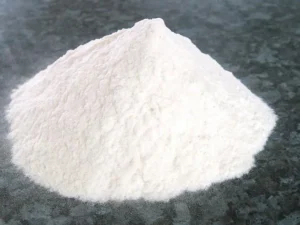
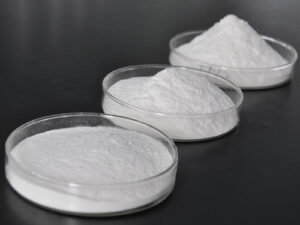
Appearance / Physical form: Fine, free-flowing white to off-white powder.
-
Particle size: Median particle size typically 20–200 µm (grade-dependent); low fines options available for dust-sensitive processes.
-
Bulk density: ~0.2–0.6 g/cm³ (packed density varies by grade and granulation).
-
Solubility / dissolution: Cold-water soluble with controlled hydration; gelation behavior at elevated temperature depending on substitution pattern.
-
Ash content: Typically ≤ 0.5% (grade dependent).
-
Moisture content: Typically ≤ 5% (controlled for storage stability).
-
pH (2% solution): Typically neutral to slightly alkaline (pH 6.5–8.5 depending on grade).
-
Packaging options: 25 kg kraft-paper bags with PE liner, 500 kg / 600 kg bulk bags (FIBC), and ISO tank or bulk tanker options for large-volume customers; custom packaging available.
-
Shelf life: 24 months when stored in original sealed packaging in a cool, dry place away from direct sunlight and moisture.
-
Core Industrial Applications
-
Construction (tile adhesives, cement-based mortars, plasters, renders): Acts as a water-retention agent, workability enhancer, and binder to improve open time, adhesion, and crack resistance. Outperforms unmodified cellulose and some synthetic thickeners by delivering stable viscosity under alkaline conditions and better film formation in cementitious matrices.
-
Paints & Coatings: Serves as rheology modifier and pigment binder, improving sag resistance, brushability, and gloss control; offers superior stability versus some associative thickeners in high-solids systems and better freeze–thaw resilience.
-
Pharmaceuticals & Personal Care: Functions as a tablet binder, controlled-release matrix, and stabilizer in topical formulations. Non-ionic character ensures compatibility with ionic APIs and excipients, enabling reliable release profiles and consistent processing.
-
Adhesives & Sealants: Provides tailored viscosity and film formation for solvent-free or waterborne systems, improving bonding strength and sag control while reducing migration.
-
Oil & Gas (drilling fluids and completion fluids): Contributes to fluid-loss control, viscosification, and suspension of solids in water-based systems; offers thermal and chemical stability advantages over some polysaccharide alternatives in specific formulations.
Why it performs better: HPMC provides a unique balance of cold-water solubility, thermal gelation, and non-ionic compatibility that yields predictable rheological behavior, better long-term stability in alkaline environments, and reduced sensitivity to electrolytes versus many natural gums and some synthetic thickeners. This translates to reduced rework, higher first-pass yield, and lower additive cost per functional unit.
-
Competitive Advantages
-
Quality consistency: Tight in-house quality control and lot traceability ensure consistent substitution levels, viscosity, and particle characteristics across shipments.
-
Supply reliability: Sourced through diversified raw-material supply and scalable production capacity to support continuous industrial supply for large contracts.
-
Logistics capability: Flexible packaging (FIBC, pallets, or bulk) and partnership with global freight providers support optimized lead times and minimized handling loss for international B2B customers.
-
Price competitiveness: Economies of scale and streamlined production deliver competitive per-ton pricing while maintaining specification compliance for industrial users.
-
Sustainability benefits: Derived from renewable cellulose feedstock; low VOC contribution in end formulations; available grades manufactured under controlled environmental management systems.
-
Technical support & documentation: Comprehensive technical data sheets, MSDS/SDS, Certificate of Analysis (CoA) per lot, and formulation guidance from application specialists to accelerate customer qualification and scale-up.
Positioning: Purchasing HPMC from this offering is a strategic sourcing decision that secures a high-performance, low-risk rheology platform with end-to-end commercial and technical support.
-
Commercial & Supply Information
-
Minimum order quantity (MOQ): BULK 20 MT.
-
Typical container loading capacity:
-
20-foot container (standard): up to 20 MT (palletized 25 kg bags) depending on packaging configuration.
-
40-foot high-cube container: up to 24–25 MT (FIBC bulk bags or optimized pallet stacking).
-
-
Lead times: Available on request and dependent on order size, destination, and agreed Incoterms; standard lead time for bulk orders typically 3–6 weeks from order confirmation subject to stock and logistics.
-
Incoterms, payment terms, and custom packaging options available upon enquiry.
Reviews
There are no reviews yet.