
Description
Product Overview
Thermo-stable Amylase (industrial biotech fermentation grade) is a high-activity, fermentation-derived enzyme preparation engineered for robust starch hydrolysis under elevated temperatures. It catalyzes the breakdown of α-1,4 glycosidic bonds in starches into dextrins and maltose, enabling high-throughput liquefaction and saccharification steps in industrial starch-processing. The product’s key value proposition is consistent high-temperature performance that reduces process time, lowers cooling needs, and increases throughput versus mesophilic alternatives. Thermo-stable Amylase is strategically important for manufacturers seeking scale, yield stability, and lower total cost of operations in sectors such as starch refining, bioethanol, brewing, and industrial glucose syrup production.
Key Specifications & Technical Characteristics
-
Active enzyme: Thermo-stable α‑amylase (fermentation-derived, microbial origin).
-
Activity: Specified enzyme activity typically expressed in KiloNovo units (KNU) or Liquefon/AMU per gram; batch certificate provides exact activity.
-
Composition: Predominantly purified α‑amylase with stabilizers and minimal fermentation residuals; free of protease activity above specified limits.
-
Purity/grade: Industrial biotech fermentation grade; >95% dry solids typical, formulated for process stability rather than food-pharm purity.
-
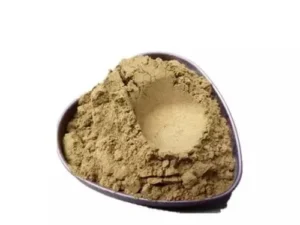
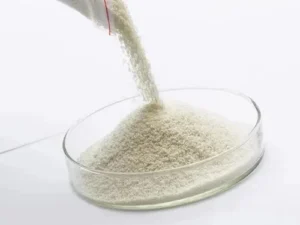
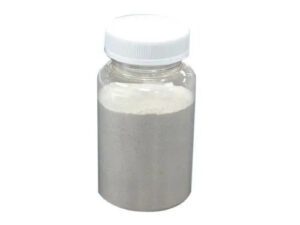
Physical form: Off-white to beige powder; flowable granular powder optimized for bulk handling.
-
Particle size: Controlled granulation for uniform dosing and low dust; typical d50 in the 100–300 µm range (batch-specific certificate).
-
Bulk density: Typical range 0.45–0.70 g/cm³ (bulk packaging dependent).
-
Solubility: Rapidly dispersible in process water at recommended temperatures; minimal clumping.
-
Activity pH/temperature profile: Optimized for high-temperature liquefaction (effective activity window commonly 60–95°C; optimum activity near 80–90°C; stable under process-relevant pH ranges—see CoA).
-
Residual solvents/contaminants: Meets industrial-spec limits; detailed analysis available on request and on CoA.
-
Microbial specification: Manufactured under controlled fermentation and downstream processing; non-pathogenic production strain; microbial limits per industrial enzyme standards.
-
Packaging options: Small-bag 25 kg; big-bag 500 kg; bulk flexitank/tanker-ready for slurry forms on request; palletized 25 kg bags for container shipments.
-
Shelf life: 12 months under recommended storage (cool, dry, <25°C); stability data on file; extended storage conditions available under contract.
-
Storage conditions: Store in sealed original packaging, dry environment, avoid direct sunlight and high humidity.
-
Documentation: Certificate of Analysis (CoA), Safety Data Sheet (SDS), Technical Data Sheet (TDS), and production traceability report provided with each shipment.
Core Industrial Applications
-
Starch processing and syrup manufacture: Primary use for high-temperature liquefaction to convert native and modified starches into dextrins for downstream saccharification; increases reactor throughput and reduces liquefaction time.
-
Bioethanol production: Enables rapid gelatinization and liquefaction of starch feedstocks at elevated temperatures, improving fermentable sugar yields and lowering cooling energy between hydrolysis and fermentation.
-
Brewing and distilling: Supports high-temperature mashing and adjunct processing to improve extract yields and process consistency, particularly in high-gravity or continuous systems.
-
Industrial glucose and maltose production: Facilitates controlled dextrinization for tailored syrup DE (dextrose equivalent) profiles with consistent conversion rates.
-
Detergent and textile pre-treatment (industrial processes): Applied where thermal robustness is required in high-temperature formulations or pre-treatment baths.
Why this product performs better than alternatives -
Thermal robustness: Maintains activity at temperatures where standard amylases denature, enabling single-step high-temperature liquefaction and reducing cooling/energy cycles.
-
Process efficiency: Faster conversion rates reduce tank residence time and increase plant throughput, translating to lower operating costs per ton of starch processed.
-
Formulation stability: Powdered, low-dust granules ensure reliable batching and dosing in automated feed systems; reduced variability versus liquid enzyme formulations.
-
Cost advantage: Higher activity per unit mass reduces dosage requirements and freight cost per unit of activity compared with lower-potency grades.
Competitive Advantages
-
Quality consistency: Produced under controlled fermentation and downstream processing with batch-to-batch CoA and traceability.
-
Supply reliability: Commercial-scale fermentation capacity with scheduled production slots and safety-stock inventory to support contractual take-or-pay and recurring supply.
-
Logistics capability: Global export-ready packaging, palletization, and container loading procedures; experience shipping to bulk industrial buyers with customs documentation and compliance support.
-
Price competitiveness: Economies of scale in fermentation and formulation deliver a favorable cost-per-activity metric; flexible pricing for volume contracts.
-
Sustainability: Fermentation-based production with optimized downstream yield reduces waste intensity; available options for lower-carbon logistics and renewable energy production upon contract.
-
Technical support: Application engineering support, dosing recommendations, stability and compatibility testing, and troubleshooting documentation included; access to process development specialists for scale-up assistance.
Commercial & Supply Information
-
Minimum order quantity (MOQ): BULK 20 MT.
-
Standard loading capacity: 20–22 MT per 20-ft container (palletized 25 kg bags) depending on pallet configuration; up to ~24–25 MT in 40-ft container where pallet and packaging allow.
-
Lead time: Typical lead time 4–8 weeks from PO for standard inventory; expedited production available by agreement.
-
Incoterms and shipping: FOB/CIF/EXW options; export documentation and CoA provided with each shipment.
-
Quality assurance: Each shipment includes CoA, SDS, TDS, and production traceability documentation.
Reviews
There are no reviews yet.