
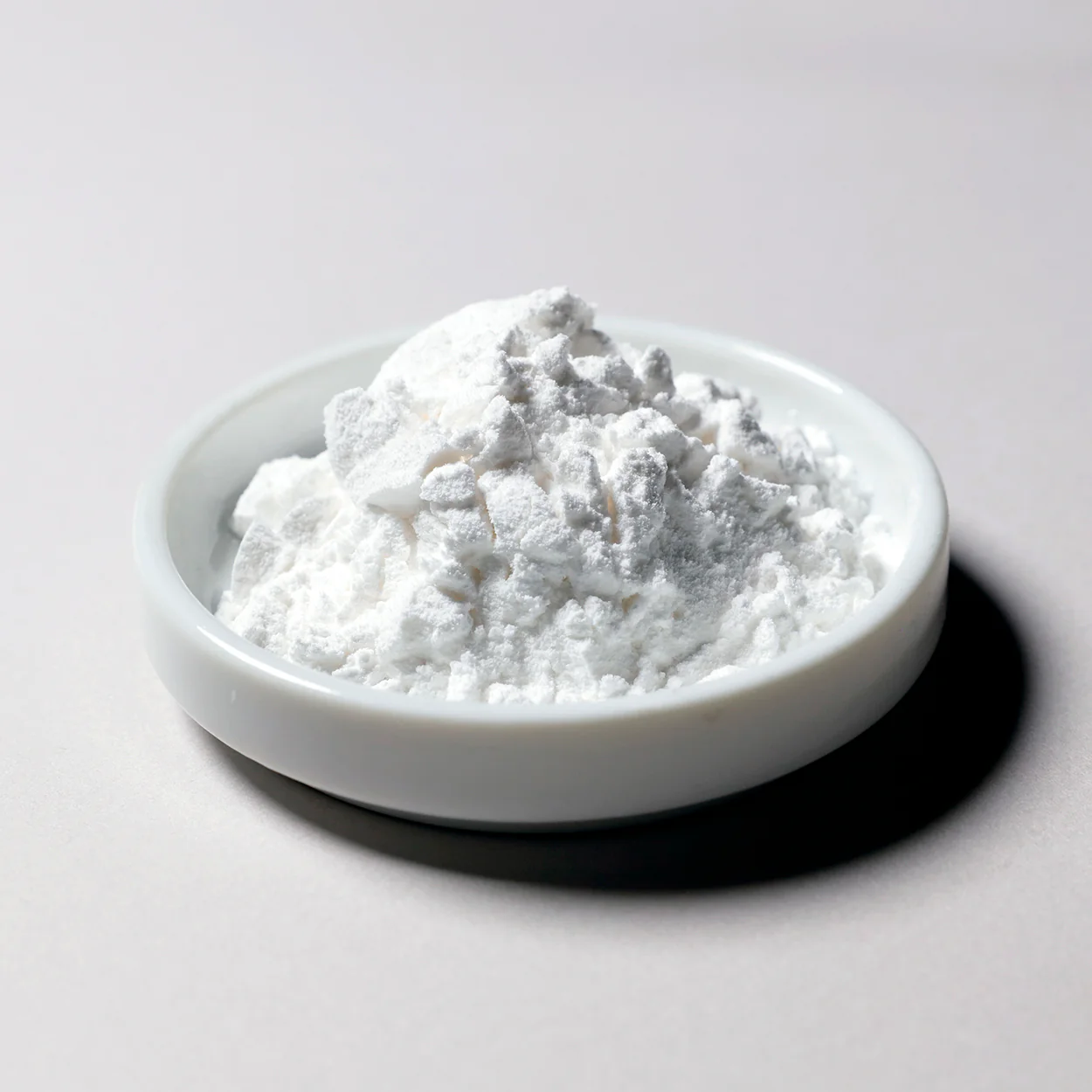
Description
-
Product Overview
Wheat Starch is a high-purity, industrial-grade botanical polysaccharide derived from wheat endosperm and supplied as a free-flowing powder. It serves as a versatile functional ingredient across food processing, paper and board coating, textile sizing, adhesives, and pharmaceutical excipient applications. The product’s primary value lies in its reliable rheological control, adhesive strength, and cost-effective thickening and film-forming properties that enable process consistency and product performance. Strategically, wheat starch provides manufacturers a scalable, low-cost functional platform that reduces formulation complexity, improves yield, and supports supply-chain resilience in commodity-driven industrial markets. -
Key Specifications & Technical Characteristics
-
Chemical composition: Predominantly amylopectin and amylose polysaccharides (starch from Triticum aestivum).
-
Typical granule composition: Amylopectin-dominant fraction for strong viscosity and film-forming properties.
-
Purity/grade: Industrial food-contact / technical grade; total starch content ≥ 98% (dry basis).
-
Moisture content: 10–14% (typical, batch dependent).
-
pH (10% aqueous slurry): 5.5–7.0.
-
Particle form and color: Fine, free-flowing white to off-white powder.
-
Particle size: D50 typically 10–80 µm (median adjustable by milling upon request).
-
Bulk density: 0.45–0.60 g/cm³ (loose).
-
Ash content: ≤ 0.5% (dry basis).
-
Viscosity (5% aqueous paste, Brabender/rotational viscometer): application-specific ranges, available on request.
-
Gelatinization temperature: typically 55–75°C (varies by cultivar and processing).
-
Solubility: Dispersible in cold water with viscosity increase upon heating; film-forming when dried.
-
Microbiological: Conforms to industrial microbiological standards; specific microbial limits available on request.
-
Heavy metals: Compliant with industry limits; certificates of analysis provided per shipment.
-
Packaging options: 25 kg multi-wall kraft bags (with inner PE liner), 500 kg bulk bags (FIBCs), 1,000–1,200 kg Gaylord/palletized, ISO tank or bulk tanker solutions for slurry/modified formats on negotiation.
-
Shelf life: 12–24 months when stored in dry, cool conditions (<25°C, relative humidity <65%); performance verification recommended after extended storage.
-
Certificates & documentation: Certificate of Analysis (COA), Material Safety Data Sheet (MSDS), GMP/food-contact compliance statements, origin and traceability documentation available.
-
Core Industrial Applications
-
Food processing: Thickener, stabilizer, texturizer, and binder for bakery, confectionery, soups, sauces, and snack coatings; improves mouthfeel and yields while remaining cost-competitive with modified starches.
-
Paper & board: Surface sizing and coating binder to enhance dry strength, printability, and surface smoothness; reduces coating pick and improves runnability at high speeds.
-
Textile: Sizing agent for yarns and fabrics to provide improved warp strength, reduced friction, and consistent desizing in downstream processes.
-
Adhesives & corrugating: Base polymer for starch adhesives used in corrugated board lamination and cartons; offers reliable bonding, fast tack development, and simplified formulation.
-
Pharmaceuticals & nutraceuticals: Excipient for tablet binding, disintegrant matrices, and carrier in dry powders (subject to appropriate pharmaceutical-grade sourcing).
-
Industrial coatings and biodegradable films: Film former for biodegradable packaging formulations and water-based coatings requiring renewable polysaccharide binders.
Why it outperforms alternatives: -
Cost-efficiency: Lower raw material cost per functional unit versus many synthetic thickeners or modified starches.
-
Process robustness: Predictable gelatinization and viscosity build under standard thermal profiles, reducing process variability.
-
Versatility: Wide compatibility with chemicals and additives, enabling formulation consolidation and simplified inventory.
-
Sustainability: Renewable, plant-based feedstock with proven end-of-life biodegradability compared with petrochemical polymers.
-
Competitive Advantages
-
Quality consistency: Tight incoming raw material control and standardized processing deliver consistent granule integrity and functional performance across batches.
-
Supply reliability: Established procurement from multiple wheat origins and scalable milling capacity to support continuous long-term contracts and seasonal hedging.
-
Logistics capability: Flexible packaging portfolio (bag, FIBC, pallet, bulk) and regional warehousing to optimize freight costs and delivery lead times; export documentation and customs support for global shipments.
-
Price competitiveness: Commodity-scale production and efficient processing enable market-competitive FOB/CIF pricing, with volume discounts for long-term agreements.
-
Sustainability benefits: Renewable raw material, lower carbon intensity versus petrochemical alternatives (scope and verification available upon request), and compatibility with circular-economy packaging options.
-
Technical support: Application engineering support, COA provision, MSDS, and tailored product adjustment (particle size, moisture, pre-gelatinization) to meet specific process needs.
-
Commercial & Supply Information
-
Minimum order quantity (MOQ): BULK 20 MT.
-
Loading capacity (MT per container):
-
20 ft dry container (bagged): up to 20–22 MT depending on packaging configuration.
-
40 ft high-cube (bagged): up to 24–26 MT depending on palletization.
-
FIBC / 500 kg bag optimization and bulk tanker solutions available; loading efficiencies to be confirmed per route and packing spec.
-



Reviews
There are no reviews yet.