
Description
-
Product Overview
Oligofructose is a soluble, short-chain fructooligosaccharide (FOS) used as a functional ingredient and process aid across food, feed, and specialty chemical applications. Industrially, it serves as a low-calorie bulking agent, prebiotic dietary fiber, texture modifier, and excipient that improves product stability and mouthfeel while supporting regulatory and nutritional claims. The key value proposition is its proven functional performance combined with consistent pharmaceutical- and food-grade quality that enables formulators to reduce sugar, increase fiber content, and enhance shelf stability without compromising process efficiency. Strategically, oligofructose addresses growing global demand for clean-label, low-glycemic and gut-health promoting ingredients while offering supply-chain resilience for large-scale industrial users.
-
Key Specifications & Technical Characteristics
-
Chemical composition: Short-chain fructooligosaccharides (linear β-(2→1) fructans, degree of polymerization typically 2–10), residual sucrose and glucose within specification.
-
Material components: Predominantly oligofructose derived from enzymatic hydrolysis of inulin (chicory or other plant sources), water as process medium.
-
Purity / Grade: Food-grade (typical purity ≥ 90% oligofructose on dry basis); available pharmaceutical and technical grades upon request.
-
Moisture content: Typically ≤ 6.0% (controlled during drying and packaging).
-
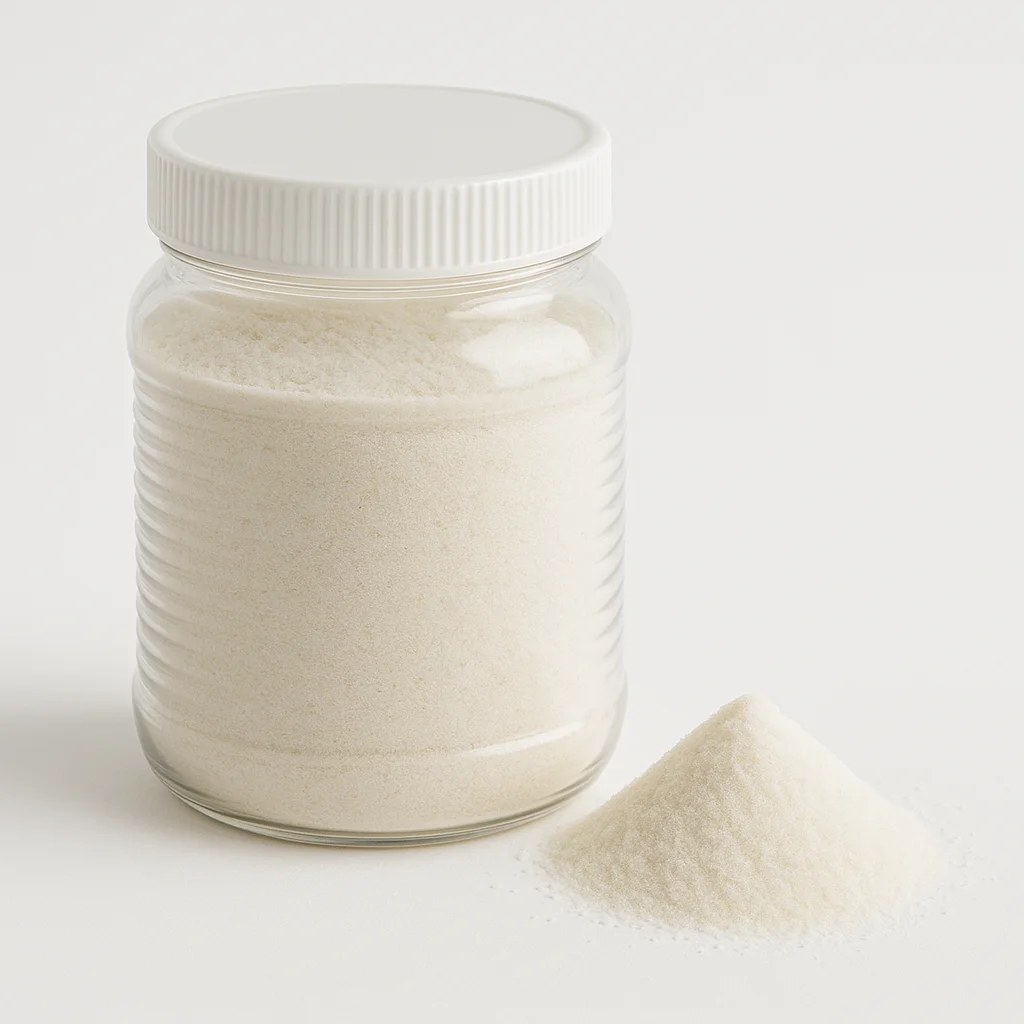
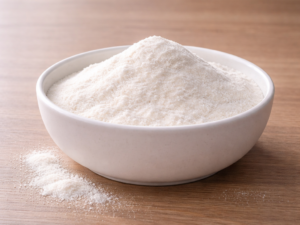
Physical form: Free-flowing powder or granular flakes; non-crystalline hygroscopic powder.
-
Color: Off-white to light beige.
-
Particle size: Typically D50 100–400 µm (custom milling available to meet process requirements).
-
Bulk density: 400–600 kg/m3 (tapped density and pour density provided on COA).
-
Solubility: Highly soluble in water; forms clear to slightly opalescent solutions depending on concentration.
-
pH (1% aqueous): Typically 4.0–7.0.
-
Microbiological: Total plate count, yeast & mold, E. coli, Salmonella standards per food-grade specifications; certificate of analysis (COA) supplied with each batch.
-
Heavy metals: Compliant with international food safety limits (Pb, Cd, Hg, As tested).
-
Packaging options: 25 kg multi-wall paper sacks with inner PE liner; 500 kg and 1,000 kg FIBCs (bulk bags); ISO tank or refrigerated bulk tanker arrangements for slurried product on demand.
-
Shelf life & storage: 24 months from manufacture when stored in cool, dry conditions (<25°C, ≤60% RH) in original sealed packaging; recommended storage in airtight containers to prevent moisture uptake.
-
Core Industrial Applications
-
Food & Beverage: Low-calorie sweetener bulking agent in reduced-sugar beverages, dairy desserts, bakery, confectionery and nutrition bars; improves mouthfeel, moisture retention, and freeze–thaw stability.
-
Nutraceuticals & Dietary Supplements: Prebiotic ingredient in powders, capsules, and RTD supplements to support gut microbiome claims and fiber fortification.
-
Infant & Medical Nutrition: Fiber supplementation and osmolality control in clinical nutrition formulas where regulatory-grade materials and consistent batch-to-batch performance are required.
-
Animal Feed: Functional fiber additive to improve gut health and feed efficiency in companion and production animals.
-
Pharmaceutical & Excipients: Binder, bulking agent or stabilizer in tablet and granule formulations; low hygroscopicity grades available for sensitive APIs.
-
Specialty Chemicals & Personal Care: Humectant and texture modifier in creams, lotions and oral care formulations where mild sweetness and soluble fiber properties are desirable.
Why it performs better than alternatives:
-
Functional versatility: Balances sweetness reduction and bulking, while also delivering prebiotic functionality—dual functional value vs. single-purpose polyols or fibers.
-
Process compatibility: High solubility and thermal stability for typical industrial processes (mixing, pasteurization, spray drying), reducing reformulation risk.
-
Cost-efficiency: High potency by dry weight and ability to replace multiple ingredients (sugar + fiber) lowers SKU complexity and total ingredient cost in many formulations.
-
Competitive Advantages
-
Quality consistency: ISO-aligned manufacturing controls, batch-level COA, and traceability from raw material source ensure predictable performance and regulatory compliance.
-
Supply reliability: Diverse sourcing strategy (multiple inulin feedstock suppliers), safety stock, and scheduled production slots to support long-term contracts and just-in-time programs.
-
Logistics capability: Flexible packaging (sacks, FIBCs, ISO tank) and global freight partnerships enable direct container loading, LCL consolidation, or bulk shipments optimized for cost and transit time.
-
Price competitiveness: Economies of scale and process optimization deliver competitive unit pricing for bulk purchases while retaining premium technical grades.
-
Sustainability: Plant-derived feedstock, waste-minimizing extraction processes, and options for supplier-level sustainability documentation (e.g., source audits, CO2 reporting) support ESG procurement criteria.
-
Technical support & documentation: Full technical datasheets (TDS), COA, HACCP/food-safety documentation, stability data, and formulation support from experienced application scientists to shorten development cycles.
-
Commercial & Supply Information
-
Minimum order quantity (MOQ) BULK: 20 MT.
-
Loading capacity (MT per container):
-
20-foot container (FCL): up to 18–20 MT in 25 kg sacks (palletized), or ~20 MT in 1000 kg FIBCs depending on stowage and local loading limits.
-
40-foot container (FCL): up to 22–24 MT in 25 kg sacks (palletized) or up to ~24–25 MT in FIBCs depending on packing configuration.
-
ISO tank / bulk tanker: negotiated per shipment; suitable for slurried or liquid concentrate shipments when requested.
-
Reviews
There are no reviews yet.