
Description
Product Overview
Treated Fence Posts are heavy‑duty, preservative‑treated wooden posts engineered for long‑life use in fencing, perimeter security, and agricultural infrastructure across industrial and commercial projects. Primarily used by utilities, construction contractors, agricultural firms, and municipal works, these posts deliver structural support and long-term resistance to decay, insects, and ground moisture. The key value proposition is reliable, specification‑grade durability that reduces replacement cycles and total lifecycle cost compared with untreated timber or lower‑grade alternatives. Strategically, treated fence posts reduce maintenance budgets, accelerate project timelines, and simplify procurement for large scale fencing programs and infrastructure rollouts.
Key Specifications & Technical Characteristics
-
Material: Southern Yellow Pine (SYP) or Radiata Pine, kiln-dried prior to treatment; alternative species available on request.
-
Treatment: Pressure‑impregnated preservative (CCA, ACQ, or Creosote options depending on regional regulation and project spec).
-
Retention Grade: Industrial/Utility grade retention levels to meet EN 252 or AWPA standards (specify required retention mg/kg at order).
-
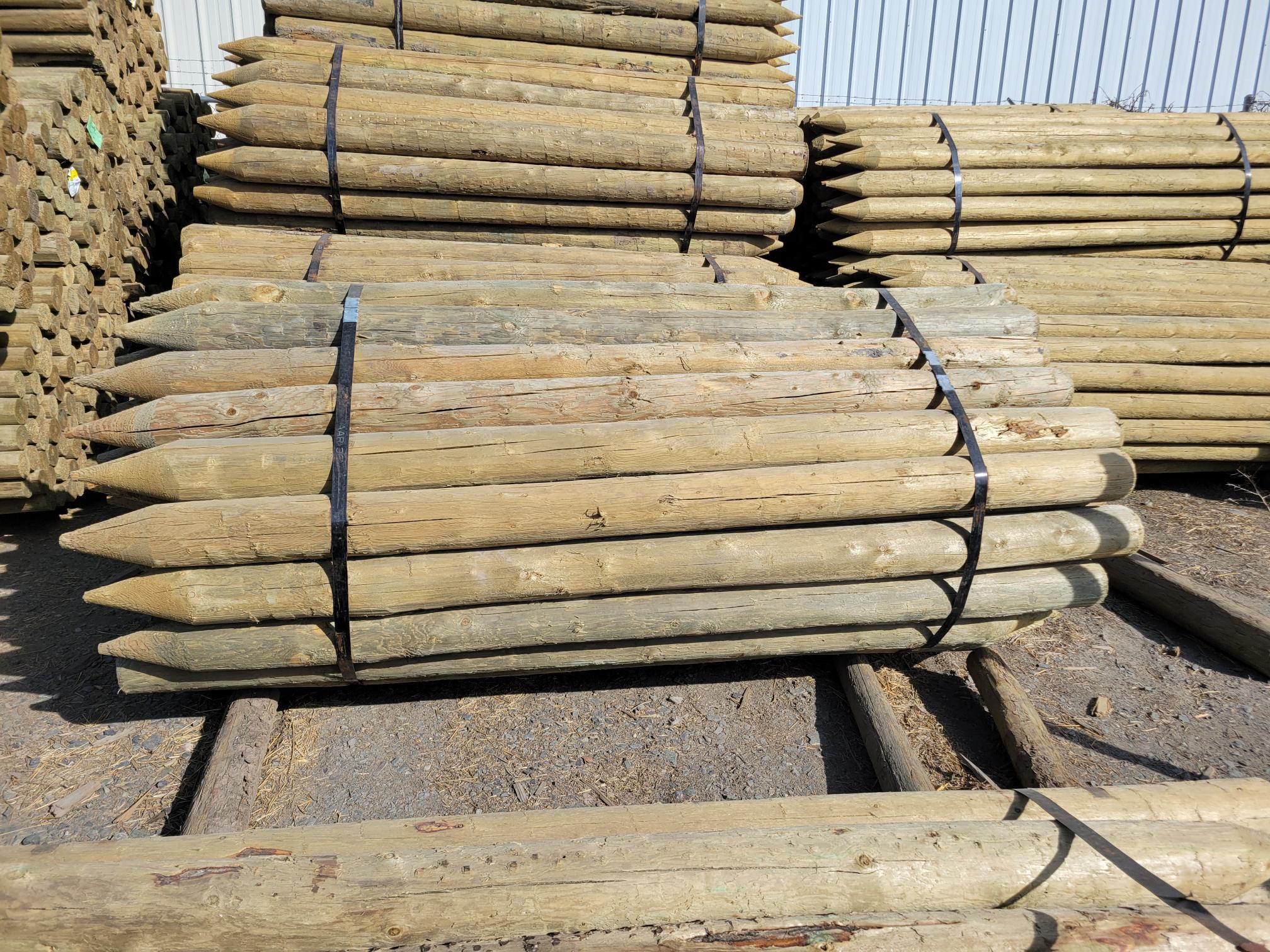
Dimensions: Standard sizes available (examples): 2.4 m x 100 mm round; 2.7 m x 125 mm round; 3.0 m x 150 mm round; custom lengths and diameters on request.
-
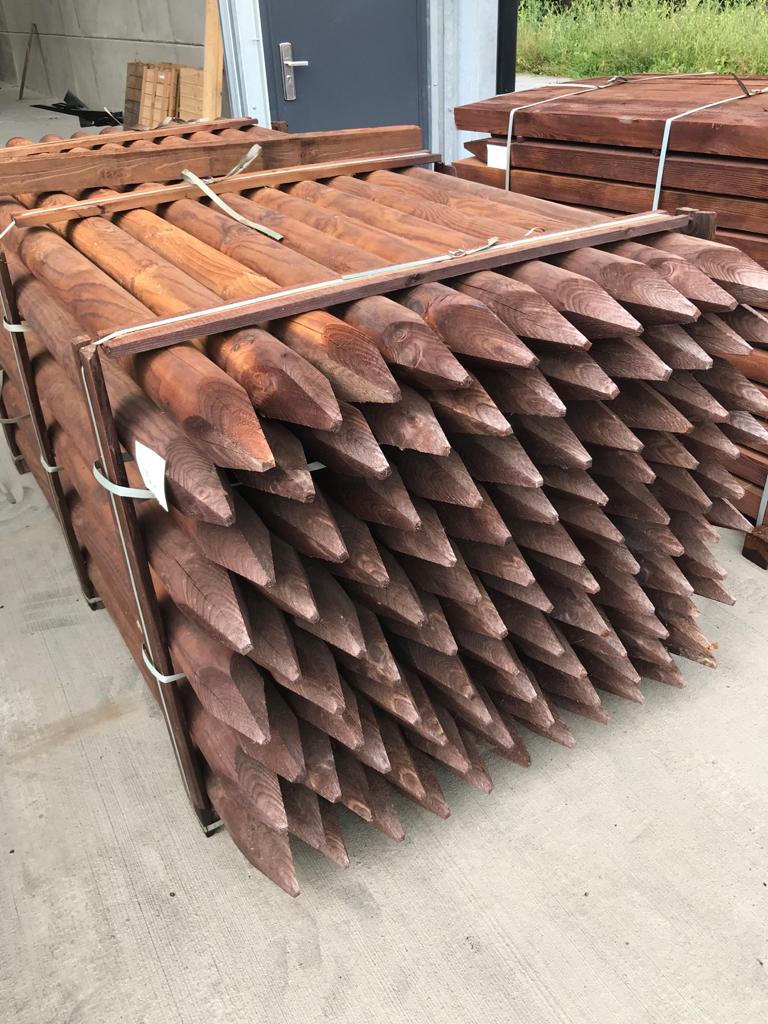
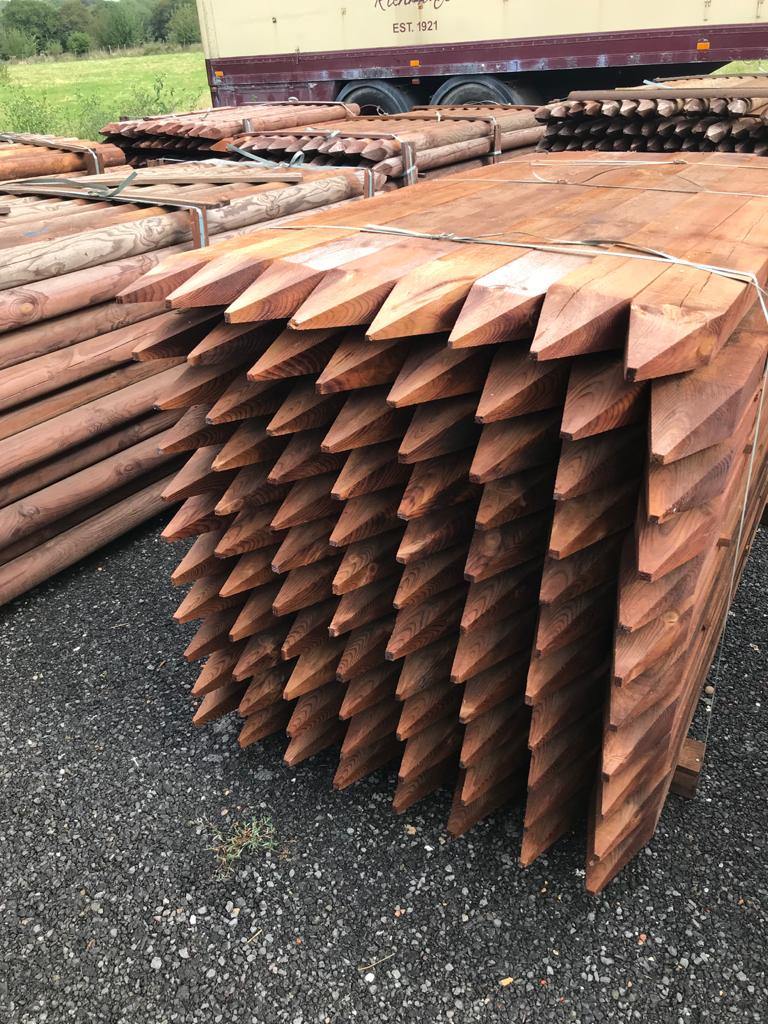
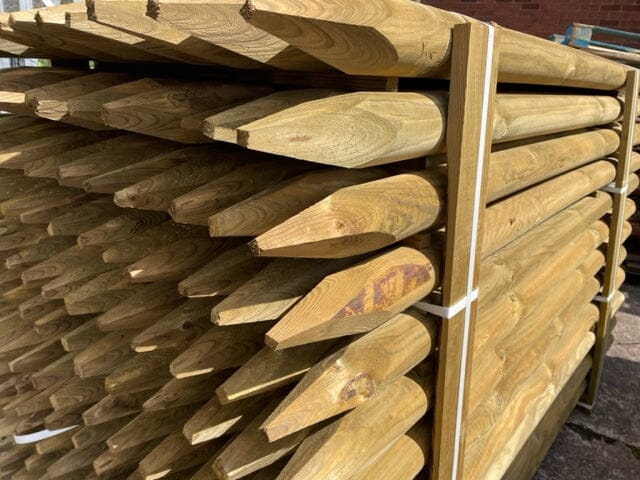
End Type: Pointed (spiiked/reamed) or cut flat; optional chamfering and pre‑drilled mounting holes.
-
Physical characteristics: moisture content < 20% post‑treatment; density typical for species (SYP ~500–600 kg/m3); surface finish smooth or semi‑rough per spec.
-
Mechanical: Straightness tolerance ≤ 5 mm/m; bending strength and compression values per species standard testing available on request.
-
Packaging: Bulk palletized, banded and shrink‑wrapped; bundled in 100/200 pieces per pallet; bulk loose loading for containers or flat‑rack shipment.
-
Shelf life: Indefinite when stored off‑ground and covered; recommended storage under shelter to preserve treatment effectiveness.
-
Certification & Compliance: Conforms to regional phytosanitary and timber treatment regulations; treatment certificates and Mill Test Reports (MTRs) provided upon shipment.
Core Industrial Applications
-
Agriculture & Livestock: Perimeter and internal paddock fencing, cattle and horse enclosures, vineyard and orchard trellising — chosen for rot resistance in ground contact and long service intervals.
-
Utilities & Infrastructure: Line posts for rural utility fencing, right‑of‑way demarcation, erosion control barriers, and highway median fencing where reliability under environmental exposure is critical.
-
Construction & Site Management: Temporary and permanent site perimeter fencing, hoarding supports, and boundary demarcation for large civil works projects.
-
Security & Perimeter Solutions: Base supports for high‑tensile and chain‑link fencing systems used by industrial plants, logistics parks, and public works.
Why it performs better: Pressure treatment penetrates cellular structure to provide multi‑year protection against fungal decay and wood‑boring insects; standardized dimensions and mechanical tolerances enable rapid installation and compatibility with common fencing hardware; lower lifecycle cost through extended service life versus untreated or poorly treated posts.
Competitive Advantages
-
Quality consistency: Mill‑controlled drying and treatment processes with batch traceability and documented retention testing ensure repeatable performance across large orders.
-
Supply reliability: Scalable production capacity with forward stock programs to fulfill multi‑site rollouts and phased procurement plans.
-
Logistics capability: Export packing optimized for container and flat‑rack loading; experienced global shipping partners and export documentation support for streamlined customs clearance.
-
Price competitiveness: Economies of scale for bulk orders and long‑term contracts; flexible pricing models for repeat procurement volumes.
-
Sustainability: Sourced from certified sustainable plantations (FSC or PEFC options available) and optimized treatment processes to meet regional environmental requirements.
-
Technical support: Full specification sheets, installation guidelines, treatment certificates, and on‑demand engineering support for project integration and QA/QC.
Commercial & Supply Information
-
Minimum order quantity (MOQ): BULK 20 MT.
-
Loading capacity (MT per container): Typical 20-ft container: up to 18–20 MT (palletized, depending on dimensions); 40-ft container: up to 22–26 MT; flat‑rack/containerized breakbulk options for oversized lengths.
-
Lead times: Production lead time and shipping ETA provided at RFQ; expedited production available for confirmed contracts.
-
Documentation: Commercial invoice, packing list, phytosanitary certificate, treatment certificate, and inspection reports provided with each shipment.
Reviews
There are no reviews yet.