
Description
-
Product Overview
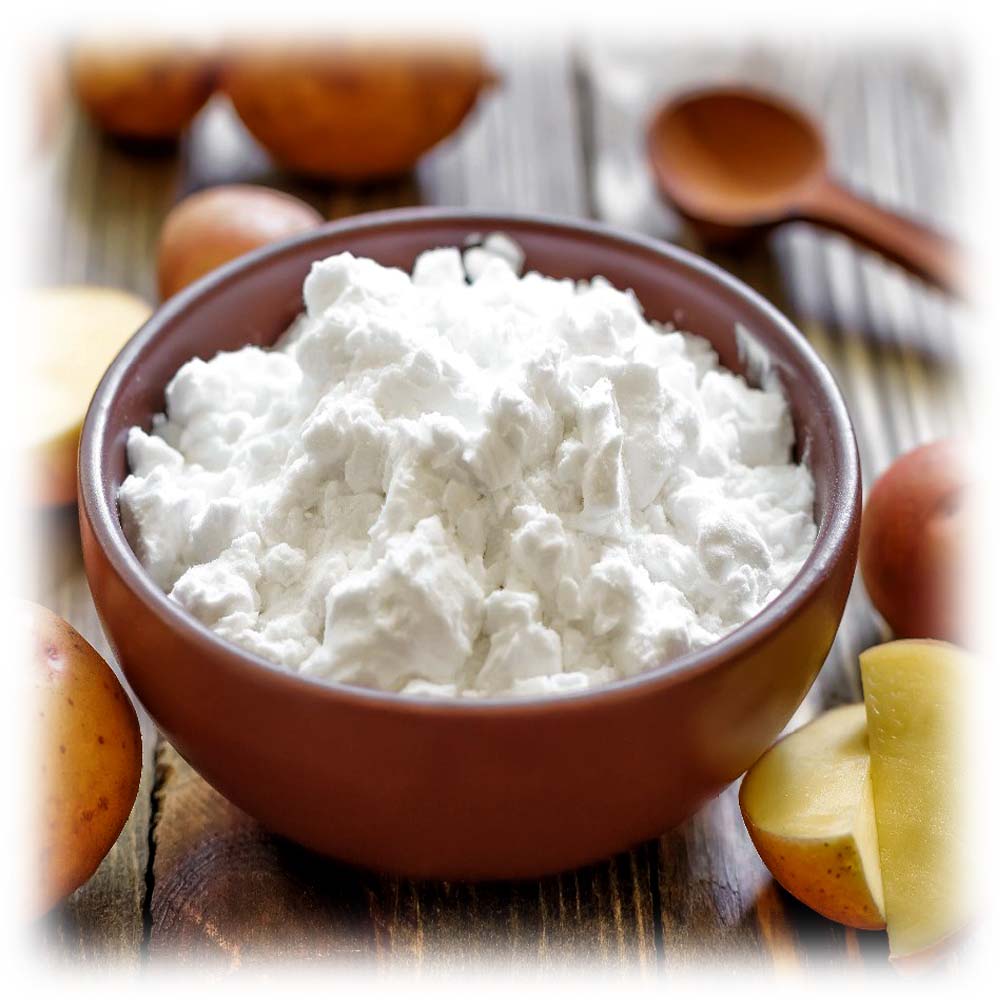
Potato Starch is a high-purity, industrial-grade native starch extracted from Solanum tuberosum tubers, supplied for large-scale manufacturing and processing. It serves as a versatile functional ingredient for thickening, binding, film formation, and dust-control across food processing, paper & board, adhesives, textiles, and pharmaceutical excipients. The product delivers predictable rheology, high clarity, and strong gelation properties under temperature-controlled processing, enabling formulation consistency and reduced rejects. As a commoditized yet technically impactful raw material, it is strategically important for manufacturers seeking cost-efficient performance, regulatory compliance, and stable supply in volume-driven production environments.
-
Key Specifications & Technical Characteristics
-
Chemical composition: Predominantly amylopectin and amylose native starch, trace mineral content (K, P), moisture-related residuals; no chemical modification unless specified.
-
Typical purity/grade: Industrial-grade native potato starch, dry basis purity ≥ 98% starch content.
-
Moisture content: Typical 10–14% (specifiable on request).
-
Particle form & appearance: Fine powder; off-white to creamy color; free-flowing when dried.
-
Particle size: Median particle size typically 5–30 µm (batch-specific particle distribution certificate available).
-
Bulk density: 0.45–0.65 g/cm³ (tapped/untapped densities available on request).
-
Viscosity profile: High peak viscosity; strong gel strength at cooling; shear-thinning behavior under processing conditions (data sheet available).
-
pH (aqueous slurry): Neutral to slightly acidic (typically 5.5–7.0).
-
Ash content: Typically < 0.5% (batch certificate provided).
-
Microbiological limits: GMP-compliant processing; standard limits for total plate count, yeasts, molds; bespoke microbiological spec available for sensitive applications.
-
Impurities & residues: Compliant with customary industrial limits for pesticide residues; tailored screening available upon request.
-
Additives/modifications: Supplied as native (unmodified) starch; chemical or physical modifications (pregelatinized, cross-linked, oxidized) available under separate spec.
-
Packaging options: 25 kg multi-wall paper sacks with PE liner, 500–1,000 kg flexible intermediate bulk containers (FIBCs); bulk pneumatic tanker/shipper for large volume loading.
-
Shelf life & storage: Recommended shelf life 12–24 months when stored dry, cool (<25°C), and protected from humidity; storage recommendations and reconditioning instructions provided.
-
Core Industrial Applications
-
Food processing: Thickener, stabilizer, and texturizer in soups, sauces, bakery fillings, and snack coatings; provides clean flavor profile and high clarity versus alternative starches, improving final product appearance and mouthfeel.
-
Paper & board: Surface sizing and coating binder to enhance dry/wet strength, printability, and internal bond; offers superior film formation and adhesive properties compared with lower-viscosity starch sources.
-
Adhesives & corrugating: Core binder in corrugating starch adhesives for packaging lines; delivers predictable set time, tack, and bond strength, reducing machine downtime and rework.
-
Textile & nonwoven: Sizing agent to improve yarn strength and weaving efficiency; leaves minimal residues and enables facile removal in desizing operations.
-
Pharmaceuticals & nutraceuticals: Excipient for tablet binding, disintegrant, and controlled-release matrix; high purity and consistent particle size ensure reproducible compression and dissolution profiles.
-
Industrial formulations (e.g., paints, drilling fluids, dust suppression): Rheology control, film formation, and particulate binding; offers cost-effective viscosity control with lower solids usage compared with some synthetic polymers.
Why it outperforms alternatives:
-
Higher gel strength and clarity at comparable dosages, enabling formulation down-gauging and cost savings.
-
Native functional profile minimizes need for chemical modification in many applications, preserving regulatory simplicity.
-
Consistent batch-to-batch rheology reduces process variability and waste.
-
Competitive Advantages
-
Quality consistency: Tight in-house QC with batch certificates of analysis, particle-size distribution, viscosity profiles, and microbiological screening.
-
Supply reliability: Sourced from vertically integrated processing partners with contracted capacity, ensuring continuity for large-scale buyers.
-
Logistics capability: Flexible packaging and bulk loading options, export-compliant documentation (COA, MSDS, phytosanitary where required), and expert handling for pneumatic bulk transfer.
-
Price competitiveness: Commodity-scale sourcing combined with demand-responsive pricing models and contract terms for multi-month supply agreements.
-
Sustainability: Sourced from agricultural feedstock with options for traceability; potential for lower lifecycle emissions versus some synthetic thickeners depending on supplier claims—sustainability dossiers available on request.
-
Technical support: Application engineering support, formulation guidance, and lab-scale trial samples; full technical data sheets and stability studies provided for qualified buyers.
-
Commercial & Supply Information
-
Minimum order quantity (MOQ): BULK 20 MT.
-
Loading capacity (per container):
-
Standard 20 ft container (bagged FIBCs): up to 20 MT, dependent on packing configuration.
-
20 ft bulk (liner/tanker) pneumatic loading: up to ~20–22 MT (subject to vessel and regulations).
-
40 ft container (if used for bagged product): up to 24–26 MT depending on palletization and sack weight.
-
-
Lead times: Typical lead time 3–6 weeks for contract orders; expedited allocations possible subject to capacity.
-
Incoterms & documentation: FOB, CIF, or DDP available; standard shipping documents include commercial invoice, packing list, COA, MSDS, and certificate of origin.
-
Payment & contract terms: Volume discounts, multi-delivery contracts, and scheduling available for strategic sourcing partnerships.

Reviews
There are no reviews yet.