
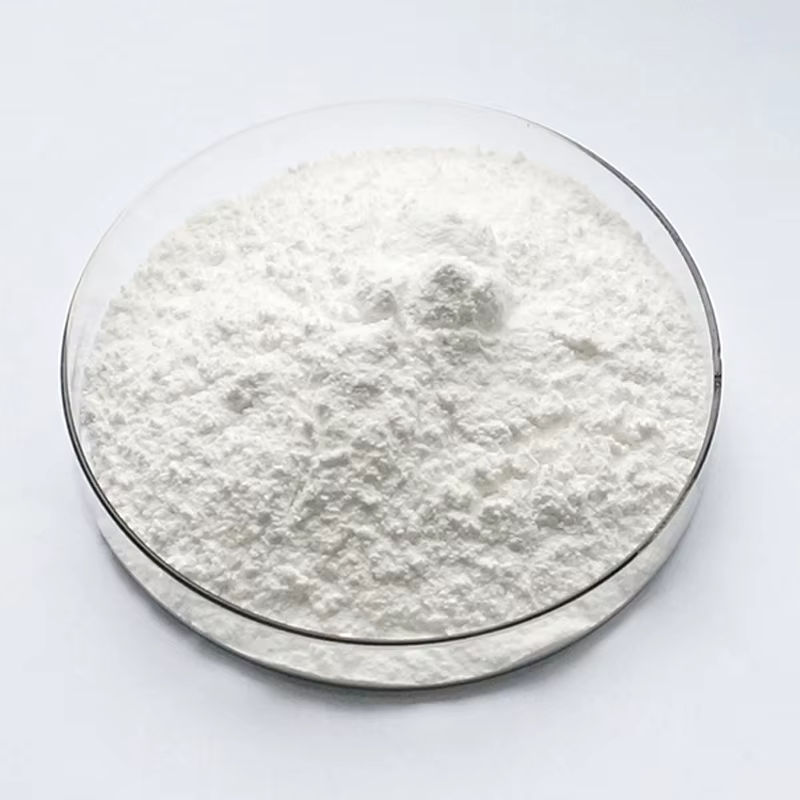
Description
1. Product Overview
Spent Ni-Al Oxide Catalyst is a secondary nickel-bearing material recovered from industrial hydrogenation and petrochemical refining processes. Its primary industrial use is as a cost-effective feedstock for nickel recovery, stainless steel production, and specialty alloy manufacturing. The key value proposition lies in delivering high nickel content at a significantly lower cost base compared to virgin ore, while supporting circular economy objectives. It is strategically important in the global market as supply chain pressures and ESG mandates drive demand for sustainable, traceable metallic inputs.
2. Key Specifications & Technical Characteristics
- Chemical Composition: Ni 8% – 15%, Al2O3 60% – 75%, SiO2 3% – 8%, Fe < 2%, S < 0.5%, Mo < 0.3% (typical ranges, subject to batch analysis)
- Purity Level / Grade: Industrial secondary grade for pyrometallurgical and hydrometallurgical recovery
- Physical Characteristics:
- Form: Extrudates, pellets, or powder depending on source
- Color: Grey to black
- Particle Size: 1.5mm – 5mm for extrudates; < 150 micron for powder
- Bulk Density: 0.8 – 1.2 g/cm³
- Packaging Options: 1 MT jumbo bags with PE liner, palletized; 20 MT per 20ft FCL; bulk vessel loading available
- Shelf Life: Indefinite if stored in dry, covered conditions to prevent re-oxidation and contamination
3. Core Industrial Applications
- Primary Industries: Non-ferrous metal smelting, stainless steel mills, catalyst recycling, specialty chemicals, and battery precursor manufacturing.
- Specific Use Cases: Direct feed into rotary kiln-electric furnaces for nickel matte production, blending material for ferronickel, and raw input for nickel sulfate production in EV battery supply chains.
- Performance vs. Alternatives: Offers higher recoverable Ni yield per dollar compared to laterite ore and lower processing energy vs. sulfide concentrates due to existing metallic state.
- Efficiency / Cost Advantages: Reduces smelting flux requirements owing to inherent Al2O3 content, lowers carbon footprint through waste valorization, and mitigates price volatility of LME nickel.
4. Competitive Advantages
- Quality Consistency: Every shipment accompanied by ICP-OES assay, moisture analysis, and SGS/CCIC inspection. Material homogenized and screened prior to dispatch.
- Supply Reliability: Contracted volumes available from multiple long-term refinery sources, ensuring 200-500 MT monthly availability.
- Logistics Capability: Established export documentation for Basel-compliant hazardous waste transboundary movement. Experience in FOB, CIF, and DAP deliveries globally.
- Price Competitiveness: Priced on LME-linked Ni payables with discounts vs. virgin units, enabling margin protection for buyers.
- Sustainability Benefits: Classified as recycled content under ISO 14021. Diverts hazardous waste from landfill and reduces Scope 3 emissions for end users.
- Technical Support: Full SDS, TDS, and process compatibility data provided. Metallurgical consultation available for furnace integration.
5. Commercial & Supply Information
- Minimum Order Quantity (MOQ): BULK 20MT
- Loading Capacity (MT per container): 20 MT per 20ft FCL

Reviews
There are no reviews yet.