
Description
-
Product Overview
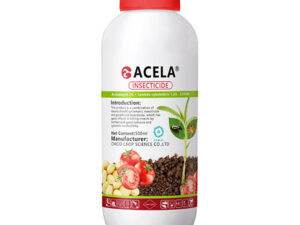
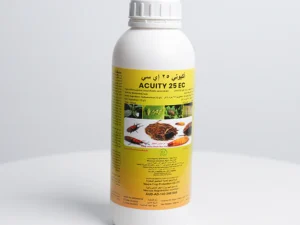
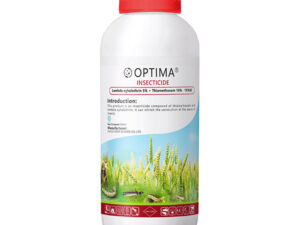
Lambda-cyhalothrin is a high-performance synthetic pyrethroid insecticide formulated for large-scale agricultural and public-health vector control applications. It delivers broad-spectrum contact and residual activity against a wide range of insect pests, making it a primary choice for crop protection, seed treatment, stored-product protection, and vector control programs. The product offers rapid knockdown, extended residual control, and low application rates, delivering superior pest management while lowering operational costs and resistance management risk. Strategically, lambda-cyhalothrin is critical to integrated pest management (IPM) programs and commercial crop yield protection, providing predictable performance and supply security for industrial buyers. -
Key Specifications & Technical Characteristics
-
Active ingredient: Lambda-cyhalothrin (chemical name: (S)-α-cyano-3-phenoxybenzyl (1R,3R)-3-(2-chloro-3,3,3-trifluoro-1-propenyl)-2,2-dimethylcyclopropane-1-carboxylate)
-
Formulation types offered: EC (emulsifiable concentrate), SC (suspension concentrate), WG (water-dispersible granule) — specify per buyer request
-
Concentrations: typical commercial strengths 2.5%–10% AI for formulations; technical grade 95%–98% purity for technical concentrate (TC)
-
Purity/grade (technical): ≥95% assay on dry basis (industrial/technical grade)
-
Physical characteristics (technical concentrate): clear to pale-yellow viscous liquid or crystalline solid depending on formulation; density ~1.2–1.3 g/cm³ for formulated concentrates (varies by carrier)
-
Particle size (WG): median particle size optimized for spray stability and deposition, typically D50 50–200 µm (specify per batch)
-
Solubility: low water solubility; soluble in organic solvents; formulation dependent
-
Stability: stable under recommended storage conditions; formulation-specific photostability enhancers available
-
Packaging options: 20 L HDPE drums, 200 L steel or lined drums, 1,000 L IBCs for liquid formulations; 25 kg multiwall paper or composite bags for granules; palletized and shrink-wrapped for export
-
Labeling & documentation: full SDS, COA (certificate of analysis), CLP/GHS classification, regulatory compliance documentation (per export destination)
-
Shelf life: 24 months in original sealed packaging under recommended storage (cool, dry, out of direct sunlight); refer to batch COA for exact expiry
-
Storage conditions: store between 5–30°C, away from foodstuffs and oxidizers, maintained in original container
-
Compliance notes: manufactured under industrial QA/QC protocols; export regulatory support for major markets on request
-
Core Industrial Applications
-
Agriculture: field crops (maize, cotton, soybean, vegetables, fruit trees) for foliar spray and seed treatment to control lepidopteran, coleopteran, and hemipteran pests. Use case: targeted foliar applications at low dose rates to maintain high yield and reduce crop loss.
-
Public health/vector control: indoor residual spraying (IRS), treated nets, and targeted vector control programs for mosquitoes and other disease vectors. Use case: long-lasting residual control in housing and public facilities to suppress disease transmission.
-
Stored-product protection: safeguard grains and stored commodities against beetles and weevils via treated packaging or controlled-treatment protocols. Use case: extend shelf life of stored goods while minimizing re-infestation risk.
-
Professional pest control and infrastructure: commercial building and transport pest management, including warehouses and food-processing facilities. Use case: fast knockdown and residual action to protect logistics and food-safety operations.
Why it outperforms alternatives: -
High intrinsic potency allows lower application rates versus many organophosphates and older pyrethroids.
-
Rapid knockdown plus extended residual efficacy reduces frequency of re-application and labor costs.
-
Versatile formulations enable optimized deployment across spray equipment and application regimes.
-
Strong IPM compatibility when rotated appropriately, supporting resistance management strategies and preserving performance.
-
Competitive Advantages
-
Quality consistency: produced under certified manufacturing practices with batch-level COA and traceable QA metrics.
-
Supply reliability: industrial-scale production capacity with confirmed bulk MOQ and container loading logistics to support continuous season-long supply.
-
Logistics capability: flexible packaging and export-grade palletization, experience with cross-border compliance, and containerized shipment planning for timely delivery.
-
Price competitiveness: industrial pricing optimized for bulk purchasers (20 MT bulk tiers), with volume discounts and contract pricing available for repeat buyers.
-
Environmental & safety profile: pyrethroid class advantages include lower mammalian acute toxicity compared with many organophosphates when used as directed; formulations and application guidance provided to minimize non-target exposure and environmental impact.
-
Technical support: full documentation suite (SDS, COA, application guides), agronomic and vector-control advisory support, and regulatory-export assistance to major global markets.
-
Commercial & Supply Information
-
Minimum order quantity (MOQ): BULK 20 MT
-
Loading capacity (per 20′ container): approximately 18–20 MT (liquid packaging and IBCs may vary; confirm per packaging selection)
-
Loading capacity (per 40′ container): approximately 24–26 MT (depending on packaging and weight distribution)
-
Lead times: subject to order volume and destination; standard lead time for bulk orders to port: typically 4–8 weeks, expedited options available by agreement
-
Payment & contract terms: standard B2B terms (letter of credit, wire transfer, or negotiated contracts), export documentation and regulatory paperwork provided with shipment
Reviews
There are no reviews yet.