
Description
-
Product Overview
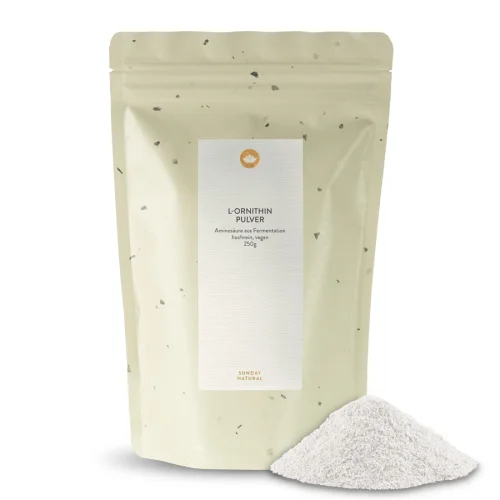
L‑Ornithine (biotech fermentation grade) is a high‑purity amino acid produced via controlled microbial fermentation and downstream purification, formulated for industrial and bulk biochemical use. Its primary industrial role is as a urea‑cycle regulator and metabolic intermediate in formulation, fermentation optimization, and specialty chemical synthesis. The key value proposition is a consistent, high‑purity feedstock that improves process control, yield stability, and regulatory compliance across pharmaceutical, nutraceutical, and specialty chemical supply chains. Strategically, L‑Ornithine from a validated biotech source reduces raw‑material variability, supports scale‑up reliability, and enables customers to meet stricter quality and sustainability requirements in global markets.
-
Key Specifications & Technical Characteristics
-
Chemical name: L‑Ornithine monohydrochloride or L‑Ornithine (specify; standard offering is L‑Ornithine monohydrochloride on request).
-
CAS (common reference): 70‑26‑8 (L‑Ornithine) / 6452‑82‑6 (monohydrochloride variant) for ordering clarity.
-
Chemical composition: L‑Ornithine produced by controlled microbial fermentation, free of animal‑derived material; residual salt profile minimized by ion exchange/ crystallization.
-
Purity/Grade: Typical purity ≥ 98.0% (HPLC); available grades: Technical (≥98%), Pharma/Captive (customizable to ≥99.5% with GMP documentation upon request).
-
Water content: ≤ 3.0% (Karl Fischer), batch certificate provided.
-
Heavy metals: Pb, Cd, Hg, As below pharmacopeial/industrial thresholds; specific certificate values provided per lot.
-
Microbial limits: Total viable count and absence of objectionable organisms per industrial specification; available validated sterilization/decontamination protocols for pharma use.
-
Physical form: White to off‑white crystalline powder.
-
Particle size distribution: Median particle size tunable by milling; standard D50 ~ 50–150 µm (custom milling available).
-
Bulk density: Typical 0.35–0.55 g/mL (tapped density provided on COA).
-
Odour and appearance: Odourless to faint, visually crystalline, free‑flowing as standard.
-
Solubility: Highly soluble in water; solubility and dissolution profile data available on request.
-
Packaging options:
-
Small bulk: 25 kg multi‑wall paper bags with PE liner, palletized.
-
Intermediate: 500 kg – 1,000 kg FIBC (food‑grade liner) for regional supply.
-
BULK: ISO tank, bulk bags on pallet, or 20 MT per container break‑bulk arrangements.
-
-
Shelf life: 24 months under recommended storage (cool, dry, <25°C, sealed packaging); COA stability data provided for each lot.
-
Traceability: Full batch traceability from fermentation to final release; COA and GMP/quality documentation available by request.
-
Core Industrial Applications
-
Pharmaceuticals and biotech: Used as a metabolic regulator in fermentation processes, cell culture supplementation, and as an intermediate in active pharmaceutical ingredient (API) pathways. Improves nitrogen balance and can optimize yield in microbial and cell‑based production.
-
Nutraceuticals and functional foods: Ingredient in formulations for hepatic support, urea‑cycle modulation, and sports nutrition blends where a USP/food‑grade variant is supplied.
-
Specialty chemicals and intermediates: Precursor in synthesis routes for chemical derivatives requiring a defined amino‑acid backbone; supports consistent downstream reaction yields.
-
Animal nutrition: Formulated into feed premixes to optimize nitrogen metabolism and growth performance (technical grades).
-
Industrial fermentation optimization: Used as a controlled nitrogen source to improve fermentation robustness and reproducibility; reduces batch‑to‑batch variability compared with crude nitrogen feeds.
Why this product performs better than alternatives: fermentation‑derived L‑Ornithine offers superior purity and lower endotoxin/residual impurity profiles versus chemically synthesized or poorly documented raw materials. Consistent particle size and solubility improve dosing accuracy and mixing homogeneity, reducing waste and rework. For pharma customers, customizable purification and documentation reduce downstream validation time and cost.
-
Competitive Advantages
-
Quality consistency: GMP‑aligned production controls, strict in‑process monitoring, and full Certificate of Analysis (COA) per lot.
-
Supply reliability: Integrated fermentation capacity with multiple production lines and safety stock to support continuous supply for scale projects and long‑term contracts.
-
Logistics capability: Flexible packaging and export readiness (EX‑works, FOB, CIF options), ability to load 20 MT per 20′ container via optimized palletization or ISO tank solutions.
-
Price competitiveness: Economies of scale from fermentation production drive competitive FOB and landed prices versus small‑scale suppliers; volume discounts for multi‑MT contracts.
-
Sustainability: Microbial fermentation using controlled feedstocks, minimized solvent use in purification, and options for lower carbon logistics routes; documentation for supplier sustainability programs available.
-
Technical support: Dedicated technical service for specification alignment, process integration trials, stability data, and regulatory documentation (COA, SDS, transport classification).
-
Documentation: Batch traceability, COA, MSDS/SDS, and bespoke regulatory support for pharmacopeial registrations available on request.
-
Commercial & Supply Information
-
Minimum order quantity (MOQ): BULK 20 MT.
-
Loading capacity: 20 MT per standard 20′ container (bulk bags/palletized) or adjusted by packing method; ISO tank options available for liquid variants or slurries where applicable.
Reviews
There are no reviews yet.