
Description
Product Overview
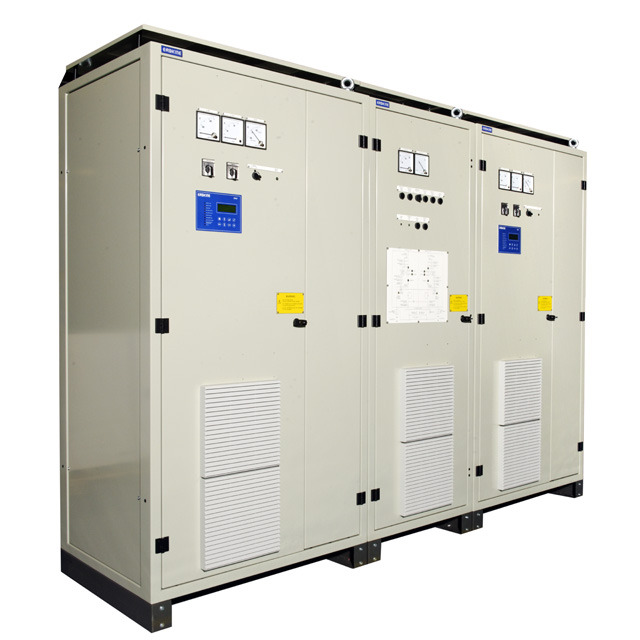
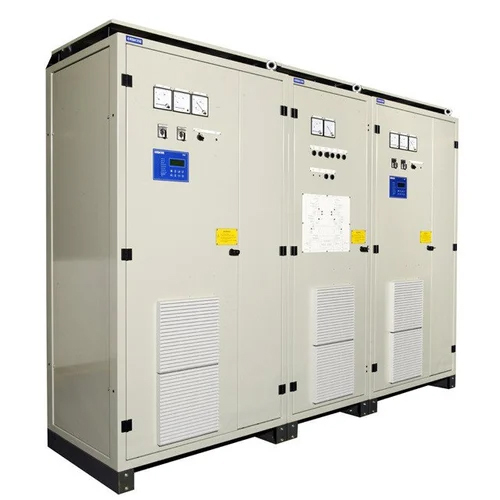
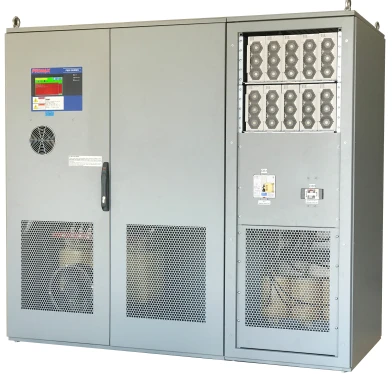
Industrial UPS system is a heavy-duty uninterruptible power supply engineered for continuous, mission-critical industrial operations. Designed to provide seamless power conditioning, short- and medium-duration backup, and safe shutdown capability, it protects production lines, process controls, automation assets, and critical infrastructure from outages, surges, and power quality events. The primary value proposition is guaranteed uptime and asset protection through high-efficiency conversion, modular redundancy, and predictable lifecycle economics. Strategically, deploying Industrial UPS systems reduces unplanned downtime, minimizes production losses and warranty exposure, and supports compliance with industry uptime and safety standards.
Key Specifications & Technical Characteristics
-
Topology: Double-conversion online (VFI) with optional modular parallel architecture.
-
Rated power range: Configurable from 50 kVA to 2,000 kVA (single unit or parallel strings).
-
Input voltage range and frequency: Wide acceptance, e.g., 380–480 VAC three-phase, 50/60 Hz ± configurable tolerance.
-
Output voltage and frequency: Regulated three-phase 400 VAC ±1%, 50/60 Hz ±0.1% (selectable).
-
Efficiency: Up to 96–98% in Eco-mode; 94–96% in full double-conversion mode depending on configuration.
-
Power factor: Unity output PF = 1.0; input PF ≥ 0.99 at full load.
-
THDi: <3% typical with active input filters.
-
Battery system: VRLA, AGM, Ni-Cd or Li-ion battery integration options; string voltages and runtime customized per site.
-
Battery chemistry and expected cycles: VRLA (typically 3–5 years), Ni-Cd (8–12 years), Li-ion (10–15 years depending on duty).
-
Battery management: Integrated BMS with cell balancing, thermal monitoring, and predictive health diagnostics.
-
Inrush and overload capability: 150% for 60 seconds, 125% for 10 minutes (model-dependent).
-
Harmonic handling: Active filtering, compliant with IEEE 519/IEC limits.
-
Redundancy: N+1, N+X, or 2N configurations supported via modular parallel control.
-
Control and communications: Embedded microprocessor with touchscreen HMI, SNMP, Modbus RTU/TCP, BACnet, OPC UA, dry contacts, and optional remote cloud monitoring.
-
Environmental ratings: Operating temperature range typically -10°C to +40°C (extended ranges available with thermal options), humidity 0–95% non-condensing.
-
Noise: <75 dB(A) at 1 m (varies by size and enclosure).
-
Physical characteristics: Rugged steel enclosure, IP20 standard; IP42–IP54 options available for shop-floor or harsh environments.
-
Weight and footprint: Varies by rating; packaged for forklift/crane handling; skid-mounting available.
-
Installation: Floor-standing or rack-mount modules; hot-swappable power modules for serviceability.
-
Certification and compliance: CE, IEC 62040 series, UL/cUL where applicable, RoHS compliant.
-
Packaging options: Individual crates for single units, skid-mounted pallets for strings, sea/air-transport packaging with corrosion protection.
-
Shelf life / storage: Electronics and battery storage recommendations per manufacturer; batteries shipped with shipping charge/discharge protection; recommended storage temp 15–25°C for long shelf life.
Core Industrial Applications
-
Manufacturing and process industries: Protects PLCs, drives, control rooms, and MES servers from outages and voltage events, preserving production continuity and preventing scrap.
-
Oil & Gas and Petrochemical: Supports safety shutdown systems, SCADA, and critical instrumentation where power loss risks safety incidents and environmental exposure.
-
Mining and Metals: Ensures continuous operation of hoists, conveyor controls, and smelting controls in harsh electrical environments.
-
Data centers and edge compute: Provides deterministic short- to medium-duration backup and clean power for server racks and network aggregation points.
-
Utilities and substations: Supports protection relays, automation, and telecom equipment during grid disturbances and transfer operations.
-
Healthcare and pharma: Maintains life-safety systems, laboratory controls, and process-critical HVAC for GMP-compliant environments.
-
Transportation and logistics: Powers signaling, control rooms, and automation at ports, rail hubs, and automated warehouses.
Why it outperforms alternatives
-
Modular architecture and hot-swappable modules reduce Mean Time To Repair (MTTR) and scale capacity non-disruptively.
-
High conversion efficiency reduces operating cost and cooling demand.
-
Advanced BMS and predictive diagnostics extend battery life and lower total cost of ownership.
-
Wide input tolerance and active filtering reduce nuisance transfers and protect sensitive electronics better than passive UPS alternatives.
-
Rugged enclosures and optional ingress protection enable deployment closer to the point of use, cutting distribution losses and footprint cost.
Competitive Advantages
-
Quality consistency: Factory-tested power modules with standardized QA, serial-number traceability, and batch-level verification.
-
Supply reliability: Multi-sourced critical components, configurable lead-time transparency, and prioritized production for bulk OEM and project orders.
-
Logistics capability: Palletized/crate shipping, export documentation readiness, inland transport coordination, and local partner installation options.
-
Price competitiveness: Configurable tiers (standard, industrial-grade, high-availability) to align capital and lifecycle spending; volume pricing for 20 MT+ bulk orders.
-
Sustainability: High-efficiency operation reduces energy consumption; optional low-carbon battery chemistries and recyclable materials; end-of-life battery takeback programs possible.
-
Technical support: Global technical datasheets, site power studies, FAT (factory acceptance test) reports, commissioning support, and 24/7 remote monitoring and service-level agreements (SLAs).
-
Documentation: Comprehensive electrical and mechanical drawings, integration guides for switchgear and BMS, compliance certificates, and maintenance manuals.
Commercial & Supply Information
-
Minimum order quantity (MOQ): BULK 20MT.
-
Typical loading capacity: dependent on unit ratings and packaging; example container planning: up to 20–25 MT per 20’ container for compact modular systems (subject to unit dimensions and battery weight), or up to 25–28 MT per 40’ HQ for larger configs.
-
Lead times: Configurable by order size and options; standard lead times available on request with expedited production for project schedules.
-
Warranty and service: Standard manufacturer warranty with optional extended coverage and on-site commissioning packages (details per contract).
Reviews
There are no reviews yet.