
Description
1. Product Overview
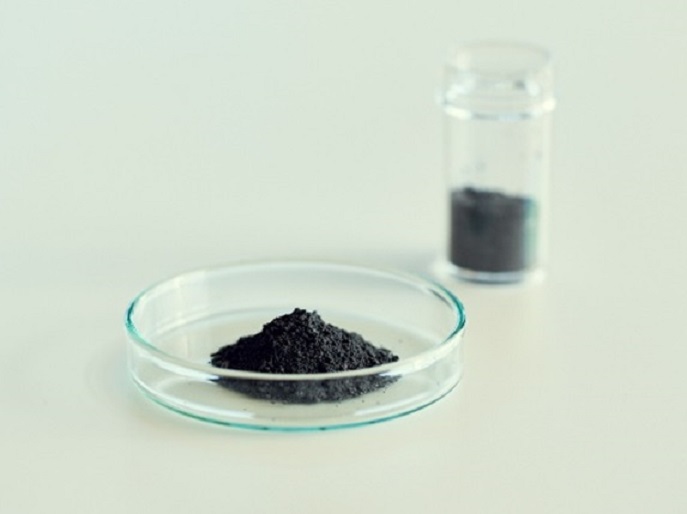
This product is a multi-principal-element ceramic powder composed of four or more transition metal carbides (e.g., HfC, ZrC, TaC, TiC, NbC) at near-equimolar ratios, engineered for ultra-high-temperature structural applications. Its primary industrial use is in hypersonic vehicle thermal protection systems, rocket nozzle inserts, and advanced cutting tools requiring extreme thermal-chemical stability. The key value proposition lies in its unique lattice distortion and sluggish diffusion effects, which deliver superior oxidation resistance and phase stability above 2,500°C. Strategically, this material addresses the critical gap in global supply chains for next-generation aerospace and defense components where conventional carbides and refractory alloys fail.
2. Key Specifications & Technical Characteristics
-
Chemical composition: (Hf, Zr, Ta, Ti, Nb)C; custom quinary or senary systems available (e.g., Hf-Ta-Zr-Ti-C)
-
Purity level: ≥ 99.5% (metals basis), oxygen content < 0.8 wt%
-
Physical characteristics:
-
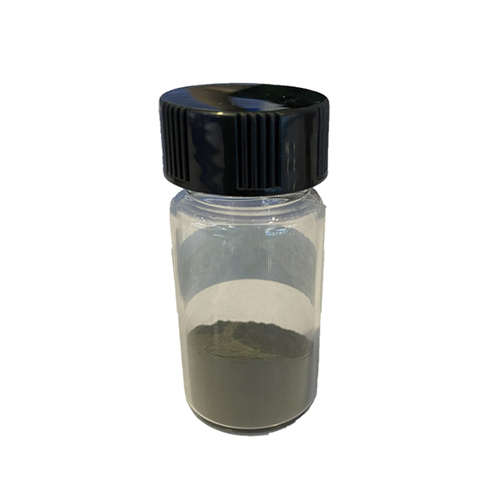
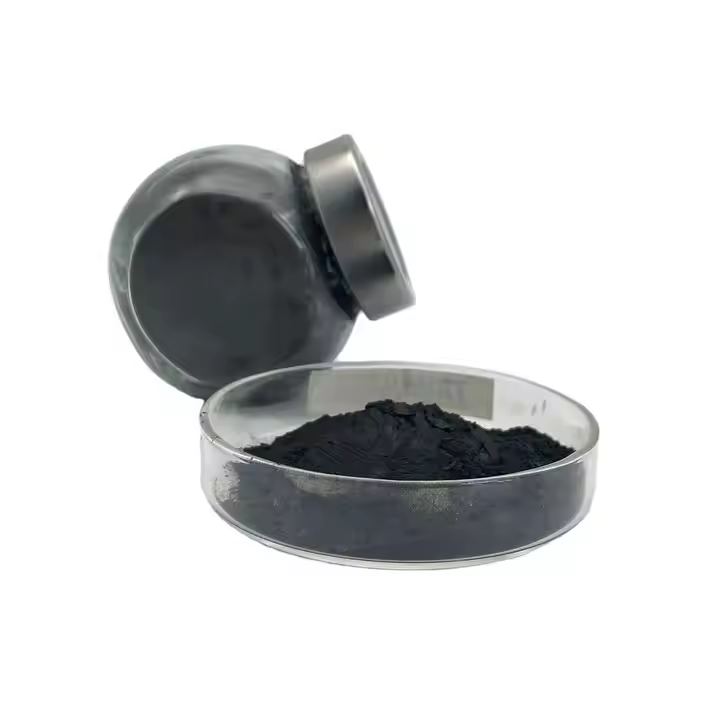
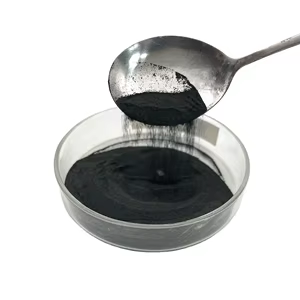
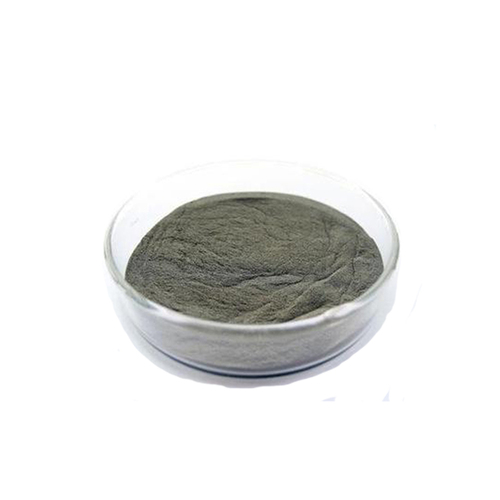
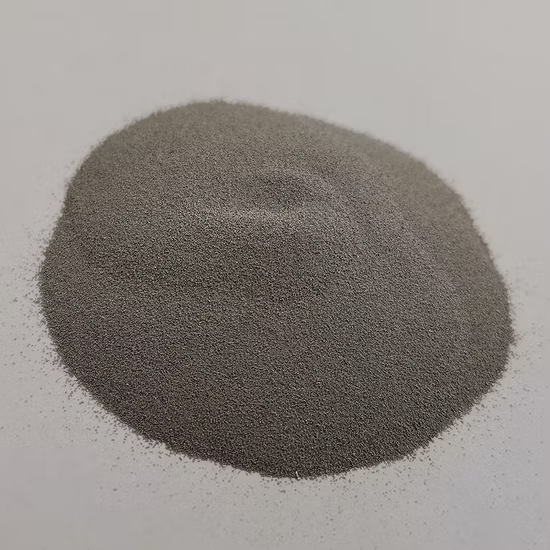
Form: Free-flowing fine powder
-
Color: Dark gray to black
-
Particle size (D50): 0.5 – 5.0 µm (customizable 0.2 – 10 µm)
-
Tap density: 1.8 – 2.5 g/cm³
-
Specific surface area (BET): 2 – 8 m²/g
-
-
Packaging options: Vacuum-sealed aluminum foil bags (1 kg, 5 kg), HDPE drums with inert gas purge (10 kg, 25 kg), or bulk FIBC liners (200 kg)
-
Shelf life: 24 months when stored below 30°C in sealed, dry conditions
3. Core Industrial Applications
-
Primary industries: Aerospace & defense, high-performance machining, nuclear energy (Gen IV reactors), and additive manufacturing of refractory parts
-
Operational use cases:
-
Hypersonic leading edges & nose tips: The powder is plasma-sprayed or sintered into CMCs, outperforming SiC-based materials by 3x in thermal shock resistance (1,600°C ΔT)
-
Ultra-hard cutting inserts: Indexable tools for Inconel 718 and titanium alloys achieve 40% longer tool life than WC-Co due to suppressed crater wear
-
Nuclear cladding coatings: Applied as a 100–300 µm layer via HVOF; resists molten uranium corrosion for 10x longer than standalone ZrC
-
-
Performance advantage: High-entropy composition prevents single-element oxide “breakaway” scaling, providing passive oxidation up to 2,800°C vs. 1,700°C for binary carbides.
4. Competitive Advantages
-
Quality consistency: Each batch certified via XRD (phase purity), ICP-MS (cation uniformity), and SEM-EDS (elemental distribution); ±1.5% at. compositional tolerance
-
Supply reliability: Redundant synthesis lines (carbothermal reduction + SPS-derived precursor) enable 50 MT/month surge capacity; safety stock held in three continental warehouses (NA, EU, ASIA)
-
Logistics capability: Uninterrupted supply under ITAR/EAR controls; UN3077 classified with hazmat-certified global forwarders
-
Price competitiveness: Volume pricing 15–20% below European specialty ceramic suppliers for comparable purity; long-term contracts (12–36 mo) lock in raw material pass-through ceilings
-
Sustainability: Closed-loop argon recovery (>90%) and 30% recycled tantalum content via certified chain-of-custody; ISO 14001:2025 compliant
-
Technical support: Dedicated application engineers provide sintering profiles, spray parameter optimization, and failure analysis with 48-hour turnaround on SEM/EDS reports
5. Commercial & Supply Information
-
Minimum order quantity (MOQ): 10 kg for first-time qualification order; 100 kg for production repeat orders
-
BULK 20MT loading capacity: 20 metric tons per standard 20-ft dry container (palletized, 25 kg drums, 4 drums per pallet, 200 pallets max)
-
Lead time: 15 days for MOQ; 30 days for bulk (FOB origin)
-
Incoterms supported: EXW, FCA, FOB, CIF (major global ports)
-
Payment terms: LC at sight or net 30 days for qualified buyers with credit approval
Reviews
There are no reviews yet.