
Description
-
Product Overview
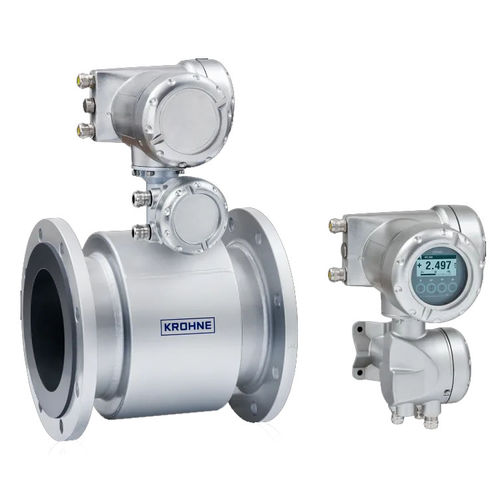
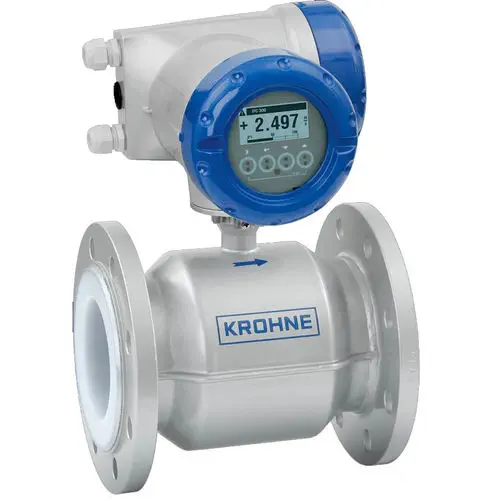
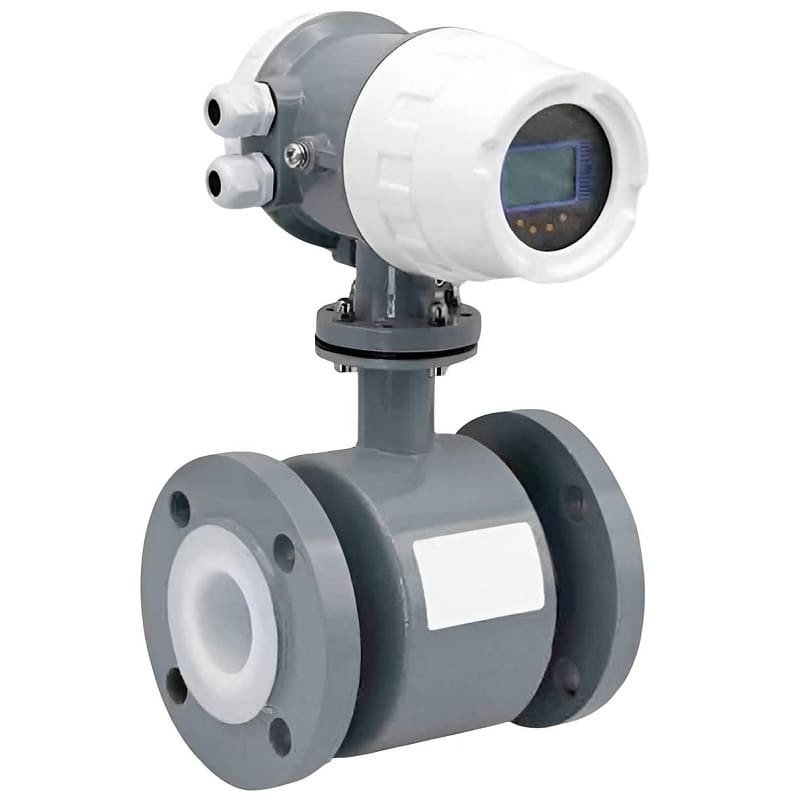
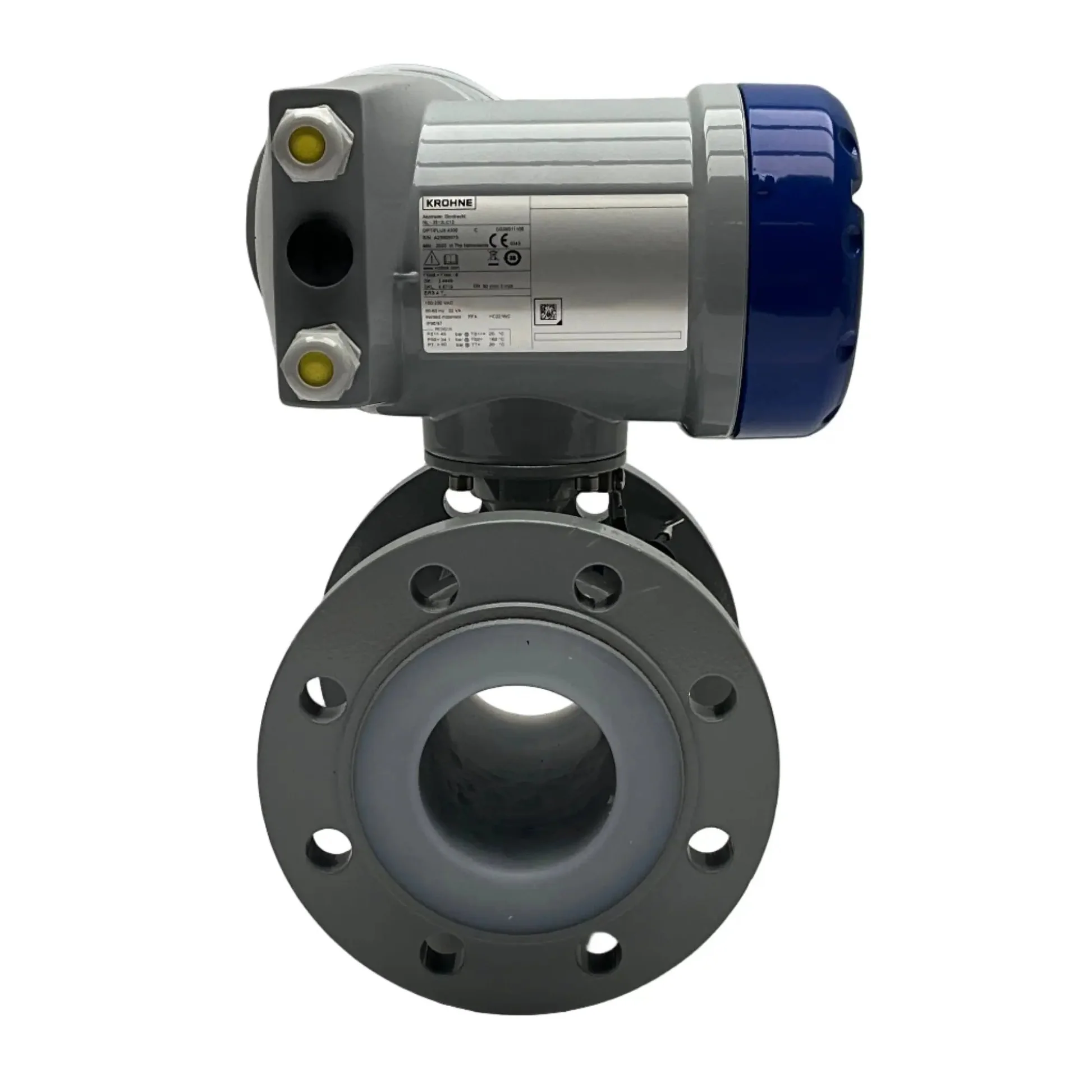
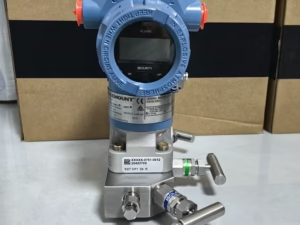
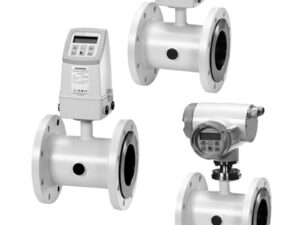
The Electromagnetic Flowmeter 4300 Series is a precision, industrial-grade flow measurement instrument that uses Faraday’s law to deliver non-intrusive, highly accurate volumetric flow readings for conductive liquids. It is primarily used for continuous flow monitoring and process control in water & wastewater, chemical processing, pulp & paper, food & beverage, and mining operations. The key value proposition is reliable, linear measurement with minimal pressure loss, wide pipe-size compatibility, and robust performance in harsh, conductive-fluid environments. Strategically, the 4300 Series reduces process variability, simplifies custody-transfer metering, and lowers total cost of ownership through long intervals between maintenance and industry-ready diagnostics.
-
Key Specifications & Technical Characteristics
-
Measurement principle: Electromagnetic induction (Faraday’s law).
-
Nominal sizes: DN15 to DN2000 (½” to 80″), customizable flanged or wafer designs.
-
Accuracy: Standard ±0.5% of reading; high-precision variants ±0.2% available.
-
Linearity: ±0.2% typical.
-
Conductivity requirement: ≥5 µS/cm (standard), low-conductivity options available.
-
Materials (wetted parts): Liner options — PTFE (Teflon), PFA, EPDM, FEP, PVDF, rubber; Electrodes — stainless steel 316L, Hastelloy C-276, titanium, platinum-clad.
-
Environmental protection: IP67/NEMA 6 / optional IP68 housings for submersion.
-
Temperature range (process): -40°C to +200°C depending on liner/electrode configuration.
-
Pressure rating: Up to PN40 / ASME 300 (model-dependent).
-
Output and communications: 4–20 mA, pulse, frequency, HART, Modbus RTU, Modbus TCP/IP, Profibus PA/DP, optional FOUNDATION Fieldbus.
-
Power supply: 24 VDC, 85–265 VAC options, battery-powered transmitter for portable units.
-
Diagnostics: Self-diagnostics, empty-pipe detection, ground-fault detection, conductivity check, flow totalizers.
-
Signal processing: Multi-point linearization, temperature compensation, advanced filtering for noise rejection.
-
Display and interface: Backlit LCD with local configuration keys; optional remote display and wireless telemetry.
-
Mounting: Inline flanged, wafer, spool-piece, insertion adapter kits for retrofits.
-
Calibration: Factory-calibrated traceable to standards; on-site recalibration kits available.
-
Chemical compatibility: Wide chemical resistance through liner/electrode selection; suitable for acids, alkalis, slurries, and wastewater streams.
-
Packaging options: Protective wooden crates for export, palletized shrink-wrapped units for regional shipments, corrosion-inhibitor wrapping for long transit.
-
Shelf life: Not applicable for electronic industrial instruments; recommended storage: dry environment, -20°C to +60°C, relative humidity <85% non-condensing.
-
Documentation: Full technical manual, calibration certificate, ATEX/IECEx (if requested), CE declaration, material certificates (Mill Test Reports) available.
-
Core Industrial Applications
-
Water & Wastewater Treatment: Continuous flow monitoring for influent/effluent streams, chemical dosing control, and leak detection. Performs better than mechanical meters in dirty or particulate-laden water due to no moving parts and lower maintenance.
-
Chemical Processing: Accurate custody and process control of aggressive, conductive liquids; liner/electrode materials allow compatibility with corrosive chemistries where other meters fail.
-
Pulp & Paper: Measurement of stock, white water, and chemical feed with high reliability in turbulent, abrasive flows; superior uptime versus turbine meters.
-
Food & Beverage: Hygienic liners (PTFE/PFA) and stainless electrodes enable CIP-compatible measurement of conductive process fluids with stable, repeatable results.
-
Mining & Mineral Processing: Slurry and tailings monitoring with electrode and liner options engineered for abrasion resistance; tolerant to entrained solids and variable conductivity.
-
Energy & Power Plants: Feedwater, condensate, and cooling circuits where minimal pressure drop and accurate flow balancing matter.
Why it outperforms alternatives: non-intrusive measurement with no moving parts reduces fouling and wear; broad material options allow tailored chemical resistance; advanced diagnostics and communications enable predictive maintenance and integration into modern DCS/SCADA systems, improving process efficiency and lowering lifecycle cost.
-
Competitive Advantages
-
Quality consistency: Factory calibration and material traceability ensure consistent metrological performance across production batches.
-
Supply reliability: Global manufacturing with regional stock hubs and configurable lead times for standard models minimize procurement risk.
-
Logistics capability: Robust export packaging and modular designs support containerized shipment and simplified on-site installation; local partner network for installation and commissioning.
-
Price competitiveness: Tiered pricing with volume discounts for inline and retrofit configurations; lower total cost of ownership by reducing maintenance intervals and downtime.
-
Sustainability: Long service life and repairable transmitter modules reduce lifecycle waste; lead-free and RoHS-compliant electronic components; energy-efficient transmitter options.
-
Technical support: Comprehensive documentation, on-site commissioning options, 24/7 remote diagnostics support, spare-parts kits, and field-training programs for operations and maintenance teams.
-
Certification & compliance: Options for ATEX/IECEx, SIL2/SIL3 functional safety assessments, and compliance packages for potable water and hygienic standards on request.
-
Commercial & Supply Information
-
Minimum Order Quantity (MOQ): BULK 20 MT.
-
Loading capacity (MT per container): Typical loading depends on unit size and packaging; approximate capacities: 20 ft container — up to 18–20 MT (small to medium units palletized), 40 ft container — up to 24–26 MT (optimized loading). Exact loading plan provided per order based on model mix and crate dimensions.
Reviews
There are no reviews yet.