
Description
-
Product Overview
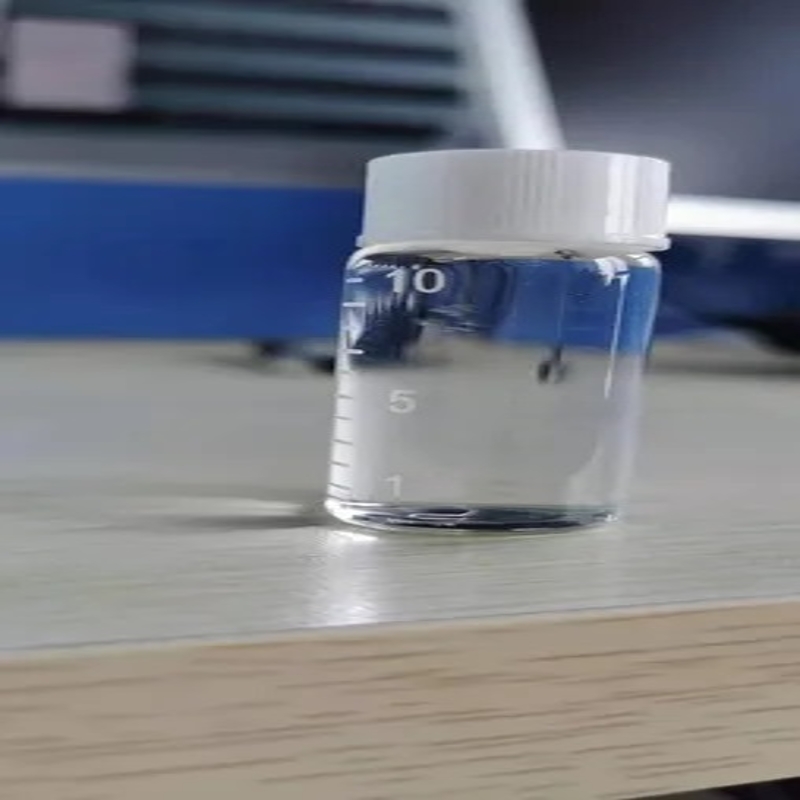
Dimethyl dicarbonate (DMDC, E242) is a clear, colorless, low-boiling organic compound used primarily as a fast-acting beverage and liquid food preservative and sterilant. In industrial settings it delivers effective microbial inactivation at low dosages, enabling longer shelf life and reduced reliance on thermal processing. The key value proposition is high antimicrobial potency combined with minimal impact on product organoleptics and processing throughput. Strategically, DMDC enables beverage and liquid-food manufacturers to optimize production costs and supply-chain shelf-life while meeting strict food-safety and regulatory requirements across global markets. -
Key Specifications & Technical Characteristics
-
Chemical name: Dimethyl dicarbonate (DMDC, E242).
-
CAS number: 512-56-1.
-
Chemical composition: Predominantly dimethyl dicarbonate, with trace residual methanol and CO2 breakdown products within regulatory limits.
-
Purity/grade: Food-grade / technical-grade options; typical purity ≥ 98.0% w/w (specify grade at purchase).
-
Physical form: Clear, colorless liquid.
-
Density: ~1.10 g/cm³ at 20°C (typical; batch certificate to confirm).
-
Boiling point: Low; rapid volatilization under heated conditions (refer to SDS for thermal behavior).
-
Solubility: Hydrolyzes in water to methanol and CO2; dosing calculated against free water content.
-
Odor: Characteristic faint ester-like odor.
-
Stability / shelf life: Typical shelf life 6–12 months when stored sealed at 5–25°C, protected from moisture and direct sunlight; exact shelf life stated on batch COA.
-
Packaging options:
-
Intermediate bulk containers (IBC) 1000 L.
-
Steel drums 200 L.
-
UN-compliant smaller drums (25–60 L) by request.
-
Custom bulk tanker loading available for large contracts.
-
-
Documentation included: Certificate of Analysis (COA), Safety Data Sheet (SDS), Declaration of Conformity for food-grade shipments (where applicable), and transport documents.
-
Core Industrial Applications
-
Beverage production (non-carbonated and carbonated): Primary use as a post-fill preservative to inactivate yeasts, molds, and bacteria, enabling extended shelf life without heat-induced flavor change.
-
Liquid food manufacturing: Applied in juices, teas, ready-to-drink (RTD) products, and certain dairy replacements for microbial control while preserving sensory quality.
-
Ingredient for chemical synthesis: Used as a reagent in selective esterification/carbonyl transfer reactions in specialty chemical production.
-
Brewing and fermentation operations: Targeted microbial control during filling or prior-to-packaging stages to reduce rework and product loss.
Why it outperforms alternatives: -
Lower required dosage than many chemical preservatives for equivalent microbial control, translating to cost-per-litre savings.
-
Minimal thermal processing required versus pasteurization, preserving flavor and reducing energy consumption.
-
Fast-acting and predictable decay kinetics allow precise control of residuals and regulatory compliance.
-
Compatibility with automated liquid-dosing systems enables integration into high-throughput production lines.
-
Competitive Advantages
-
Quality consistency: Manufactured under controlled conditions with batch COAs and traceability for each shipment to meet food-safety audit requirements.
-
Supply reliability: Robust production and inventory planning to support continuous supply; options for contract manufacturing and safety-stock agreements for large customers.
-
Logistics capability: Multiple packaging formats, UN-compliant transport, and options for bulk tanker loading to reduce handling costs and speed time-to-plant.
-
Price competitiveness: Economies of scale for bulk (20 MT+) buyers, flexible pricing tiers tied to volume and contract terms.
-
Sustainability & environmental considerations: Low-dosage performance reduces overall chemical throughput per finished unit; manufacturer adheres to waste-management and emissions controls during production (verify supplier sustainability statements).
-
Technical support & documentation: Full SDS, COA, dosing guidance for common beverage matrices, regulatory guidance per market (EU/US/other), and on-request technical consultation for process integration and validation.
-
Commercial & Supply Information
-
Minimum order quantity (MOQ): BULK 20MT.
-
Loading capacity: Typical container loading capacities (subject to packing configuration):
-
20-foot container: up to ~18–20 MT for drums/IBC depending on packaging and stacking constraints.
-
40-foot container: up to ~24–26 MT for IBC/tanker configurations (confirm with supplier logistics).
-
-
Lead times, incoterms, and pricing: Available on request and negotiable based on contract volume, delivery location, and required documentation.
-
Contact for procurement: Provide purchase order specifying grade (food/technical), desired packaging, destination, and required regulatory documentation; supplier will issue formal quotation and delivery schedule.
Reviews
There are no reviews yet.