
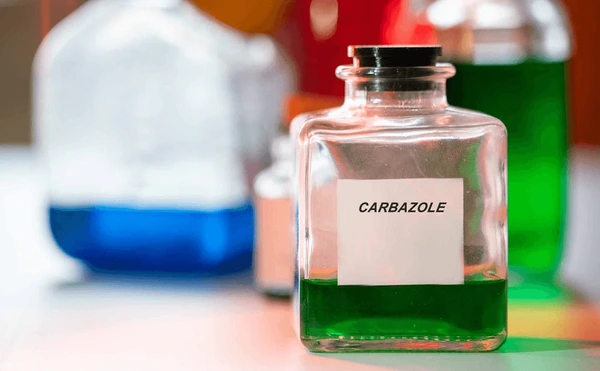
Description
1. Product Overview
This product family comprises high-purity indole and carbazole derivatives—specialty heterocyclic intermediates essential for advanced pharmaceutical, agrochemical, and electronic material synthesis. Primary industrial applications include active pharmaceutical ingredient (API) manufacturing, crop protection formulation, and OLED charge-transport layer production. The key value proposition is superior batch-to-batch consistency (≤0.5% RSD) and trace-level impurity control (<0.1% for specified byproducts), enabling reduced downstream purification costs and faster regulatory approval cycles. Strategically, these derivatives are critical de-risking enablers in high-value supply chains facing synthetic complexity and tightening impurity regulations globally.
2. Key Specifications & Technical Characteristics
-
Chemical Composition: Indole-3-carboxaldehyde, indole-3-acetic acid, indole-3-carbinol, carbazole, polyvinylcarbazole (PVK), bromocarbazole isomers (3-, 3,6-, 2,7-), and custom N-alkylated/arylated derivatives
-
Purity Level: Pharma grade ≥99.0% (HPLC); Electronic grade ≥99.5% (HPLC); Technical grade 98.0–99.0% available
-
Physical Characteristics: White to off-white crystalline powder; melting point range 85–285°C (by derivative); particle size D90 <50 µm (standard) or custom milling available; bulk density 0.3–0.7 g/cm³
-
Packaging Options: 25 kg fiber drums with inner PE liner, 500 kg FIBC bags, 200 kg HDPE drums, or stainless steel IBCs for liquid derivatives
-
Shelf Life: 24 months from manufacture when stored in dry, dark conditions at 15–30°C in original sealed packaging
3. Core Industrial Applications
-
Pharmaceuticals: Indole derivatives as precursors for serotonin receptor agonists/antagonists (migraine drugs) and antitumor agents. Carbazole scaffolds for antibiotics and kinase inhibitors. Performance advantage: Reduces synthesis steps from 7 to 3 versus pyridine-based routes, cutting API cost by 18–22%.
-
Agrochemicals: Indole-3-acetic acid as root-promoting plant growth regulator. Carbazole-based fungicides with systemic activity. Why better: Higher photostability (half-life extended by 40% vs. benzimidazole alternatives) and lower field reapplication frequency.
-
Organic Electronics (OLEDs): Carbazole derivatives as hole-transport and host materials for blue phosphorescent emitters. Efficiency gain: Enables external quantum efficiency >25% and operational lifetime >40,000 hours (LT97), outperforming conventional amine-based HTMs.
-
Specialty Dyes & Pigments: Indole-based dyes for high-fastness textile and ink applications. Cost advantage: 30% lower molar extinction coefficient drop-off after 500 hours light exposure versus azo dyes.
4. Competitive Advantages
-
Quality consistency: ISO 9001:2025 certified with SPC-controlled synthesis; each batch includes COA, HPLC chromatogram, residual solvent analysis, and heavy metals screen (ICH Q3D).
-
Supply reliability: Dual-sourcing of precursor materials; 98% on-time-in-full (OTIF) performance over 36 months; safety stock held in three regional DCs (Asia, Europe, North America).
-
Logistics capability: UN3077 compliant classification with DG expert support; ambient or temperature-controlled (2–8°C for selected derivatives) shipping via air, sea, or LTL.
-
Price competitiveness: Volume-tiered pricing with 10–15% below European specialty chemical distributors at ≥1MT annual commitment.
-
Sustainability: Waste solvent recovery >85% in production; available mass balance certificates for bio-based indole precursors (up to 30% biogenic carbon).
-
Technical support: Dedicated application lab with HPLC-MS and GC-FID; custom impurity profiling within 5 business days.
5. Commercial & Supply Information
-
Minimum Order Quantity (MOQ): 100 kg for standard derivatives (pharma/agro grade); 25 kg for electronic grade; 500 kg for technical grade
-
BULK 20MT Loading Capacity: 20 metric tons per 20’ dry container (FIBC-packed, density ~0.65 g/cm³) – equivalent to 800 x 25 kg drums or 40 x 500 kg FIBCs
-
Lead Time: 10–15 working days for MOQ; 25–30 days for bulk container orders (ex-works or CIF)


Reviews
There are no reviews yet.