


Description
1. Product Overview
Boron Carbide (B₄C) is one of the hardest known ceramic materials, ranking third behind diamond and cubic boron nitride, specifically engineered for high-performance abrasive, ballistic, and wear-resistant applications. Its primary industrial use lies in manufacturing lightweight ceramic armor, high-precision nozzles, and nuclear neutron absorbers. The key value proposition is an exceptional combination of ultra-high hardness (HV 3000+), low density (2.52 g/cm³), and neutron capture capability—delivering significant weight reduction without compromising protection or durability. Strategically, B₄C is critical for defense, aerospace, and nuclear sectors, where material failure is not an option.
2. Key Specifications & Technical Characteristics
-
Chemical composition: Boron carbide (B₄C), typically B content 78–82%, C content 18–22%
-
Purity level: Industrial grade (95–97%), High-purity grade (98.5%+), Nuclear grade (99%+ with tailored B¹⁰ isotope)
-
Physical characteristics:
-
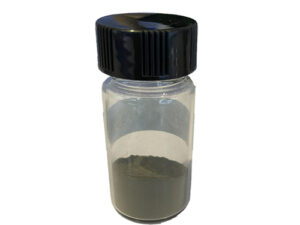
Form: Dark gray to black powder, granules, or sintered shapes
-
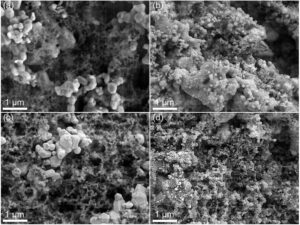
Particle size: Available from 0.5 µm (micron) to 5 mm, with narrow distribution control (d50 = 5 µm, 15 µm, 44 µm, etc.)
-
Density: True density ~2.52 g/cm³; tap density 0.8–1.2 g/cm³ (varies by particle size)
-
Hardness: Vickers hardness 3000–3500 HV (30–40 GPa)
-
-
Packaging options: 25 kg multi-wall paper bags with PE liner, 500 kg FIBC bulk bags, or steel drums with desiccant
-
Shelf life: 36 months when stored in dry, sealed conditions (≤70% relative humidity, 5–35°C)
3. Core Industrial Applications
-
Ballistic armor systems (defense & security): Used in body armor plates, vehicle armor, and helicopter crew seats. Advantage: 15–20% lighter than silicon carbide or alumina, enabling superior soldier mobility and fuel savings on platforms.
-
Abrasive blasting nozzles & wear parts (heavy manufacturing): Precision components for waterjet cutting, sandblasting, and slurry handling. Advantage: 5–10x longer service life than tungsten carbide in abrasive environments, reducing downtime and part replacement costs.
-
Nuclear radiation shielding (civil nuclear & research): Control rods, neutron absorbers, and shielding pellets. Advantage: Naturally high B¹⁰ cross-section (3,840 barns) for neutron capture—outperforms cadmium or hafnium on cost-per-absorption capacity.
-
Refractory additives & grinding powders (tooling): Bonded abrasives, lapping compounds, and sintering aids for polycrystalline diamond. Advantage: Maintains hardness at 1000°C+ without oxidation degradation common in other carbides.
4. Competitive Advantages
-
Quality consistency: ISO 9001:2025 certified production with 100% laser particle sizing and ICP purity verification; each batch includes a Certificate of Analysis (CoA).
-
Supply reliability: Dual-source raw material strategy (China, Europe) with 3,000 MT annual capacity; safety stock maintained at 500 MT across 3 regional warehouses.
-
Logistics capability: Door-to-door delivery via air freight (samples/urgent), sea freight (standard), or rail (bulk), with real-time tracking via digital logistics portal.
-
Price competitiveness: Tiered pricing for contract volumes (100 MT+/year) plus spot market flexibility; no premium for nuclear-grade packaging.
-
Sustainability: Zero-liquid-discharge manufacturing; 98% of boron carbide waste recycled into secondary abrasive products.
-
Technical support: Free application engineering consultation, sintering parameter recommendations, and on-site mixing trials for large buyers.
5. Commercial & Supply Information
-
Minimum Order Quantity (MOQ): 1 MT for standard industrial grade; 500 kg for high-purity/nuclear grade (sample orders available at 25 kg upon credit approval)
-
Bulk loading capacity:
-
20 ft container: 20 MT (FIBC or bagged)
-
40 ft container: 25 MT (optimized palletized packing)
-
Bulk vessel: 250 MT minimum (direct from production hub)
-


Reviews
There are no reviews yet.