
Description
-
Product Overview
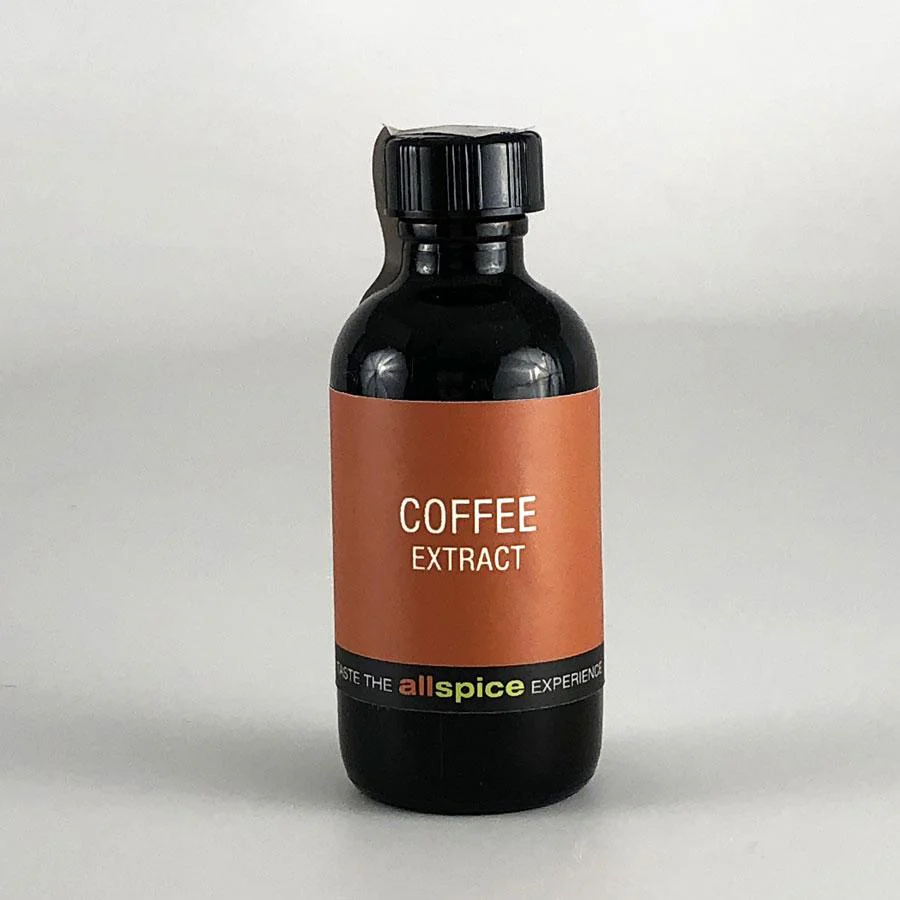
Coffee Extract is a concentrated, industrial-grade aqueous/solvent-derived extract of roasted coffee solids engineered for use as a flavoring, aroma precursor, and functional additive across food, beverage, pharmaceutical, and consumer goods manufacturing. Its primary industrial use is to deliver consistent coffee flavor and soluble coffee solids at scale while simplifying formulation, batching, and downstream processing. The key value proposition is a factory-ready, analytically characterized concentrate that reduces variability, shortens production cycles, and lowers total cost of formulation versus on-site roasting or single-origin whole-bean sourcing. Strategically, Coffee Extract enables predictable product positioning, regulatory traceability, and supply-chain consolidation for manufacturers seeking reproducible sensory profiles and production efficiencies across regional and global facilities. -
Key Specifications & Technical Characteristics
-
Chemical composition: Water-soluble coffee solids, volatile aroma fraction, caffeine, chlorogenic acids, lipids <1% (as emulsified fines), trace minerals; solvent-free (if water-extracted) or solvent-residue controlled to regulatory limits (if solvent-extracted).
-
Typical assay: Total soluble solids (TSS) 30–60% w/w (concentrated grades available at 65–75%); caffeine content specified per grade (e.g., 0.8–1.4% w/w) and available decaffeinated alternatives.
-
Purity / grade: Food-grade / FCC-compliant; industrial flavor grade with COA provided for each lot. Pharmaceutical-grade or USP-traceable variants available on request.
-
Physical form: Viscous liquid concentrate (amber to dark brown), homogeneous suspension; solids-stable powdered variants available (spray-dried extract) with carrier (maltodextrin) if required.
-
Particle / droplet characteristics (powder form): Median particle size 50–200 µm; bulk density 350–650 kg/m³ depending on carrier.
-
pH: Typically 4.5–6.5 (liquid concentrate), adjusted formulations available.
-
Water activity (powder): <0.6 (spray-dried variants) for shelf-stability.
-
Solubility: Fully water-soluble at typical formulation temperatures; dispersible in aqueous systems without phase separation; emulsion-compatible with standard emulsifiers.
-
Sensory profile: Controlled roast profile descriptors (mild, medium, dark), calibrated flavor wheel and aroma marker certificates included per lot.
-
Packaging options: 25 kg pails, 200 kg drums, 1,000 kg IBC totes, bulk ISO tank or flexitank shipments for liquid concentrate; 25 kg Kraft bags (with liners) or 600–1,000 kg totes for powders.
-
Shelf life: Liquid concentrate refrigerated (2–8 °C): 12 months unopened; ambient-stable formulations: 6–9 months depending on preservatives; spray-dried powder: 18–24 months under recommended storage.
-
Lot traceability: Batch number, roast profile, COA (microbiology, heavy metals, pesticide screening), and storage/handling instructions included.
-
Core Industrial Applications
-
Food & Beverage manufacturers: Direct addition to RTD beverages, dairy/plant-based creamer systems, bakery fillings, confectionery centers, ice creams, and powdered beverage mixes for reproducible coffee flavor without roasting infrastructure.
-
Nutraceuticals & Pharmaceuticals: Flavor masking in tablets, syrups, and oral suspensions; active marker control (caffeine dosing) with COA-backed content for label accuracy.
-
Consumer Goods & Personal Care: Fragrance accords in soaps, shampoos, and cosmetics where coffee aroma or antioxidant claims are required.
-
Ingredient blending and contract manufacturing: Enables co-manufacturers to scale flavor across SKUs while maintaining consistent sensory benchmarks.
Why it outperforms alternatives: -
Consistency: Controlled extraction and lot-level analytics eliminate variability inherent in whole-bean sourcing and on-site roasting.
-
Operational efficiency: Lowers capital and operating expenditure by removing the need for roasting, grinding, and extract processing in-house.
-
Cost advantage: Higher yield-per-kg of usable flavor solids and reduced waste versus infusions or domestic roast-and-grind processes.
-
Scalability: Readily integrable into continuous or batch production lines, simplifying dosing and ensuring uniform product quality.
-
Competitive Advantages
-
Quality consistency: Tight specification control, sensory calibration, and full COA for every shipment ensure predictable performance in finished goods.
-
Supply reliability: Established green-bean sourcing partnerships and multi-origin procurement options reduce single-origin disruption risk; scalable production capacity for large enterprise contracts.
-
Logistics capability: Multiple packaging formats and bulk shipping (IBC, flexitank, iso-tank) optimized for freight efficiency; export documentation and customs support for global distribution.
-
Price competitiveness: Volume-tier pricing, contract pricing options, and reduced TCO for buyers by eliminating in-house roasting and processing costs.
-
Sustainability benefits: Options for certified sustainable sourcing (e.g., Rainforest Alliance, UTZ, or equivalent), reduced CO2 and energy footprint versus on-site roasting, and traceable supply chains for ESG reporting.
-
Technical support & documentation: Technical data sheets, sensory descriptors, application guidelines, dosage matrices, stability study data, allergen statements, and on-request formulation support from application scientists.
-
Commercial & Supply Information
-
Minimum order quantity (MOQ): BULK 20MT.
-
Loading capacity (MT per container): Typical loading capacities — 20 ft container (bulk pallets/drums): up to 22–24 MT depending on packaging density; 40 ft container (drums/IBCs): up to 24–26 MT; ISO tank/flexitank: up to 24–26 MT for liquid concentrate depending on density and regional shipping regulations.
-
Lead times: Production lead times and shipping schedules available on contract; expedited options for established customers.
-
Documentation included: Commercial invoice, packing list, COA, MSDS/SDS, certificate of origin, and sustainability certificates where applicable.
Reviews
There are no reviews yet.