
Description
Product Overview
Encapsulated Flavors are industrial-grade flavor payloads where volatile aroma and taste compounds are microencapsulated within food-safe carrier matrices to protect stability, control release, and simplify handling in large-scale processing. Primarily used by food, beverage, nutraceutical, and feed manufacturers, they deliver consistent sensory profiles through thermal, mechanical, or shelf-life stresses. The key value proposition is reliable flavor retention with controlled release, reducing formulation variability, waste, and over-dosing while enabling streamlined dry- and wet-process integration. Strategically, encapsulated flavors de-risk product development, accelerate time-to-market for new SKUs, and lower total cost of ownership in high-volume manufacturing.
Key Specifications & Technical Characteristics
-
Chemical composition: Core flavor compounds (natural and/or nature-identical esters, aldehydes, ketones, terpenes) encapsulated in carriers such as maltodextrin, gum arabic, modified starch, cyclodextrin, hydrogenated vegetable oil, or protein matrices (soy, dairy) depending on formulation.
-
Functional additives: Anti-caking agents, flow aids, antioxidants (e.g., tocopherols), and moisture scavengers included as required.
-
Purity/grade: Food- or feed-grade (FCC/FG/Food Chemical Codex compliant); allergen declaration available per batch; GMP-compliant production.
-
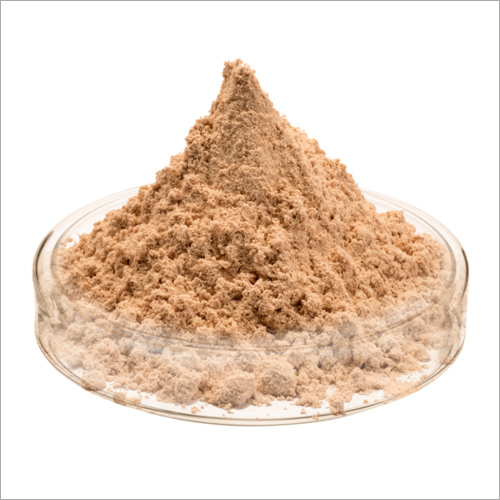
Physical form: Free-flowing powder or agglomerates; also available as pourable beads or spray-dried granules.
-
Color: Off-white to light tan (color can vary with carrier and flavor).
-
Particle size: Typical D50 between 50–350 µm (custom sieving available), bulk density 0.35–0.65 g/mL.
-
Moisture content: Typically < 6% (controlled to specification for stability).
-
Solubility / dispersibility: Rapid dispersion in water and easy incorporation into dry mixes; oil-release profiles tunable via carrier selection.
-
Thermal stability: Formulations available with heat-resistance up to 120–140°C for application in extrusion and baking; high-heat variants for specialized processes.
-
Release mechanism: Time-release, heat-triggered, shear-triggered, or pH-responsive options.
-
Packaging options: 25 kg kraft bags with PE liner, multi-wall paper sacks, FIBC (1,000 kg), and food-grade drums; vacuum or nitrogen-flushed options for extended life.
-
Shelf life: Standard 12–24 months under recommended storage (cool, dry, <25°C); extended-life variants up to 36 months with inert-gas packaging.
Core Industrial Applications
-
Food manufacturing: Confectionery, bakery, dairy analogues, snack seasonings, ready meals—used to preserve volatile notes through baking, frying, and long shelf storage.
-
Beverage and powdered drink mixes: Maintain aroma and mouthfeel during storage and reconstitution; reduce flavor loss in high-solids formulations.
-
Nutraceuticals & powdered supplements: Masking bitter actives and providing controlled flavor release to improve consumer acceptability.
-
Animal feed: Palatants for feed attractants, improving intake and feed conversion ratios in aquaculture and livestock.
-
Extrusion and snack processing: Withstand high shear and temperature in extruders while releasing flavor at the product surface for perceptible impact.
Why it outperforms alternatives -
Encapsulation prevents premature volatilization and oxidation, preserving target flavor profile through processing and storage.
-
Tunable release profiles ensure flavor is delivered at the desired process stage, improving sensory consistency and reducing rework.
-
Superior handling (dry, free-flowing forms) reduces dust, cross-contamination risk, and dosing variability versus liquid concentrates.
-
Cost-in-use advantages from reduced flavor overage and lower product returns due to sensory drift.
Competitive Advantages
-
Quality consistency: Batch-to-batch analytical QC with GC-MS headspace profiling, moisture control, and certificate of analysis (CoA) provided.
-
Supply reliability: Established production capacity with multi-site manufacturing and safety stock; options for contract manufacturing for large, recurring programs.
-
Logistics capability: Export-ready packaging, containerized bulk options, and supported customs documentation (HS codes, SDS, CoA); local warehousing available on request.
-
Price competitiveness: Scalable pricing tiers tied to volume and contract terms, optimized for large B2B procurement.
-
Sustainability: Carrier selection available from renewable, non-GMO, or sustainably sourced materials; low-waste spray-drying and solvent-free encapsulation methods offered.
-
Technical support: Formulation assistance, application trials, thermal and process compatibility testing, and regulatory support (labeling, allergen statements, country-specific conformity guidance).
Commercial & Supply Information
-
Minimum order quantity (MOQ): BULK 20MT
-
Loading capacity (MT per container): Up to 20 MT per 20-foot container (for FIBC/bulk-packed product), up to 22–24 MT per 20-foot container depending on packaging configuration and density.


Reviews
There are no reviews yet.