

Description
1. Product Overview
REE Electrolyte Residue is a secondary rare earth material generated as a by-product from rare earth molten salt electrolysis processes. Its primary industrial use is as a cost-effective feedstock for recovery and refining of high-value Rare Earth Elements including Neodymium, Praseodymium, Dysprosium, and Terbium. The key value proposition lies in delivering concentrated REE content at significantly reduced input costs versus primary oxides, enabling downstream processors to improve margin and raw material security. This material is strategically important in the market as global demand for magnet, catalyst, and EV motor supply chains intensifies, positioning secondary REE streams as critical to diversification and ESG-compliant sourcing.
2. Key Specifications & Technical Characteristics
- Chemical Composition: Mixed rare earth oxides, oxyfluorides, and chlorides. Typical TREO content 35%–55%. Major elements: Nd, Pr, Ce, La, Dy, Tb. Impurities: Fe, Ca, Al, Si, F, Cl. Full assay provided per lot.
- Purity Level / Grade: Industrial grade secondary feedstock. REE distribution varies by source bath; customized blending available to meet target input specs.
- Physical Characteristics:
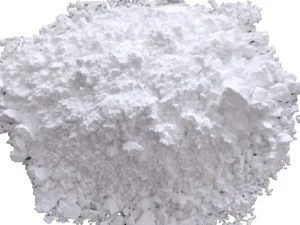
- Form: Agglomerated powder to friable lumps
- Color: Grey to brown
- Particle Size: 80% passing 10mm, fines <75μm 15%–30%
- Bulk Density: 1.8–2.4 g/cm³
- Moisture: ≤5% as packed
- Packaging Options: 1 MT jumbo bags with inner PE liner on pallets, 25 MT bulk in lined containers. Custom packaging available for long-term contracts.
- Shelf Life: Chemically stable under dry storage. Recommend use within 24 months to minimize hydration and caking.
3. Core Industrial Applications
- Primary Industries: Rare earth separation plants, hydrometallurgical processors, magnet alloy producers, catalyst manufacturers, and polishing powder producers.
- Specific Operational Use Cases: Feedstock for solvent extraction to recover individual REEs; raw material for mischmetal and NdFeB precursor production; blending agent to upgrade low-grade ion-adsorption clays; recycling loop input for closed-system magnet manufacturers.
- Performance Advantages: Higher TREO concentration than most mining tailings or phosphogypsum residues. Lower radioactivity profile versus monazite-based sources, simplifying handling and licensing. Existing chloride/fluoride matrix improves leach kinetics, reducing acid consumption by 12%–18% versus primary concentrates.
- Efficiency & Cost Advantages: Offers 25%–40% cost savings per kg TREO compared to virgin oxide equivalents. Enables buyers to hedge primary supply volatility and meet OEM requirements for recycled content in EV and wind supply chains.
4. Competitive Advantages
- Quality Consistency: Source-segregated lots with batch-wise XRF and ICP-MS certification. Controlled blending ensures ≤5% TREO variance across contract volumes.
- Supply Reliability: 300–500 MT monthly production capacity from captive electrolysis operations. 90-day rolling stock program available for strategic partners.
- Logistics Capability: Export experience to China, Japan, EU, and North America. Compliant UN-approved packaging, MSDS, and non-radioactive certification provided. FOB/CIF major ports.
- Price Competitiveness: Direct-from-producer pricing with no trader markup. Volume-tiered discounts and long-term index-linked contracts available.
- Sustainability Benefits: Classified as circular economy material. Utilizing this residue reduces primary mining impact, lowers CO₂ per kg REE by >60%, and supports Scope 3 reporting for end users.
- Technical Support: Dedicated metallurgical team for leachability testing, flow sheet adaptation, and impurity management. Full documentation: COA, TDS, MSDS, radiation certificate, and process origin traceability.
5. Commercial & Supply Information
- Minimum Order Quantity (MOQ) BULK: 20 MT
- Loading Capacity: 20–22 MT per 20′ FCL with jumbo bags. 25–27 MT per 20′ FCL for bulk direct load with liner.


Reviews
There are no reviews yet.