
Description
-
Product Overview
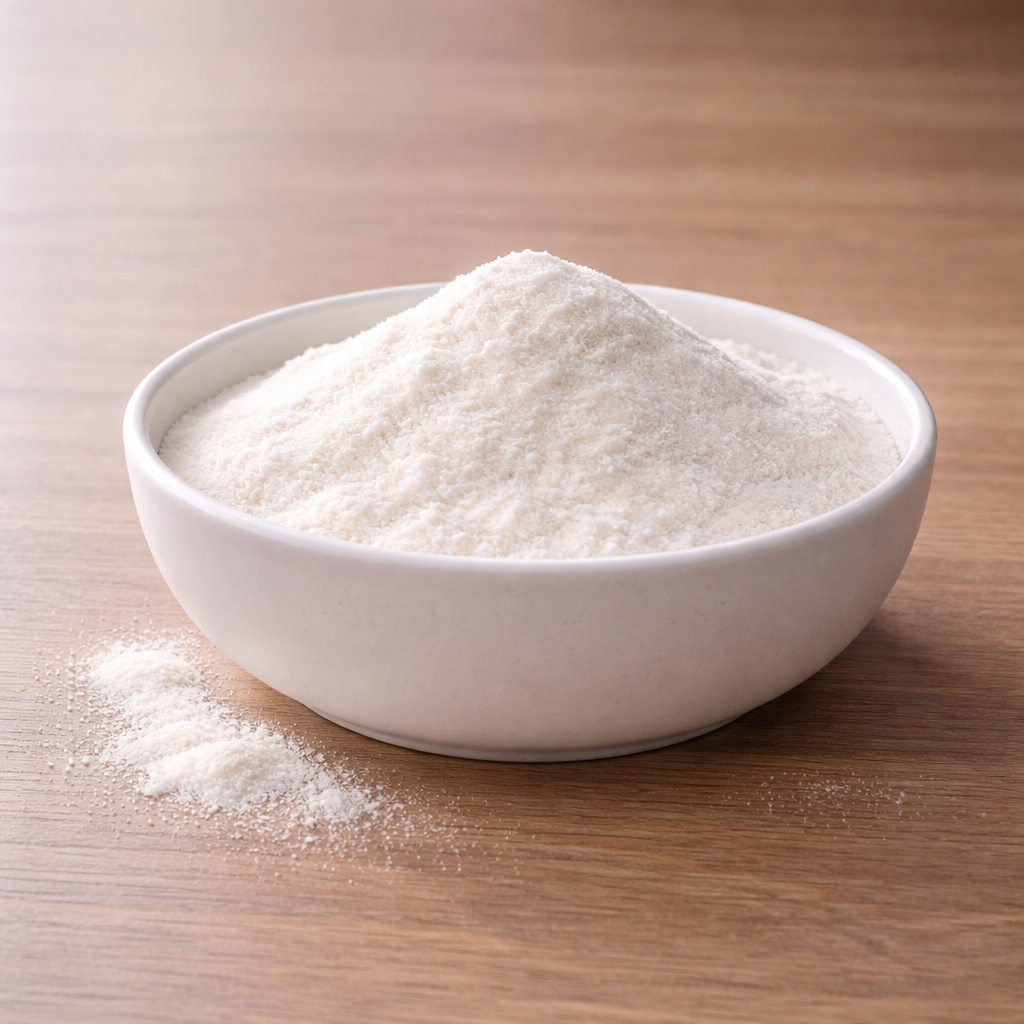
Dextrose Monohydrate is a high-purity crystalline carbohydrate (glucose·H2O) produced to industrial-grade specifications for use across food, pharmaceutical, fermentation, and chemical process applications. Its primary industrial use is as a fermentable sugar, osmotic agent, and formulation ingredient where predictable reducing-sugar performance and consistent physical properties are required. The key value proposition is stable, high-assay dextrose with low impurity and moisture profile that ensures reproducible process yields, reduced batch variability, and simplified quality control. Strategically, sourcing reliable dextrose monohydrate reduces production downtime, improves product traceability, and lowers total cost of ownership for large-scale processors and contract manufacturers.
-
Key Specifications & Technical Characteristics
-
Chemical composition: D-glucose monohydrate (C6H12O6·H2O).
-
Assay / Purity: Typical assay ≥ 99.5% (dry basis) or as specified to customer grade.
-
Reducing sugar content: Conforms to industrial pharmacopeial ranges on request.
-
Moisture content: Typically 17.5–18.5% (monohydrate basis); tight control per specification.
-
Physical form: Free-flowing crystalline powder / granules.
-
Color: White to off-white crystals.
-
Particle size: Standard 100–500 µm (custom sieving available on request).
-
Bulk density: Approx. 0.8–1.0 g/cm³ (tapped density varies by granulation).
-
Solubility: Highly soluble in water; predictable dissolution profile for process control.
-
pH (1% solution): Typically 4.0–6.5.
-
Typical impurities: Low ash, low sulfated ash; heavy metals and microbiological limits per industrial grade specifications.
-
Packaging options: 25 kg multi-ply paper bags with polyethylene liner; 500 kg and 1,000 kg FIBC/Big Bags; 20 MT bulk container loading (loose or palletized) for full container loads.
-
Shelf life: 24 months when stored in cool, dry conditions in original sealed packaging; storage conditions to prevent caking and moisture ingress.
-
Certifications & testing: Certificate of Analysis (CoA) supplied with each shipment; available GMP, ISO 9001 traceability documentation; regulatory support documents on request.
-
Core Industrial Applications
-
Fermentation & Biotechnology: Primary carbon source for industrial fermentations (ethanol, organic acids, enzymes, biopolymers). Predictable fermentability delivers higher yields and lower process variability versus mixed sugar feedstocks.
-
Food & Beverage Manufacturing: Sweetener, fermentation starter, preservative/osmotic agent in bakery, confectionery, dairy, and beverage processes; highly soluble and neutral-flavored for consistent formulations.
-
Pharmaceutical & Nutraceuticals: Excipient, tonicity agent, or flavoring carrier in syrups, injectables (where applicable to grade), and oral formulations; low impurity profile supports regulatory compliance.
-
Chemical Processes & Industrial Formulations: Feedstock for chemical syntheses, reduction reactions, and specialty resin or adhesive formulations where consistent reducing-sugar content matters.
-
Animal Feed & Aquaculture: Rapidly metabolizable carbohydrate source for starter feeds and conditioning formulas.
Why it outperforms alternatives: Consistent assay and controlled physical properties reduce downstream variability, lower filtration/clogging risks, and improve dissolution kinetics compared with syrup or mixed-sugar alternatives. Solid crystalline supply minimizes water-carriage logistics and microbial risk versus liquid sugars.
-
Competitive Advantages
-
Quality consistency: Tight in-house QC and batch-to-batch analytical alignment ensures uniform assay, moisture, and particle distribution.
-
Supply reliability: Integrated sourcing and contractual production volumes support continuous supply for large-scale industrial consumers; contingency inventory strategies reduce disruption risk.
-
Logistics capability: Flexible packaging (bag, FIBC, bulk) and optimized container loading for 20 MT bulk FCL shipments reduce per-unit transport costs and simplify warehouse handling.
-
Price competitiveness: Bulk pricing models and long-term contract terms deliver lower landed cost compared with spot purchases of specialty sugars.
-
Sustainability: Efficient crystallization processes and waste-minimization practices; packaging options available with recyclable or reduced-plastic liners. Sustainability documentation available on request.
-
Technical support: Full product specifications, CoA, handling and storage guidance, and application support from experienced technical team; custom particle-sizing and QC tolerances available for process integration.
-
Commercial & Supply Information
-
Minimum order quantity (MOQ): BULK 20 MT.
-
Loading capacity: 20 MT per 20-foot container (bulk loose or palletized loading); higher consolidated loads achievable with 40-foot containers where applicable.
-
Standard lead times: Subject to confirmation at order, with expedited production and shipping options for contract customers.
-
Documentation provided: Certificate of Analysis (CoA), Bill of Lading (BOL), commercial invoice, packing list, and regulatory/quality documentation on request.



Reviews
There are no reviews yet.