
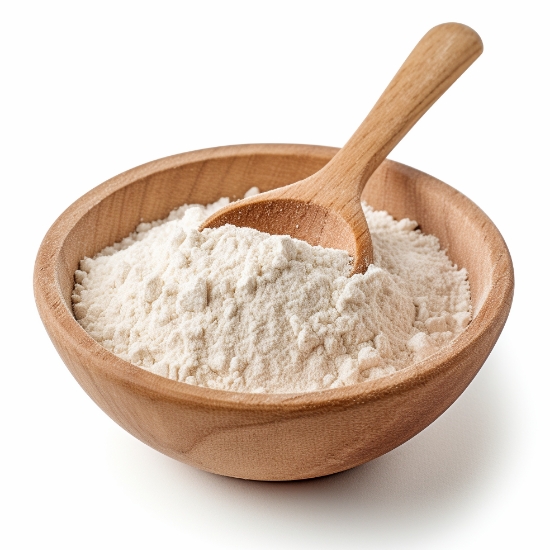
Description
-
Product Overview
High Acyl Gellan is a high-performance hydrocolloid polymer used as a gelling, stabilizing, and texture-control agent in demanding industrial formulations. Engineered for robust gel strength and thermal stability, it provides consistent rheology control across wide pH and temperature ranges. Its key value proposition is predictable, high-strength gel formation at low use levels, enabling formulation cost savings, reduced ingredient loads, and improved process robustness. Strategically, High Acyl Gellan addresses increasing industry demand for clean-label, heat-stable texturants that deliver reproducible performance at scale, reducing production variability and supporting tighter product specifications. -
Key Specifications & Technical Characteristics
-
Chemical composition: High Acyl Gellan Gum (polysaccharide produced by Sphingomonas spp.), predominantly high acyl fraction.
-
Functional groups: Acyl substituents (acetyl and glycerate) content consistent with high-acyl grade for elastic, non-brittle gels.
-
Purity / Grade: Industrial grade, typical purity ≥ 95% (dry basis); heavy metals and residuals tested to industrial specification limits.
-
Physical form: Fine powder / granular white to off-white powder, free-flowing.
-
Particle size: Typical D50 range 50–200 µm (custom milling available on request).
-
Bulk density: Typically 0.20–0.40 g/mL (packed density varies by lot).
-
Moisture content: Typically ≤ 12% (controlled to prevent caking).
-
Solubility & dispersion: Disperses in hot or cold water with appropriate hydration protocol; forms elastic gels on cooling in presence of mono/divalent cations.
-
Thermal stability: Retains gel structure up to specified process temperatures (application-dependent).
-
pH stability range: Functional across pH 3–10 for most formulations.
-
Microbiological quality: Standard industrial microbial limits; sterilization/aseptic processing available on request.
-
Packaging options: 25 kg multi-ply kraft bags with inner polyethylene liner, 500–1000 kg FIBCs (big bags), 20 MT bulk palletized shipments in lined containers; custom packaging per customer specification.
-
Shelf life: 24 months when stored in original sealed packaging, dry, cool (<25°C), away from direct sunlight and moisture.
-
Certification & documentation: Certificate of Analysis (CoA), Safety Data Sheet (SDS), technical data sheet (TDS) supplied with each shipment; additional compliance documentation (e.g., non-GMO statements, allergen declarations) available on request.
-
Core Industrial Applications
-
Food & Beverage: Used for texturizing, stabilizing, and suspending in confectionery gels, dairy analogues, fruit preparations, and low-sugar/jellied products. Advantage: stronger, elastic gels at low dosage compared with many polysaccharides, improving yield and reducing caloric and ingredient costs.
-
Pharmaceutical & Nutraceutical: Employed in controlled-release matrices, viscous suspensions, and oral-care formulations where clean-label, predictable rheology and thermal resilience are required. Advantage: consistent API release profiles and formulation stability.
-
Personal Care & Cosmetics: Provides stable gel networks in creams, serums, and gels, enhancing sensory properties and preventing phase separation. Advantage: superior mouthfeel/skin feel and compatibility with a broad pH range.
-
Industrial & Technical (adhesives, coatings, ceramics): Acts as a rheology modifier and binder where elastic gelation and processing stability are needed. Advantage: improves process control, reduces syneresis, and enhances end-product mechanical properties.
Why it outperforms alternatives: -
Low use-level efficacy: Achieves required texture and stability at lower concentrations than many competing hydrocolloids, lowering formulation cost.
-
Thermal and ionic resilience: Maintains functional properties across thermal cycles and in presence of various ions, reducing batch failures.
-
Reproducibility: Tight specification control yields lower production variability and fewer rejected batches.
-
Competitive Advantages
-
Quality consistency: Tight in-house QC and third-party testing ensure batch-to-batch uniformity on key parameters (viscosity, acyl content, moisture).
-
Supply reliability: Strategically managed supply chain with safety stocks and contract manufacturing options to secure continuous supply for large-scale operations.
-
Logistics capability: Flexible packaging and consolidated bulk shipments support cost-efficient global distribution; loading and containerization assistance provided.
-
Price competitiveness: Low dosage requirement combined with competitive FOB/CIF pricing structures delivers lower total formulation cost per unit.
-
Sustainability benefits: Manufactured via controlled fermentation; options for responsibly sourced raw materials and reduced-waste packaging available to support corporate sustainability goals.
-
Technical support: Comprehensive technical documentation (CoA, SDS, TDS), formulation support from experienced application scientists, on-request trial samples, and scale-up assistance for process integration.
-
Commercial & Supply Information
-
Minimum order quantity (MOQ): BULK 20 MT.
-
Loading capacity (MT per container): Typical sea freight loading capacity 20 MT per 20-foot container (lined bulk or palletized bags); up to 22–24 MT possible for high-density packing in 20-ft containers depending on packaging configuration and destination port regulations.

Reviews
There are no reviews yet.