

Description
-
Product Overview
Konjac Gum (glucomannan) is a high-viscosity, water-soluble polysaccharide derived from the tubers of Amorphophallus konjac. Engineered for industrial-scale formulation, it functions as a premium thickener, emulsifier, stabilizer, and film-forming agent across food, pharmaceutical, personal care, and specialty chemical applications. Its chief value proposition is delivering high functional performance at low use-levels—providing strong rheology control, clean-label formulation compatibility, and cost-in-use reductions versus conventional hydrocolloids. Strategically, Konjac Gum enables manufacturers to meet tightening regulatory, sustainability, and performance requirements while improving yield, shelf stability, and sensory profiles in finished products. -
Key Specifications & Technical Characteristics
-
Chemical composition: Predominantly glucomannan (linear β-1,4-linked D-mannose and D-glucose) with trace amounts of protein and ash.
-
Typical purity / grade: Food/Pharma-grade specification available; typical glucomannan content ≥ 85–95% (grade-dependent).
-
Molecular weight: High molecular weight polysaccharide, typically in the range of 200,000–2,000,000 Da (batch dependent).
-
Viscosity (solution): High-viscosity behavior; e.g., 1% aqueous solution viscosity ranges vary by grade—spec sheets provided on request.
-
pH stability: Functional across pH 3–10; performance optimized when neutral to mild alkaline for certain applications.
-
Solubility & hydration: Rapid hydration in cold or warm water with appropriate dispersion; requires shear for uniform dispersion in some formulations.
-
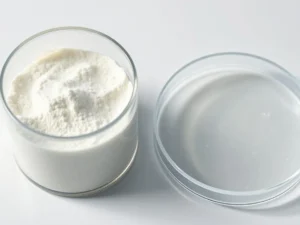
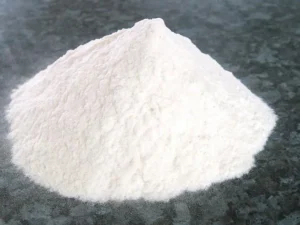
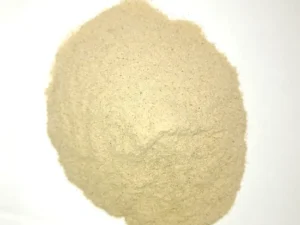
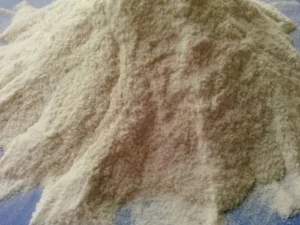
Physical form: Powder (granulated or milled), off-white to cream color.
-
Particle size: Typical D50 range 50–250 µm (custom milling available on request).
-
Bulk density: Approximately 0.25–0.45 g/mL (grade and compaction dependent).
-
Moisture content: Typically <10% (controlled to prevent caking).
-
Ash content: Low, grade-dependent (spec sheet).
-
Microbial limits: Manufactured under hygienic conditions; certificate of analysis includes aerobic plate count, yeast & mold, E. coli, Salmonella (food/pharma grades meet regulatory thresholds).
-
Packaging options: 25 kg multi-wall kraft paper bags with polyethylene liner; 500 kg / 1,000 kg FIBC (big bags); bulk tanker or bulk flexible containers for large loads.
-
Shelf life: 24 months when stored in a cool, dry place in original sealed packaging; shorter shelf-life specifications available for hygroscopic-sensitive formulations.
-
Certifications available: ISO, Kosher, Halal, GMP, and third-party audit documentation on request.
-
Core Industrial Applications
-
Food & Beverage: Low-use-level thickening and texturizing in sauces, dressings, dairy analogues, gluten-free bakery, noodles, and gelling desserts. Provides superior mouthfeel and synergies with xanthan or carrageenan for clean-label formulations.
-
Pharmaceuticals & Nutraceuticals: Excipient for controlled-release matrix tablets, high-solubility dietary fiber supplements, and capsule formulations where high viscosity and film-forming properties aid dissolution profiles.
-
Personal Care & Cosmetics: Stabilizer and rheology modifier in creams, lotions, shampoos, and gels; enhances sensory profile while enabling low-surfactant, mild formulations.
-
Industrial & Specialty Chemicals: Thickener in aqueous systems, binder in ceramics and adhesives, and film former in specialty coatings and packaging adhesives.
-
Agriculture & Seed Coatings: Carrier and film-former for seed treatments and controlled-release agrochemical matrices.
Why it outperforms alternatives: -
Efficiency: Extremely high water-holding capacity and viscosity per gram versus many hydrocolloids, lowering use-level and material cost.
-
Functional synergy: Combinable with xanthan, carrageenan, and starches to achieve tailored rheology and improved freeze-thaw stability.
-
Clean-label and regulatory advantages: Plant-derived, non-GMO sourcing options, and compatibility with stringent food and pharma regulations.
-
Competitive Advantages
-
Quality consistency: Tight in-house QC and batch release testing ensure reproducible molecular weight, viscosity, and microbial profiles across production lots.
-
Supply reliability: Secured upstream sourcing with multi-origin procurement and safety stock planning to support continuous production and large-scale contracts.
-
Logistics capability: Flexible packaging (bag, FIBC, bulk) with coordinated container scheduling and export documentation for expedited global shipping from major ports.
-
Price competitiveness: Low effective cost-in-use due to high functional potency; volume pricing and long-term contract discounts available.
-
Sustainability: Plant-based, low-carbon-profile supply chain options; traceability programs and potential for responsibly sourced certifications.
-
Technical support: Comprehensive technical datasheets, formulation guides, stability testing support, and application development assistance from experienced technical service teams. Documentation packages (COA, SDS, regulatory declarations) provided with shipments.
-
Commercial & Supply Information
-
Minimum order quantity (MOQ): BULK 20 MT.
-
Loading capacity (MT per container): Standard 20 ft container up to approximately 20–22 MT (bagged/FIBC, palletized); 40 ft container up to approximately 24–26 MT depending on packaging configuration and local loading practices.
-
Lead times: Typical lead time 2–6 weeks depending on order size, certification needs, and destination; expedited production and shipping options available.
-
Payment and logistics: Standard commercial payment terms negotiable; export-ready documentation and incoterms (FOB, CIF, DDP) available per agreement.
Reviews
There are no reviews yet.