
Description
-
Product Overview
The Compressed Air Receiver Tank is a heavy‑duty pressure vessel designed to store and stabilize compressed air for industrial systems. Used as a buffer and surge absorber in production facilities, it evens pressure fluctuations, improves compressor efficiency, and provides reserve capacity for peak demand. Its key value proposition is reduced compressor cycling, lower energy consumption, and improved system reliability—delivering measurable uptime and maintenance savings. Strategically, the tank is central to optimized plant air systems across manufacturing, processing, and utilities where consistent, clean, and cost‑effective compressed air is a core utility. -
Key Specifications & Technical Characteristics
-
Material construction: Carbon steel (SA516 Grade 70) or optional stainless steel (304 or 316) for corrosive environments.
-
Coating/finish: Internal sandblasted, epoxy primer with corrosion‑resistant topcoat; external primer and industrial enamel; optional galvanization.
-
Design code: ASME Section VIII Division 1 (or PED/EN 13445 on request) with stamped pressure rating.
-
Working pressure: Standard 10 bar (150 psi); options from 6 bar up to 25 bar available.
-
Test pressure: 1.3× working pressure hydrostatic test performed per code.
-
Volume capacities: Common sizes 250 L to 20,000 L (custom sizes available).
-
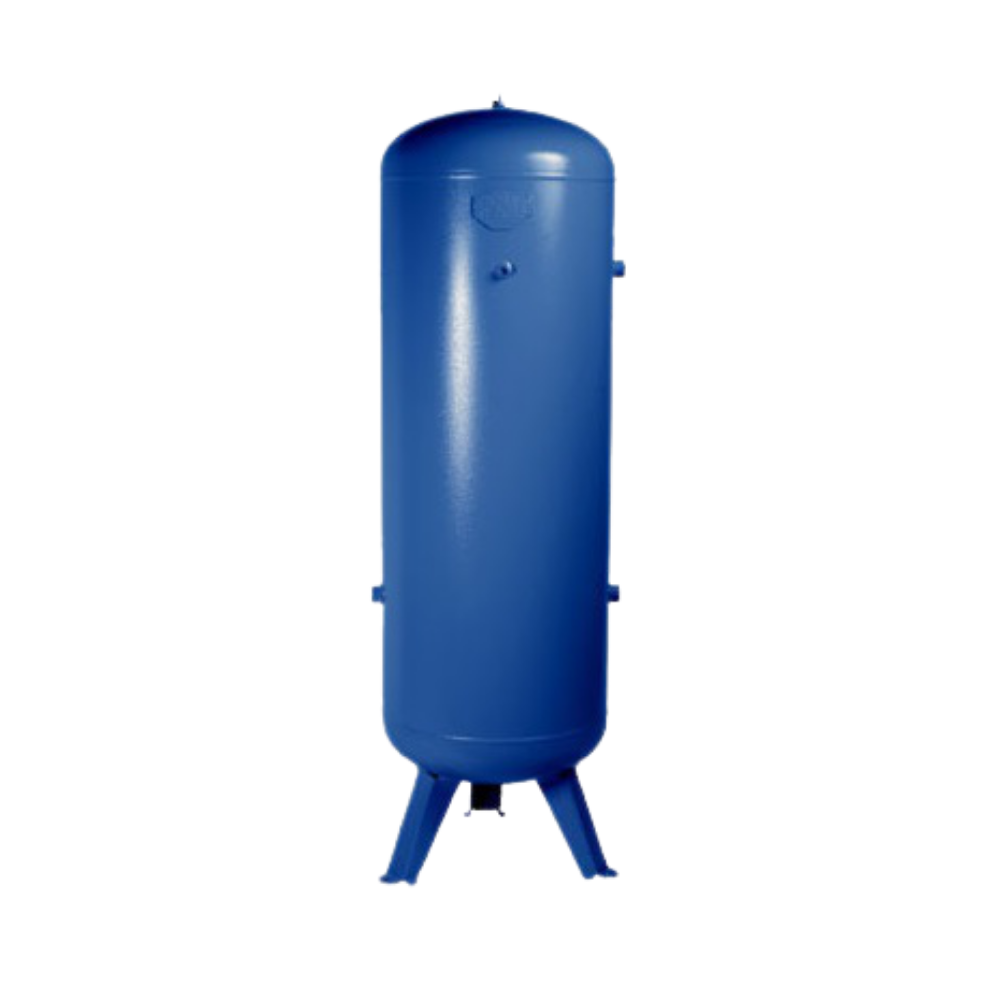
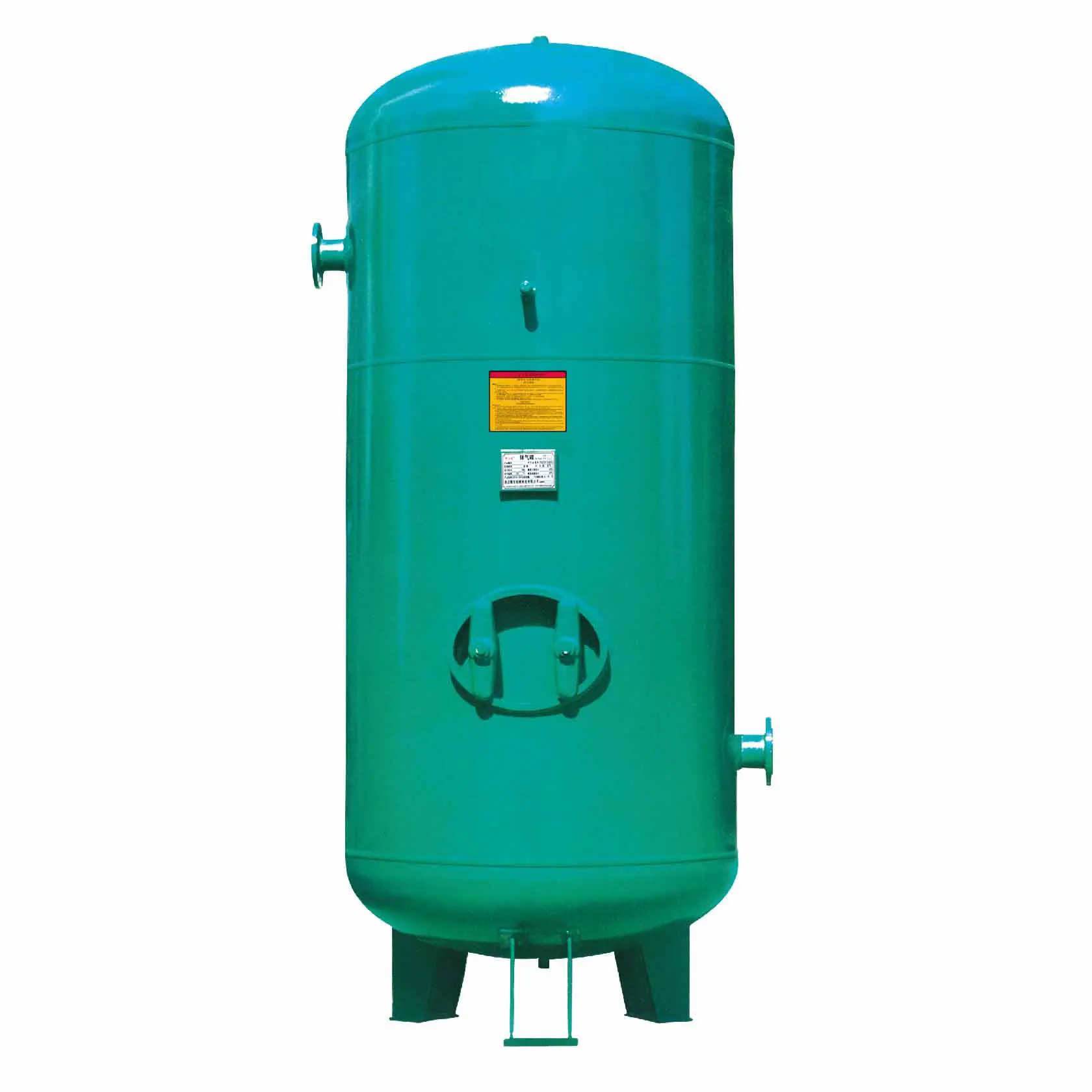
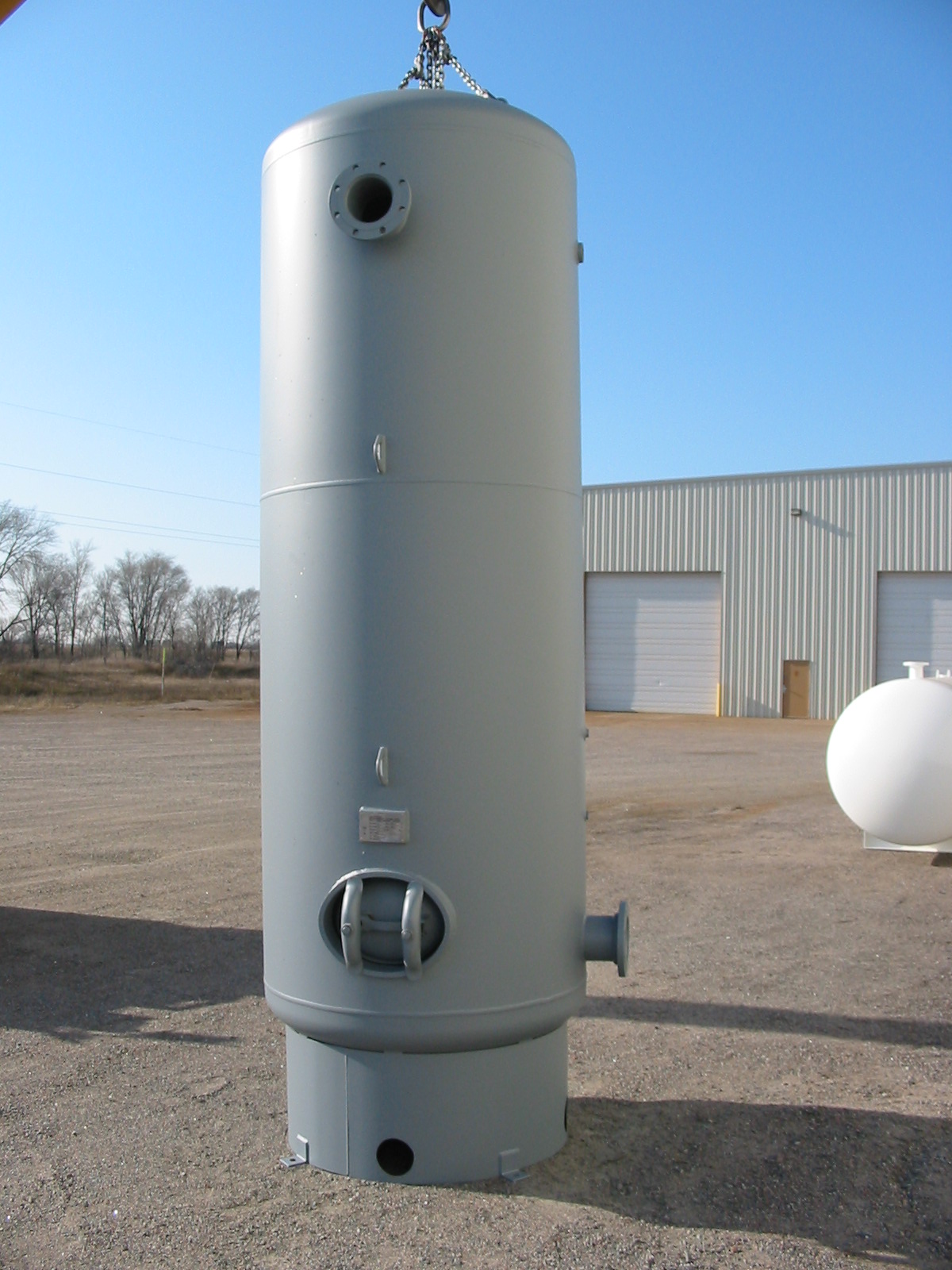
Physical form and features: Horizontal or vertical cylindrical shell with dished ends; welded nozzles for inlet/outlet, drain, pressure gauge, safety valve, and service manway on larger units.
-
Corrosion allowance and wall thickness: Specified per design pressure and code, typically 6–25 mm depending on size and rating.
-
Surface area treatments: Internal epoxy lining option for condensate resistance; external cladding or insulation jacket available.
-
Connections: Standard flanged (ANSI/PN/DIN) or welded connections; custom nozzle sizes on request.
-
Accessories: Pressure gauges, safety relief valves, drain traps, water level indicators, vibration isolators, mounting saddles or skirt bases.
-
Packaging options: Shrink‑wrapped and crated for export, sea‑fastened for container or breakbulk shipment, pigmented corrosion protection for long storage.
-
Shelf life/storage: Not applicable as a static vessel; recommended indoor dry storage and periodic coating inspection if held in inventory.
-
Core Industrial Applications
-
Manufacturing & Assembly Plants: Stabilizes air supply for pneumatic tools, actuators, and robotic systems, reducing downtime from pressure collapse during peak cycles.
-
Petrochemical & Refining: Provides surge protection and moisture separation for instrument and utility air, enhancing process control reliability.
-
Food & Beverage: When specified with stainless steel and hygienic finishes, used for packaging, pneumatic conveying, and CIP systems where contamination control is critical.
-
Mining & Construction: Serves as mobile or fixed buffer for high‑demand pneumatic equipment, improving compressor life in harsh duty cycles.
-
Power Generation & Utilities: Ensures reliable instrument and starting air, smoothing demand spikes and protecting critical systems.
Why it outperforms alternatives: engineered to code with optimized volume-to-pressure ratios, robust materials and protective coatings that extend service life, and customizable nozzles and accessories that reduce field retrofits. Lower compressor cycling translates into energy savings and reduced maintenance spend, making total cost of ownership lower than undersized or non‑certified tanks.
-
Competitive Advantages
-
Quality consistency: Manufactured to certified codes (ASME/PED) with documented material traceability and NDT reports.
-
Supply reliability: Standard sizes stocked regionally with scalable lead times for custom builds; capacity for batch production and expedited orders.
-
Logistics capability: Designed for efficient container loading; supplied sea‑fastened or container‑compatible to minimize freight risk and handling.
-
Price competitiveness: Multiple material and finish options allow tailored capital vs lifetime‑cost choices; volume pricing for bulk buyers.
-
Sustainability: Durable design reduces replacement frequency; optional recyclable coatings and stainless configurations extend lifecycle and reduce waste.
-
Technical support: Detailed datasheets, certified test reports, installation guides, and engineering support for sizing and integration; field service and spare parts available.
-
Commercial & Supply Information
-
Minimum order quantity (MOQ): BULK 20MT
-
Loading capacity (MT per container): Variable by tank size and orientation; typical loading examples:
-
20 ft container: up to ~12–14 MT of small/medium tanks (packaged), depending on dimensions.
-
40 ft HC container: up to ~24–26 MT of small/medium tanks (packaged), depending on dimensions.
Final loading capacity is client‑specific and depends on selected tank sizes, packaging, and internal lashing requirements; provide required dimensions and preferred shipping method for precise container load planning.
-
Reviews
There are no reviews yet.