
Description
-
Product Overview
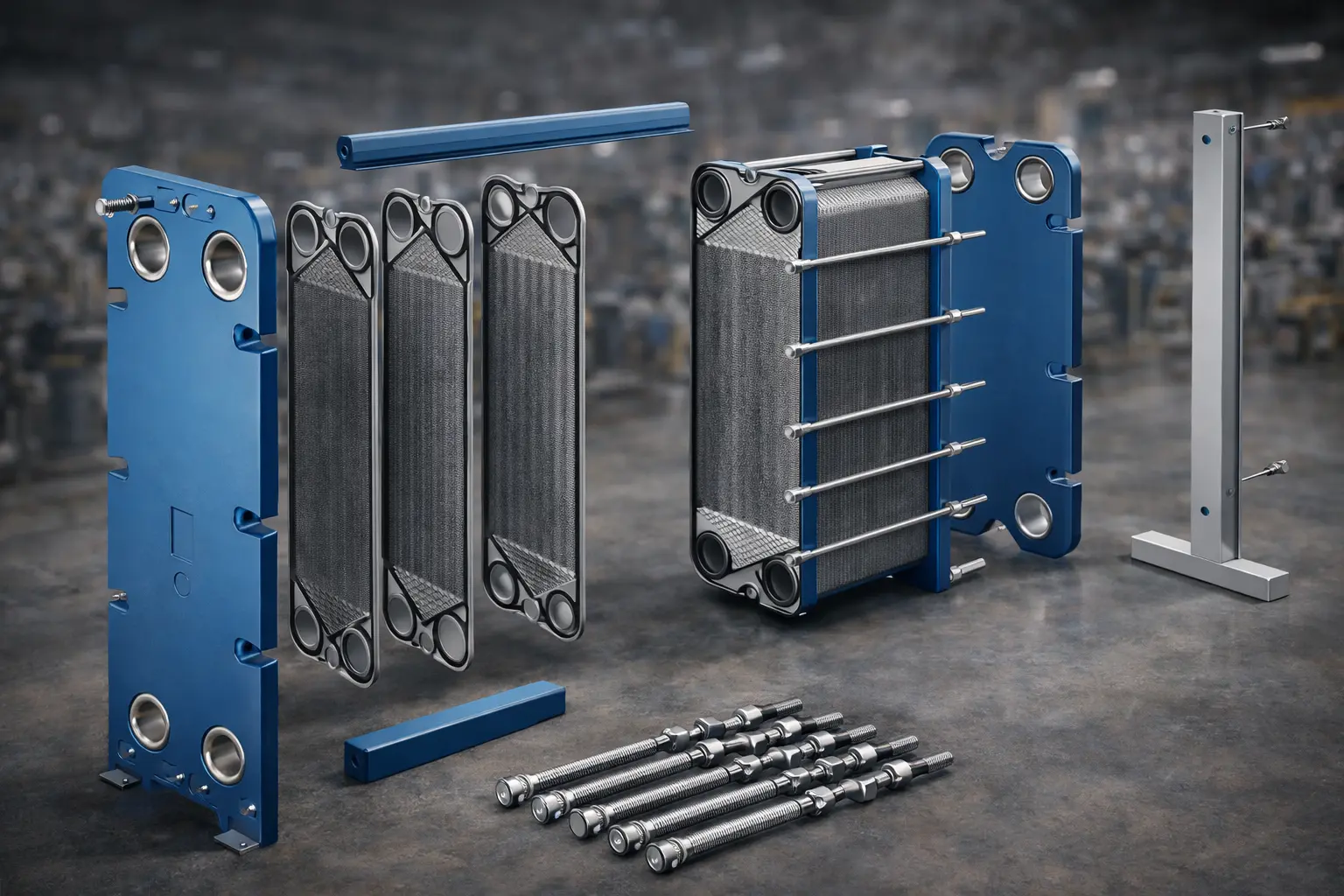
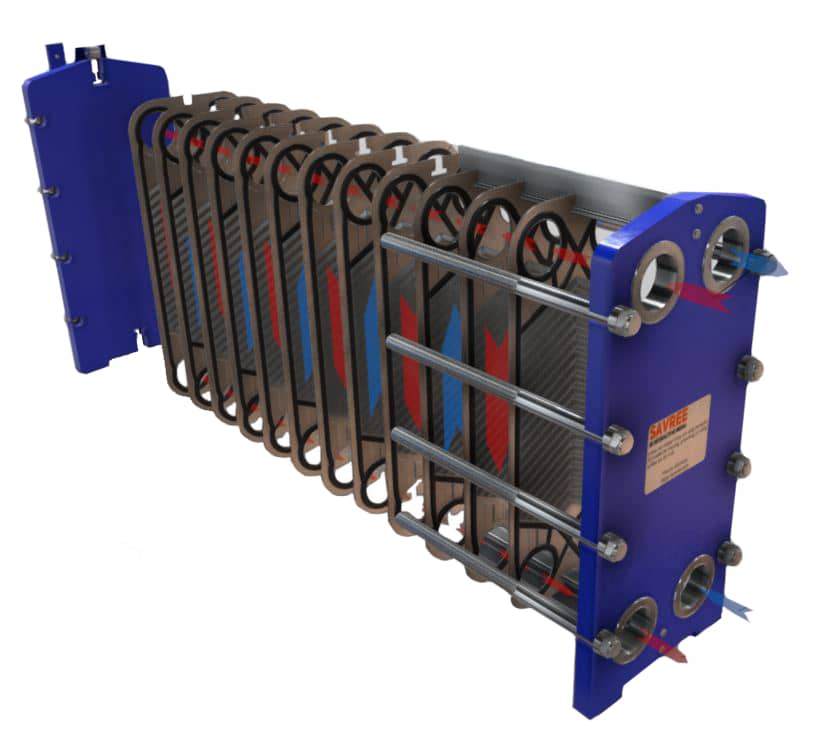
A plate heat exchanger is a compact, high-efficiency heat-transfer device that uses a series of corrugated metal plates to transfer thermal energy between two fluid streams without mixing them. It is primarily used in industrial processes for heating, cooling, condensation and recuperation across sectors such as chemical processing, oil & gas, HVAC, food & beverage, and power generation. The key value proposition is superior thermal performance per unit footprint—delivering high heat-transfer coefficients, low fouling rates, and easy maintenance—thereby reducing energy use, process downtime, and installed capital compared with shell-and-tube alternatives. Strategically, plate heat exchangers enable tighter process control, smaller plant layouts, and lower lifecycle costs, making them a preferred choice for enterprises seeking operational efficiency and scalable thermal solutions.
-
Key Specifications & Technical Characteristics
-
Construction material: Stainless steel (SS304 or SS316), titanium, duplex stainless, or nickel alloys (specify on order).
-
Plate material thickness: Typical range 0.4–1.2 mm depending on alloy and duty.
-
Gasket options: EPDM, NBR, Viton (FKM) or metal-brazed (no-gasket) variants for high-temperature or aggressive chemistries.
-
Plate design: Chevron corrugation with variable chevron angles for optimized turbulence and pressure drop.
-
Thermal performance: Heat transfer coefficient range typically 1,500–8,000 W/m²·K depending on duty and plate geometry.
-
Maximum operating pressure: Up to 25 bar for gasketed units; higher for brazed or welded designs (consult specification).
-
Maximum operating temperature: Up to 180°C for gasketed (gasket-dependent); up to 700°C for welded/brazed or exotic alloys (application dependent).
-
Flow arrangement: Counter-current or cross-flow configurations; single-pass or multipass options.
-
Hydraulic characteristics: Low hold-up volume, optimized for rapid response and minimal contamination risk.
-
Surface finish and tolerances: Industrial finish to ISO-compliant flatness; custom surface treatments available (passivation, electro-polish).
-
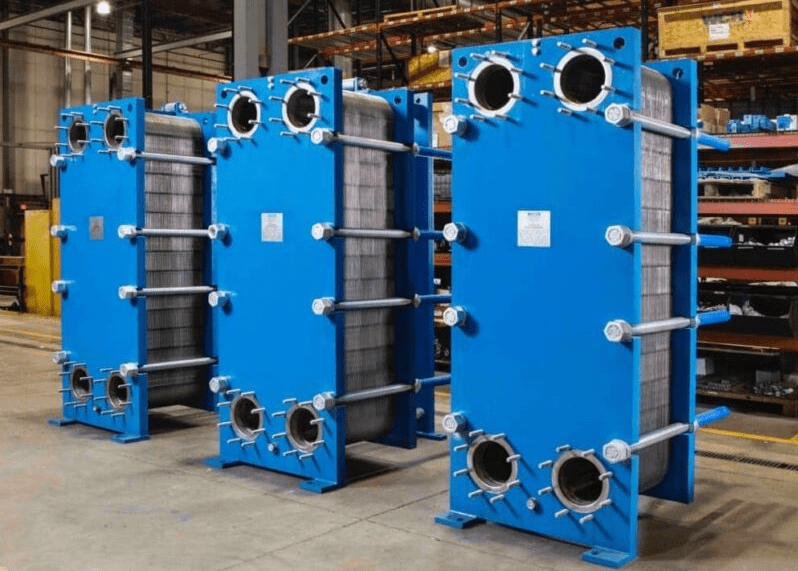
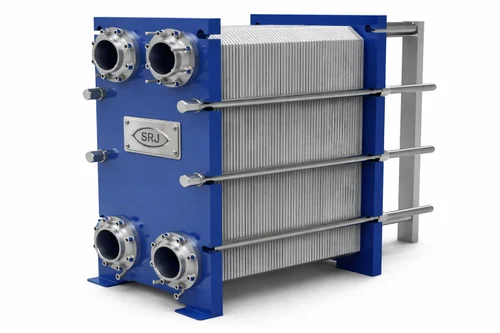
Physical form & dimensions: Modular plate packs with frame; footprint and weight vary by capacity and configuration—custom layouts available.
-
Connection types: Flanged, threaded, victaulic, or hygienic tri-clamp fittings depending on industry standards.
-
Packaging options: Crate and palletized export packaging; protective anti-corrosion coating for sea transport; bespoke packaging for cleanroom/hygienic supplies.
-
Documentation: Includes material certificates (MTC), pressure test certificates, dimensional drawings, and operating/maintenance manual.
-
Shelf life / storage: Not applicable for metallic equipment beyond standard corrosion-avoidance storage recommendations; recommend dry, covered storage and periodic inspection for long-term warehousing.
-
Core Industrial Applications
-
Chemical processing: Heat recovery between process streams, reactor heating/cooling, and condensation duties. Plate exchangers deliver high thermal efficiency in corrosive or multi-stream applications by using alloy selection and gasket compatibility.
-
Oil & gas & petrochemicals: Crude pre-heat, lube oil cooling, and gas condensers where compactness and high performance reduce plot space and improve heat integration.
-
HVAC & district heating: Efficient energy transfer for heat pumps, chillers, and district substations; reduced refrigerant charge and fast response time improve system economics.
-
Food & beverage & dairy: Pasteurization, sterilization, and CIP-compatible heating/cooling with hygienic gasket and surface finish options that simplify cleaning and reduce contamination risk.
-
Power generation & marine: Waste heat recovery and cooling circuits where high thermal duty in constrained spaces is required; brazed or welded constructions offer reliability under vibration and transient loads.
Why it performs better: The plate geometry creates high turbulence at relatively low flow rates, increasing heat-transfer coefficients and reducing required surface area. Modular construction allows capacity scaling and straightforward maintenance (plate inspection, replacement, gasket change) that lowers lifecycle downtime and cost compared with fixed shell-and-tube systems.
-
Competitive Advantages
-
Quality consistency: Manufactured to ISO and industry-standard tolerances with full traceability and material certification.
-
Supply reliability: Standard modular designs for rapid lead-time; capacity to support large volume orders through established production and supply-chain partners.
-
Logistics capability: Export-ready packaging, sea/air freight coordination, and local partner networks for delivery to major industrial hubs.
-
Price competitiveness: Lower installed cost per kW of thermal transfer due to compact footprint and higher efficiency; competitive unit pricing for BULK procurements.
-
Sustainability: Enables energy recovery and reduced fuel/electricity consumption; recyclable materials and options for lower-footprint transport packaging.
-
Technical support: Detailed engineering sizing, selection assistance, P&ID integration drawings, start-up guidance, and maintenance documentation available; aftermarket spare plates and gasket kits supplied.
Positioning: Buying this plate heat exchanger is a strategic sourcing decision that improves plant energy intensity, reduces CAPEX and OPEX over lifecycle, and de-risks process scaling.
-
Commercial & Supply Information
-
Minimum order quantity (MOQ): BULK 20MT.
-
Loading capacity (MT per container): Dependent on unit size and packing configuration; typical export loading estimates: 20-foot container up to 20–24 MT (packed), 40-foot container up to 24–28 MT (packed). Final loading figures provided per order after configuration and packaging review.
Reviews
There are no reviews yet.