
Description
1. Product Overview
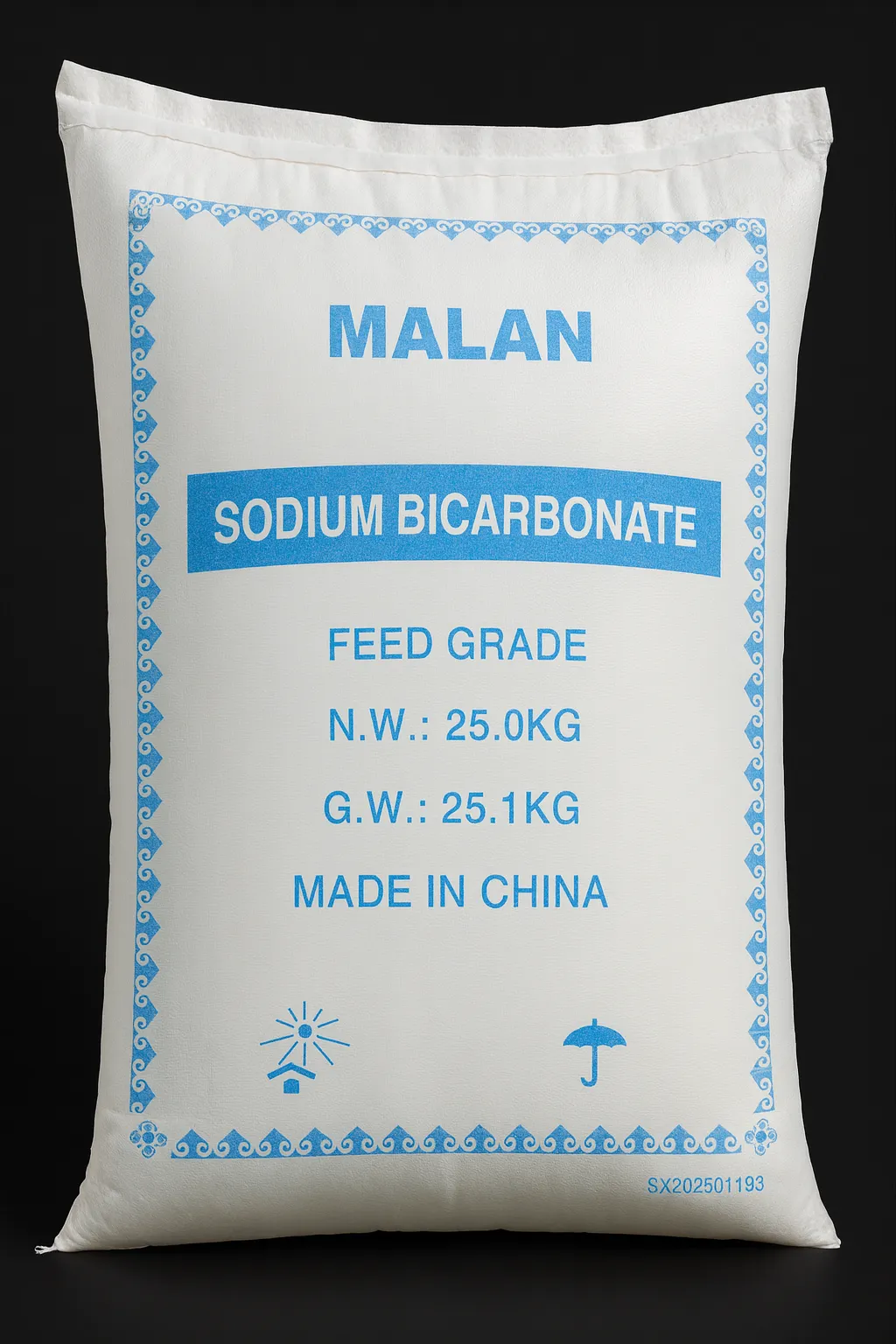
Sodium Bicarbonate (Feed Grade) is a high-purity, inorganic buffering agent specifically manufactured to optimize digestive health and performance in livestock and poultry. Its primary industrial use is as a dietary feed additive to regulate rumen pH in ruminants and improve electrolyte balance in monogastric animals. The key value proposition is a measurable reduction in metabolic disorders (such as subacute ruminal acidosis) and a clear improvement in feed conversion ratios (FCR) and weight gain. In an era of margin-driven animal production, this product is strategically critical for large-scale operators seeking to maximize output per ton of feed while reducing veterinary interventions.
2. Key Specifications & Technical Characteristics
-
Chemical Composition: Sodium Hydrogen Carbonate (NaHCO₃)
-
Purity Level: ≥ 99.0% (Feed Grade, compliant with international standards such as EU 68/2010 & FDA 582.1741)
-
Physical Characteristics:
-
Form: Fine, free-flowing crystalline powder
-
Color: White
-
Particle Size: 100% passing through 200-micron mesh (typical range: 100–300 µm)
-
Bulk Density: 0.90 – 1.05 g/cm³
-
-
Packaging Options: 25 kg multi-wall kraft paper bags (palletized & shrink-wrapped), 1 MT jumbo bags, or pneumatic tanker delivery for bulk silos
-
Shelf Life: 24 months when stored in dry, cool conditions (< 40°C / < 75% RH) away from acidic materials
3. Core Industrial Applications
-
Dairy & Beef Ruminants: Direct addition to total mixed ration (TMR) at 0.5%–1.5% of dry matter intake. Performs better than mineral buffers due to its rapid dissolution rate, providing immediate rumen pH stabilization after grain-heavy feeding.
-
Swine Production: Used as a sodium source and buffering agent for lactating sows (prevents constipation and improves milk fat content) and weaned piglets (reduces post-weaning diarrhea).
-
Poultry (Broilers & Layers): Added to drinking water or feed to increase blood bicarbonate levels, improving eggshell thickness (layers) and reducing heat stress mortality (broilers). Cost advantage: replaces more expensive alkalizers with identical efficacy.
-
Aquafeed: Buffers intensive recirculating aquaculture systems (RAS) and improves osmoregulation in shrimp and tilapia, yielding a 8–12% survival advantage over untreated systems.
4. Competitive Advantages
-
Quality Consistency: Produced via the Solvay process with ISO 22000:2018 certification; batch-to-batch purity variation < 0.2%, verified by third-party SGS inspection.
-
Supply Reliability: Backed by dedicated mining and synthesis capacity, enabling 24/7 dispatch with average lead times of 7 days for container loads and 14 days for bulk vessels.
-
Logistics Capability: Dual-warehousing in key export hubs (Rotterdam, Houston, Singapore); ability to ship break-bulk, 20’/40’ containers, or Flexitanks (for liquid suspension applications).
-
Price Competitiveness: Direct mill pricing – no distributor markup – with price lock options for quarterly contracts above 500 MT.
-
Environmental & Documentation: Full chain-of-custody documentation; REACH and IANA/GMP+ certified; zero heavy metal contamination (Pb < 1 ppm, As < 1 ppm). Full CoA and MSDS provided digitally within 4 hours of order placement.
5. Commercial & Supply Information
-
Minimum Order Quantity (MOQ): BULK 20 metric tons (equivalent to one standard 20’ dry container)
-
Loading Capacity:
-
20’ FCL: 25 MT (max payload)
-
40’ FCL: 25–27 MT (depending on palletization)
-
Bulk vessel (break-bulk): 500–50,000 MT
-


Reviews
There are no reviews yet.