

Description
1. Product Overview
Ruthenium acetylacetonate (Ru(acac)₃) is a high-purity organometallic precursor essential for chemical vapor deposition (CVD) and atomic layer deposition (ALD) of ruthenium-based thin films. Its primary industrial use lies in semiconductor manufacturing, advanced microelectronics, and industrial catalysis, where precise, uniform metal deposition is critical. The key value proposition is exceptional thermal stability, consistent volatilization, and minimal carbon contamination, enabling sub-5nm film uniformity. Strategically, this product is indispensable as the global semiconductor industry scales toward 2nm nodes and beyond, where ruthenium serves as a viable alternative to copper for interconnects and electrode materials.
2. Key Specifications & Technical Characteristics
-
Chemical composition: Ruthenium(III) acetylacetonate, Ru(C₅H₇O₂)₃
-
Purity grade: ≥99.9% (trace metals basis), with custom 99.99% (4N) available
-
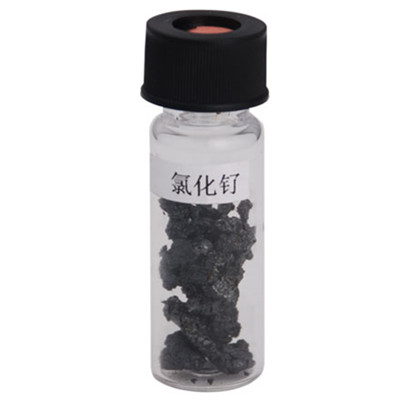
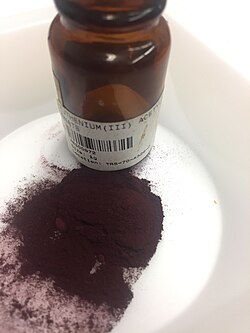
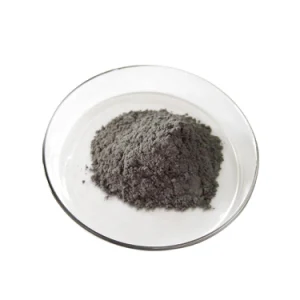
Physical form: Dark brown to black crystalline powder
-
Particle size: 100–400 µm (sinter-free, free-flowing)
-
Melting point: 260–265°C (decomposes without residue)
-
Vapor pressure: Suitable for low-temperature CVD (sublimes at 200–230°C / 0.1–1.0 Torr)
-
Packaging options: Hermetic 1g, 5g, 25g under inert gas; bulk stainless-steel ampoules (100g, 500g) with purge ports
-
Shelf life: 24 months when stored at 2–8°C under dry, oxygen-free conditions
3. Core Industrial Applications
-
Semiconductors & microelectronics: Used in ALD/CVD for ruthenium seed layers, metal-insulator-metal (MIM) capacitors, and Cu diffusion barriers. Performs better than physical vapor deposition (PVD) due to 100% step coverage on high-aspect-ratio 3D NAND and DRAM trenches.
-
Thin-film resistors & electrodes: Enables ultra-thin, low-resistivity Ru films (10–15 µΩ·cm) for ferroelectric RAM (FeRAM) and resistive RAM (ReRAM). Advantage: lower carbon incorporation (<1%) compared to alternative organometallic precursors.
-
Industrial catalysis: Serves as a soluble catalyst precursor for hydrogenation, hydroformylation, and C–H activation. Superior thermal stability allows higher reaction temperatures (up to 300°C) without decomposition vs. RuCl₃.
4. Competitive Advantages
-
Quality consistency: Batch-to-batch traceability with ICP-MS, TGA, and NMR validation; impurity levels of Fe, Ni, Cu <10 ppm each.
-
Supply reliability: Redundant synthesis lines (two independent ISO 8 cleanroom facilities) with 12-month rolling forecast buffer stock.
-
Logistics capability: Temperature-controlled global shipping via FedEx Dry Ice Express or custom chemical logistics partners; UN3466 classified (stable under transport).
-
Price competitiveness: Tiered pricing for 100g+ volumes reduces per-gram cost by up to 35% vs. specialty lab suppliers.
-
Sustainability: Solvent recovery system in production (97% recycling of acetylacetone); halogen-free synthesis reduces hazardous waste disposal burden.
-
Technical support: Full material safety data sheet (MSDS), certificate of analysis (CoA), and deposition process recipes (ALD pulsing parameters) included.
5. Commercial & Supply Information
-
Minimum order quantity (MOQ): 1 gram (sample qualification) / 25 grams (standard commercial)
-
Bulk 20MT loading capacity: Not applicable – Ruthenium acetylacetonate is a high-value, low-volume specialty chemical. Maximum single shipment: 500 kg (equivalent to ~20 pallets, 8,000–10,000 liters volumetric). For context, 20MT would exceed annual global production capacity.
-
Loading capacity per container: 200 kg net weight per standard 20-ft reefer container (temperature-controlled at 2–8°C), using 100g to 500g steel ampoules packed in UN-approved fiberboard boxes. Container volume: 33 m³, stackable 20 pallets.


Reviews
There are no reviews yet.