
Description
1. Product Overview
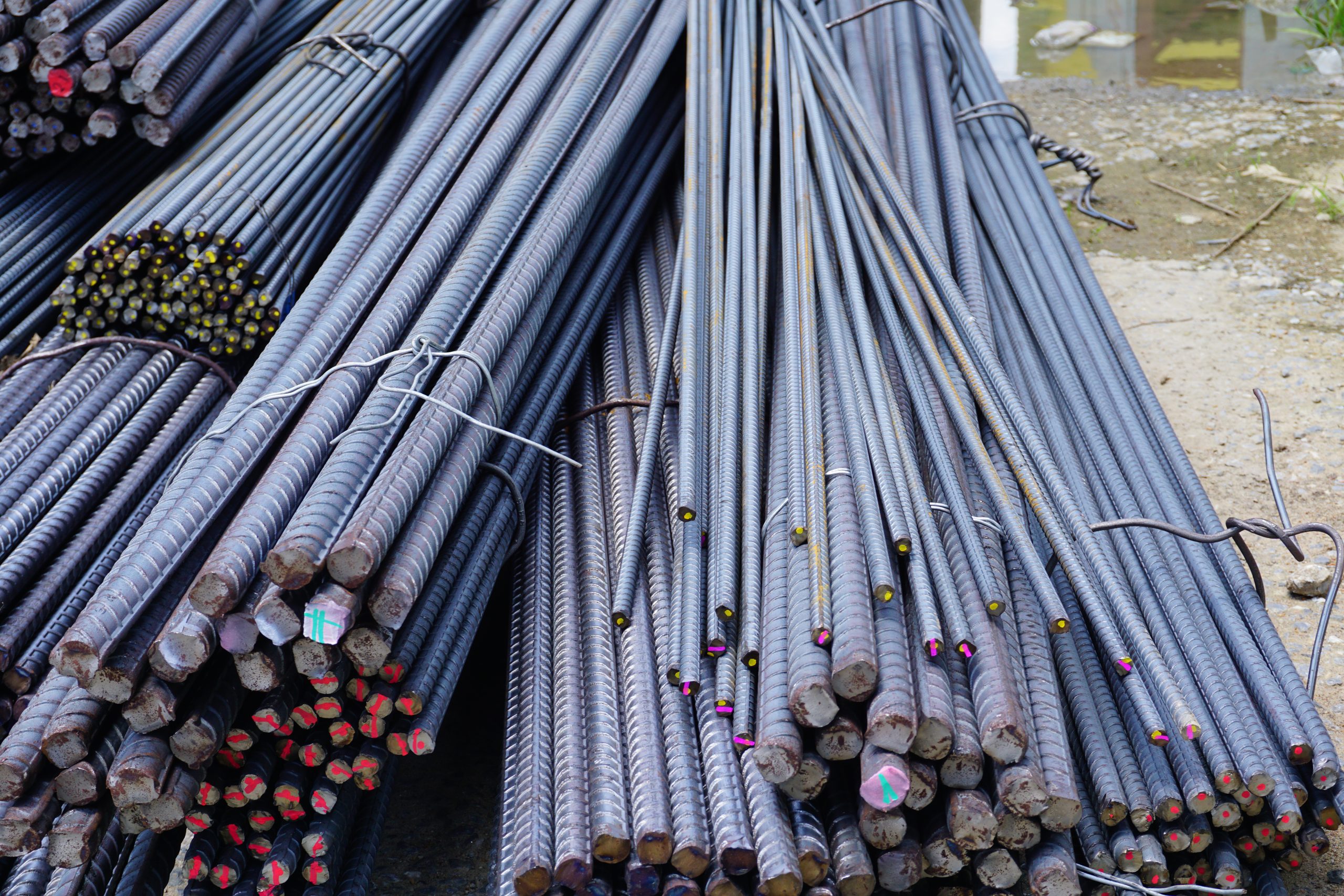
Reinforcing Steel Bar (Rebar) is a high-tensile, deformable steel bar engineered to provide superior structural reinforcement in cast-in-place and precast concrete applications. Its primary industrial use is to absorb tensile and shear stresses in concrete structures—bridges, high-rises, tunnels, and industrial pavements—where plain concrete alone would fail. The key value proposition lies in its exceptional bond strength with concrete, yield strength consistency, and resistance to dynamic loading, enabling longer structural lifespans and reduced material usage. Strategically, rebar is critical to global infrastructure development, accounting for over 40% of steel consumption in construction; reliable sourcing directly impacts project safety, cost predictability, and regulatory compliance.
2. Key Specifications & Technical Characteristics
-
Material Composition: Low-alloy carbon steel (Fe + C: 0.22–0.32%, Mn: 0.60–1.10%, P ≤ 0.040%, S ≤ 0.050%), conforming to ASTM A615 / A706, BS 4449, or ISO 6935-2.
-
Grade / Yield Strength: Grade 40 (280 MPa), Grade 60 (420 MPa) [standard], Grade 75 (520 MPa) – available with mill test certificates (MTC).
-
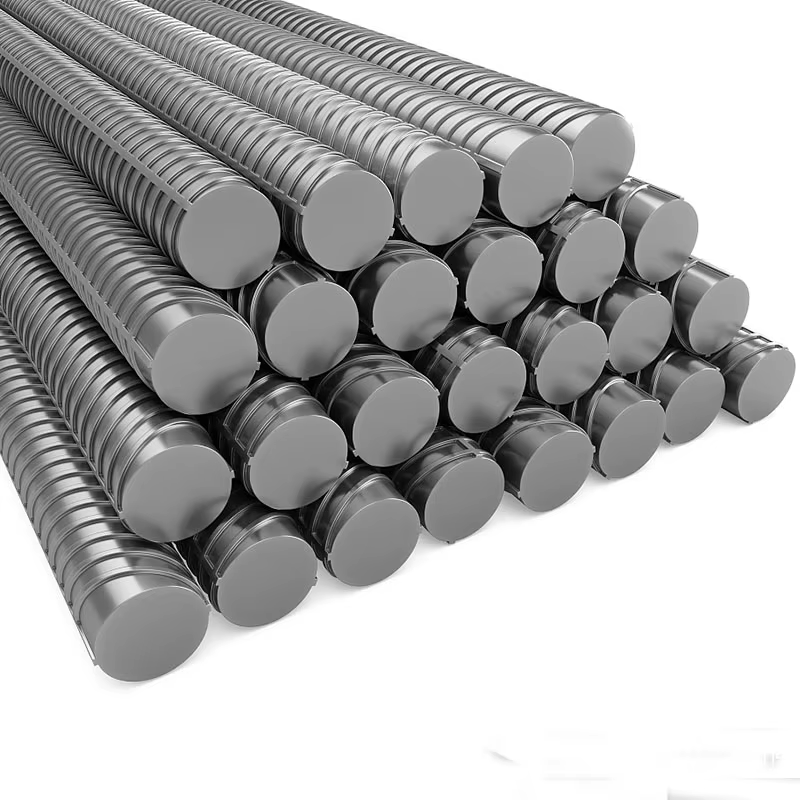
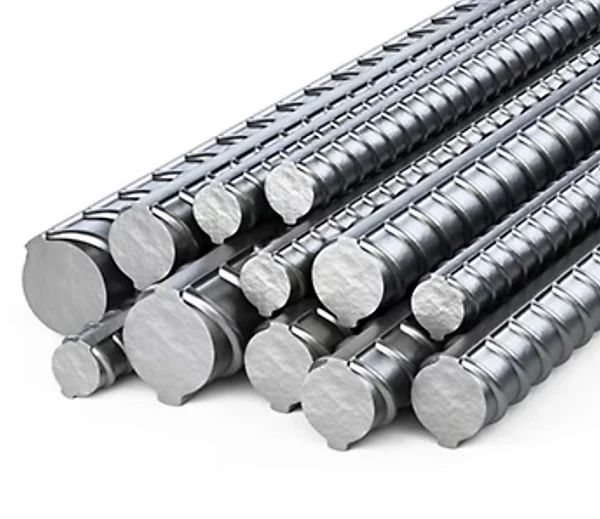
Physical Form: Hot-rolled, deformed bar with transverse ribs (two longitudinal ribs + lug pattern); nominal diameters: 8mm, 10mm, 12mm, 16mm, 20mm, 25mm, 32mm, 40mm.
-
Surface Condition: Bare, black steel (epoxy-coated or galvanized available upon request for corrosion-resistant applications).
-
Unit Density: 7.85 g/cm³; typical linear mass: 0.395 kg/m (10mm) to 9.864 kg/m (40mm).
-
Standard Lengths: 6m, 9m, 12m (custom cut-to-length available for MOQ ≥ 100 MT).
-
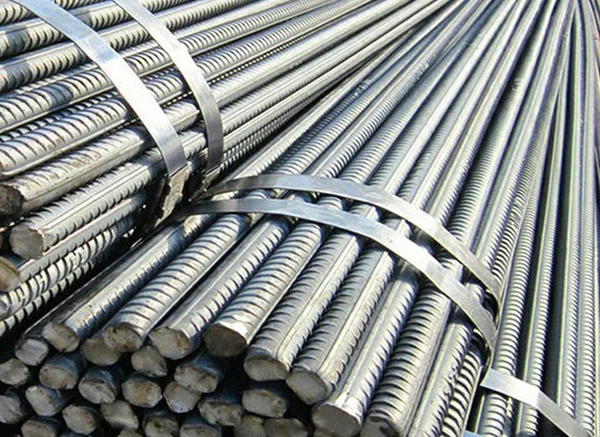
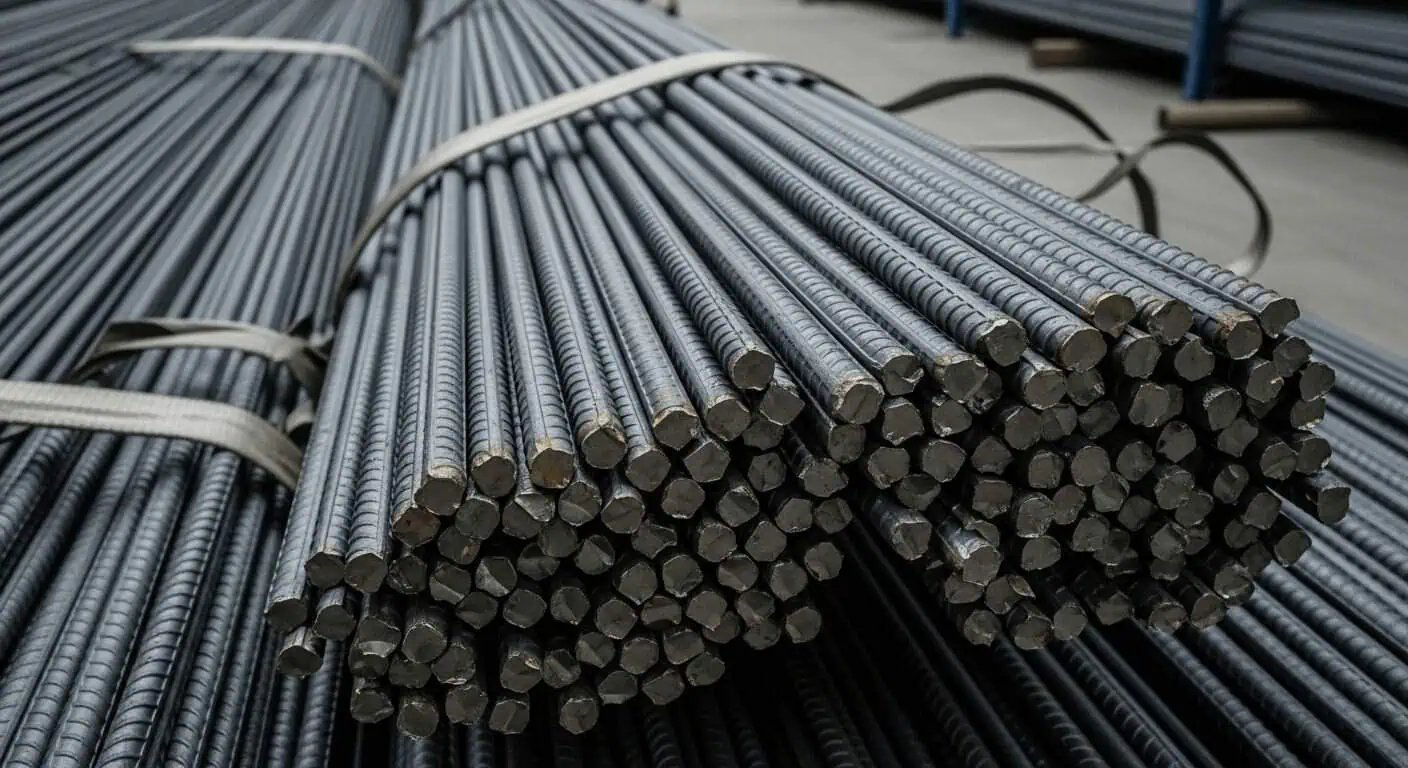
Packaging: Hexagon or square bundles (2.0–2.5 MT per bundle) with four steel tie bands + weather-resistant polypropylene ID tags. Edge protectors for container loading.
-
Shelf Life: Indefinite under dry, covered storage; surface oxidation acceptable per ASTM G101 (does not affect tensile strength).
3. Core Industrial Applications
-
Heavy Civil Infrastructure: Highways, bridge girders, tunnel linings, and retaining walls – rebar’s high bond strength minimizes crack propagation under cyclic axle loads, outperforming smooth bars by 40% in pull-out resistance.
-
Commercial & High-Rise Construction: Foundation piles, shear walls, and column reinforcement – consistent elongation (≥12% for Grade 60) ensures ductile failure warning, a key safety benchmark over cheaper, more brittle alternatives.
-
Precast Concrete & Marine Structures: Seawall piles, dry docks, and offshore platforms – epoxy-coated rebar reduces chloride ion penetration by 90% vs. black steel, extending service life from 15 to over 50 years in tidal zones.
-
Energy & Industrial Plants: Nuclear containment vessels, wind turbine towers, and refinery foundations – heat-straightened rebar (post-fabrication) maintains ASTM yield tolerance within ±5%, critical for thermo-mechanical loading environments.
4. Competitive Advantages
-
Quality Consistency: ISO 9001:2025-certified mills with in-line ultrasonic testing (UT) and eddy current inspection; lot-level traceability via heat number stamped on every bundle.
-
Supply Reliability: Three dedicated rolling mills (capacity: 1.2M MT/year) with 98% on-time-in-full (OTIF) delivery record over last 18 quarters; buffer inventory held in 7 regional hubs.
-
Logistics Capability: Proprietary port-to-site tracking via IoT-enabled twist-lock reels; bundled weight optimized for 20’ and 40’ containerized or break-bulk loading.
-
Price Competitiveness: Direct mill contracts eliminate 2–3 intermediary margins; volume-based tiered pricing (≥5,000 MT) matches or beats LME steel scrap + rolling spread by 3–5%.
-
Sustainability: 94% recycled content (post-consumer steel); EPD available; Scope 3 emissions data provided per request for ESG reporting.
-
Technical Support: Free rebar detailing software (Revit/STAAD plug-in), shop drawing review, and on-site welding/tying training via certified field engineers.
5. Commercial & Supply Information
-
Minimum Order Quantity (MOQ): BULK 20 MT (mixed diameters allowed within one grade)
-
Loading Capacity per 20’ Standard Container: 20 MT (max gross weight, bundled)
-
Loading Capacity per 40’ High-Cube Container: 24 MT (optimized length distribution for 12m bars)
-
Break-bulk / LCL option: Available for order consolidation (MOQ 10 MT) with 15% surcharge.
-
Lead time (ex-mill): 14–21 days for stock sizes (10–32mm); 30 days for custom lengths or epoxy coating.
-
Incoterms: FOB (loading port) or CIF (major global hub – Rotterdam, Dubai, Singapore, Shanghai, Houston)
Reviews
There are no reviews yet.