

Description
1. Product Overview
Industrial Gear Oil Residue is a high-viscosity industrial by-product derived from used or partially refined gear lubrication systems across heavy-duty mechanical operations. It is primarily utilized as a secondary feedstock in reprocessing, energy recovery, and industrial blending applications where residual hydrocarbon value can be efficiently extracted or repurposed. The product delivers a cost-efficient alternative raw material for industries seeking to optimize input costs while maintaining operational throughput. Its value propositionBeta-glucosidase lies in enabling circular resource utilization, reducing waste disposal burdens, and supporting secondary recovery economics in large-scale industrial ecosystems. Strategically, it plays a critical role in sustainable industrial supply chains by converting waste streams into monetizable inputs.
2. Key Specifications & Technical Characteristics
- Material Composition: Hydrocarbon-based lubricating oil residues with metallic wear particles and additive remnants
- Purity / Grade: Industrial grade (unrefined / semi-refined residue stream)
- Physical Form: Viscous liquid or semi-sludge consistency depending on source processing level
- Color: Dark brown to black
- Density: Approx. 0.90 – 1.05 g/cm³ (variable by batch)
- Viscosity: High viscosity, non-Newtonian behavior under varying temperature conditions
- Packaging Options:
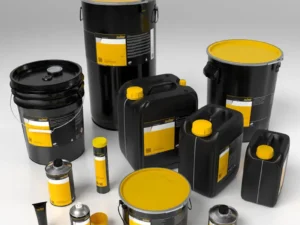
- 200L steel drums
- 1000L IBC tanks
- Bulk tanker loading
- Shelf Life: 12–24 months under sealed, cool, and dry storage conditions
3. Core Industrial Applications
- Primary Industries: Re-refining plants, waste-to-energy facilities, industrial fuel processors, and metallurgical recovery units
- Operational Use Cases:
- Feedstock for re-refined base oil production
- Supplementary fuel in controlled industrial combustion systems
- Raw input for energy recovery and thermal processing units
- Blending component in low-grade industrial lubricants
- Performance Advantages:
- Higher residual hydrocarbon content compared to mixed waste oils
- Cost advantage over virgin petroleum feedstocks
- Improved feed consistency for downstream refining operations
- Supports closed-loop industrial recycling systems with reduced processing losses
4. Competitive Advantages
- Quality Consistency: Stabilized sourcing streams from controlled industrial collection networks
- Supply Reliability: Continuous availability through aggregated multi-site feedstock recovery
- Logistics Capability: Scalable bulk handling via drum, IBC, and tanker shipment systems
- Price Competitiveness: Significant cost advantage versus refined base oils and virgin lubricants
- Sustainability Benefits: Supports circular economy initiatives by diverting hazardous waste from disposal streams
- Technical Support: Full batch traceability, material safety documentation, and technical data sheets available upon request
5. Commercial & Supply Information
- Minimum Order Quantity (MOQ): Bulk 20 MT
- Loading Capacity: Up to 20–25 MT per standard 20ft container (depending on packaging configuration and density variation)



Reviews
There are no reviews yet.