
Description
1. Product Overview
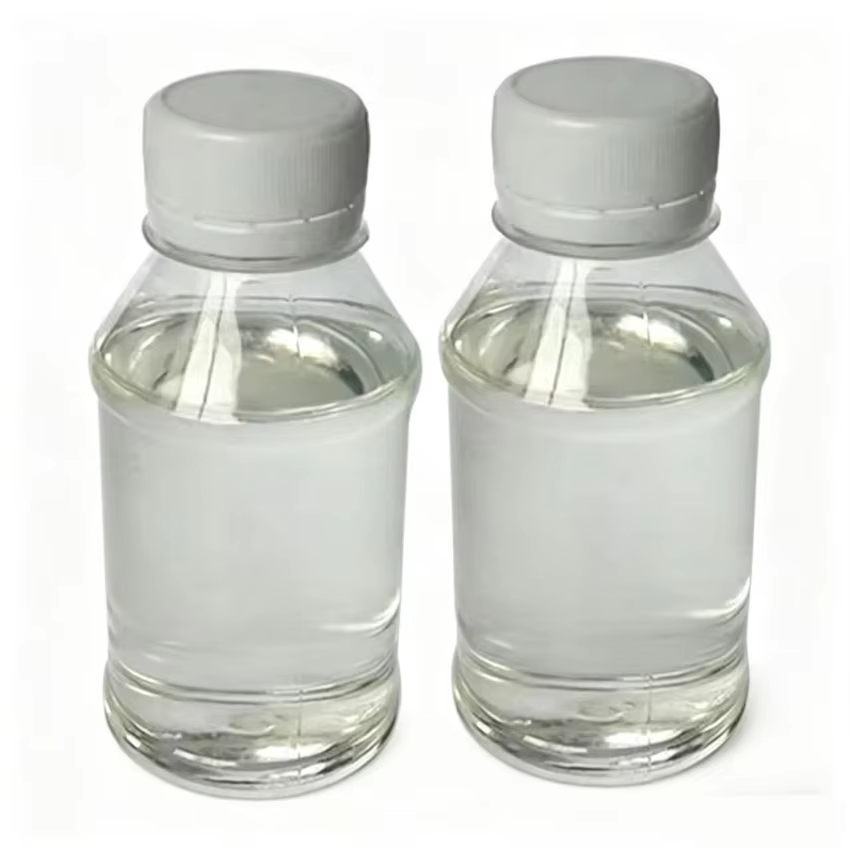
Hydrogenated Mineral Oil is a fully saturated, high-purity hydrocarbon fluid produced via catalytic hydrogenation to remove aromatics, olefins, and sulfur compounds. It is primarily used as a process oil, extender, or lubricant base in industrial manufacturing, where thermal stability and non-polar compatibility are critical. The key value proposition is superior resistance to oxidation and sludge formation, reducing maintenance downtime and off-spec product risk. Strategically, it serves as an essential input for industries transitioning to longer-life, lower-friction operational fluids amid tightening environmental regulations on volatile organic compounds.
2. Key Specifications & Technical Characteristics
-
Chemical composition: Saturated aliphatic hydrocarbons (C15–C50), <0.5% aromatics, <10 ppm sulfur
-
Purity grade: Technical bulk grade (non-pharmaceutical), meets ASTM D4559 and DIN 51528 standards
-
Physical characteristics:
-
Form: Clear, colorless to pale yellow liquid at 20°C
-
Kinematic viscosity (40°C): 15–100 cSt (grade-dependent)
-
Density (15°C): 0.84–0.89 g/cm³
-
Flash point: >200°C (closed cup)
-
Pour point: -15°C to -5°C
-
-
Packaging options: ISO tank (20–24 MT), flexitank (20 MT), bulk tanker truck, or 200L steel drums (on request for samples)
-
Shelf life: 24 months in sealed, dry, non-reactive containers away from direct heat
3. Core Industrial Applications
-
Primary industries: Polymer compounding, agricultural chemical formulations, metalworking fluids, rubber manufacturing, textile processing, and industrial lubricants.
-
Specific use cases:
-
Polymer: Carrier oil for masterbatch, PVC plastisol viscosity modifier, or rubber extender (SBR, NR, EPDM)
-
Agrochemical: Non-phytotoxic solvent for EC and SC herbicide formulations
-
Metalworking: Base fluid for rolling oils, corrosion-preventive coatings, and drawing compounds
-
-
Performance advantage: Saturation eliminates reactivity with catalysts or additives, ensuring batch-to-batch reproducibility. Low volatility reduces fume generation in high-temperature processes (e.g., tire curing). Cost advantage: 20–30% lower total cost of ownership vs. synthetic esters due to longer fluid life and lower replacement frequency.
4. Competitive Advantages
-
Quality consistency: Single-source refinery partnership with ISO 9001:2025 certification; each batch tested for UV absorbance, viscosity stability, and trace metals.
-
Supply reliability: Dedicated bulk storage terminals in Rotterdam, Houston, and Singapore enabling 48-hour lead times for ≥20 MT orders.
-
Logistics capability: In-house transport coordination for ISO tank and flexitank shipments with real-time tracking and temperature monitoring.
-
Price competitiveness: Direct mill pricing removes distributor markups; volume-based rebates for 12-month supply agreements.
-
Sustainability & compliance: Free of PAHs, REACH and UK-REACH registered, low VOC content (<0.5%) supports green factory certifications.
-
Technical support: Full SDS, batch COA, and ATSM data sheets available via API integration into procurement systems.
5. Commercial & Supply Information
-
Minimum Order Quantity (MOQ): 20 metric tons (bulk)
-
Loading capacity: 20–24 MT per 20-ft ISO tank container; 20 MT per flexitank (standard dry container)
Reviews
There are no reviews yet.