
Description
-
Product Overview
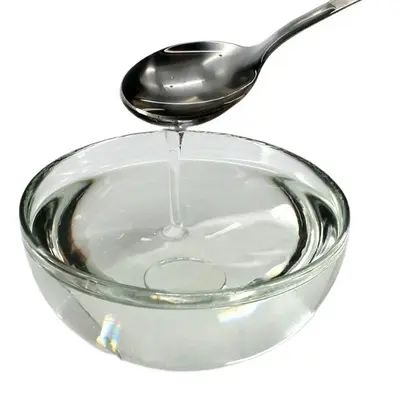
HFCS-42 (High Fructose Corn Syrup, 42% fructose) is a liquid sweetener produced from enzymatically processed corn starch, formulated for industrial food, beverage, and downstream ingredient manufacturing. It serves as a cost-effective, soluble sweetening and humectant agent for applications requiring predictable sweetness, enhanced mouthfeel, and processing stability. HFCS-42 delivers consistent functional performance across formulation, blending, and thermal processes, reducing blending variability and downtime. Strategically, HFCS-42 is a high-volume commodity ingredient that optimizes cost-in-use and supply-chain flexibility for large-scale manufacturers and co-packers.
-
Key Specifications & Technical Characteristics
-
Chemical composition: Glucose-fructose syrup derived from enzymatically converted corn starch; typical saccharide profile includes glucose, fructose, maltose, higher saccharides.
-
Fructose content: Nominal 42% fructose by dry solids.
-
Dry solids (Brix): 72 ± 1 °Brix (typical concentration for HFCS-42).
-
Purity/grade: Food‑grade industrial (suitable for beverage and food manufacturing); complies with prevailing food safety standards (specify certificates with purchase).
-
Physical form: Viscous, clear-to-amber liquid.
-
Density: Approximately 1.37–1.43 g/mL at 20 °C (product-specific certificate will state exact).
-
Viscosity: Temperature-dependent; provided in technical datasheet for standard temperature points.
-
pH: Typically 3.5–6.0 (product-specific analysis available).
-
Microbiological limits: Managed via processing and storage controls; specification and certificates-of-analysis provided per lot.
-
Packaging options: ISO tankers, bulk tank trucks, 20 MT flexitanks per 20′ container, 24–25 MT per 40′ reefer/flexi (subject to loading method), IBCs (1,000 L) on pallet, and drum options upon request.
-
Storage conditions: Store in closed, food-grade tanks or containers at ambient to cool temperatures, protected from contamination.
-
Shelf life: Best used within 12–24 months under recommended storage; refer to lot-specific testing for extended shelf-life claims.
-
Documentation: Full specification sheet, Certificate of Analysis (CoA), material safety data sheet (MSDS/SDS), and HACCP/FSMS documentation available on request.
-
Core Industrial Applications
-
Beverage manufacturing: Primary sweetener and mouthfeel modifier in sodas, RTD teas, flavored waters, and syrups; blends with other sweeteners to achieve target sweetness profiles and cost optimization.
-
Food processing: Sweetener and humectant in baked goods, confectionery, sauces, dressings, canned fruits, and dairy-based desserts that require high solubility and shelf stability.
-
Ingredient formulation: Intermediate for caramel, flavors, and functional syrups where predictable sugar chemistry is required for Maillard reactions and viscosity control.
-
Fermentation feedstock: Carbon source in industrial fermentation processes where consistent monosaccharide composition supports predictable yields.
-
Nutraceuticals and personal care: Emollient and humectant in certain industrial personal-care formulations and oral care products where sweetening or moisture retention is needed.
Why it outperforms alternatives: HFCS-42 offers superior solubility and blending homogeneity versus crystalline sucrose in certain liquid systems, faster processing (reduced dissolution time), and cost-in-use advantages compared with higher-fructose syrups for applications targeting moderate sweetness. Its consistent enzyme-produced composition reduces lot-to-lot variability and simplifies quality control.
-
Competitive Advantages
-
Quality consistency: Manufactured under controlled enzymatic conversion with lot-level CoAs to ensure stable saccharide profile and Brix.
-
Supply reliability: Sourced from established corn-starch processing networks with contingency capacity and scheduled production runs to support large, recurring orders.
-
Logistics capability: Bulk loading via ISO tankers, flexitanks, and IBCs; regional distribution and export packaging options tailored to customer supply-chain needs.
-
Price competitiveness: Commodity-scale production and flexible packaging deliver lower landed cost per sweetness-equivalent compared with niche sweeteners.
-
Sustainability: Efficient substrate utilization and potential for sourcing from suppliers with sustainable corn programs and responsible agricultural practices (supplier-specific certifications available).
-
Technical support: Product technical datasheet, application guidance, formulation support, and analytical data provided; collaborative troubleshooting for scale-up available upon request.
-
Commercial & Supply Information
-
Minimum order quantity (MOQ): BULK 20 MT.
-
Loading capacity (MT per container): Typical flexitank loading — 20 MT per 20′ container; alternative container loadings: up to 24–25 MT per 40′ flexitank/reefer depending on loading method and transport regulations.
Reviews
There are no reviews yet.