
Description
-
Product Overview
Fulvic Acid — High-Strength Formulation is a concentrated, industrial-grade fulvic acid concentrate engineered for large-scale applications in agriculture, water treatment, specialty chemicals, and formulation manufacturing. Its primary industrial use is to improve nutrient delivery, chelation, soil and media conditioning, and to act as a performance-enhancing additive in complex formulations. The product delivers rapid chelation of micronutrients, enhanced bioavailability, and improved process stability compared with lower-strength or crude humic inputs. Strategically, this high-strength fulvic acid reduces active ingredient load, simplifies logistics, and lowers total cost of ownership for formulators, growers, and process engineers seeking consistent, high-performance organic acidates.
-
Key Specifications & Technical Characteristics
-
Chemical composition: Concentrated fulvic acid fraction (derived from leonardite/oxidized lignite or controlled extraction feedstock), predominantly low-molecular-weight humic substances enriched in carboxylic and phenolic functional groups.
-
Active content (analytical): High-strength fulvic acid equivalent, typically specified on dry-weight basis; typical assay range 60–85% fulvic acid fraction (specify exact assay on COA).
-
Purity/impurities: Low heavy-metals profile (meets industrial thresholds for Pb, Cd, Hg, As), minimal insolubles (<0.5% w/w), low sodium and chloride as required by application (COA provided).
-
Molecular weight distribution: Dominated by low molecular weight species (average MW < 1,500 Da) to support rapid chelation and solubility.
-
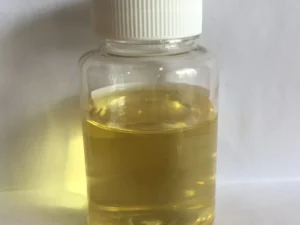
Physical form: Dark brown to black viscous liquid or concentrated syrup (viscosity varies with solids), free-flowing when diluted.
-
Solubility: Fully water-soluble and compatible with common aqueous media and many organic co-solvents; dissolves rapidly to form stable solutions across pH 2–10 (matrix dependent).
-
pH (as supplied): Typically 3.5–5.5 (adjustable on request).
-
Density: Typical bulk density 1.15–1.30 g/mL (product-dependent).
-
Particle size: Not applicable for liquid concentrate; if supplied as high-solids paste, solids are colloidal/soluble.
-
Color/odor: Dark brown, characteristic earthy odor (non-hazardous).
-
Packaging options: IBC totes (1,000 L), steel or HDPE drums (200 L), flexitanks for bulk tanker shipments, and bulk tanker loads. Custom packaging and private-labeling available on request.
-
Shelf life: 12 months in sealed original packaging when stored in cool, dry conditions; COA recommended before use if stored beyond 12 months.
-
Certificates: Batch-specific Certificate of Analysis (COA), MSDS, and technical datasheet supplied with every shipment.
-
Core Industrial Applications
-
Agriculture / Fertilizer Formulation: Used by commercial fertilizer producers and agribusiness integrators as a high-efficiency chelating and biostimulant component to increase micronutrient uptake, reduce fertilizer runoff, and improve crop uniformity. Practical use: incorporate into liquid NPK blends, foliar sprays, and fertigation systems to lower required micronutrient dosages while improving yield and quality.
-
Specialty Chemical & Formulation Industry: Acts as a natural dispersant, complexing agent, and performance modifier in industrial formulations (seed coatings, polymer additives, surfactant blends). Practical use: stabilize metal ions in complex formulations and improve active ingredient dispersion versus crude humic alternatives.
-
Water Treatment & Remediation: Used in municipal and industrial water treatment as a natural chelator to mobilize and sequester trace metals or to condition sludge for enhanced dewatering. Practical use: replace or reduce synthetic chelants where regulatory or sustainability goals favor natural organics.
-
Animal Nutrition & Feed Additives: Incorporated into feed premixes to support trace mineral bioavailability and gut health enhancements for livestock production. Practical use: reduce inorganic trace mineral loading while maintaining performance.
-
Horticulture & Controlled-Environment Agriculture (CEA): High compatibility with hydroponic and substrate-based systems for improved nutrient delivery and root development. Practical use: lower EC swings and improve consistent uptake in recirculating systems.
Why this product performs better: the high-strength formulation concentrates active fulvic fractions (low molecular weight and high functionality), delivering faster chelation kinetics, improved solubility, and lower shipping and storage burdens compared with low-strength humic slurries or crude extractions. That yields cost savings (less product per application), more predictable performance, and easier integration into automated dosing systems.
-
Competitive Advantages
-
Quality consistency: Industrial-scale, controlled extraction and standardized blending ensure low batch-to-batch variability; every shipment includes a COA.
-
Supply reliability: Sourced from validated feedstock suppliers with multi-modal logistics and safety stock to support continuous supply for large contracts.
-
Logistics capability: Available in IBCs, drums, flexitanks, and containerized bulk; supported loading profiles for 20 MT and larger bulk shipments; export-ready documentation and export packaging options.
-
Price competitiveness: High active concentration reduces per-use cost versus low-strength alternatives; scalable pricing tiers for contract volumes.
-
Sustainability & environmental benefits: Derived from naturally occurring feedstocks using controlled, resource-efficient extraction; can reduce use of synthetic chelants and inorganic micronutrients, contributing to lower downstream environmental load. Sustainability documentation (source traceability, basic life-cycle indicators) available on request.
-
Technical support & documentation: Dedicated technical datasheets, application guides, COA, MSDS, and access to application specialists for formulation trials and agronomic/technical consultation. This reduces development time and mitigates formulation risk.
-
Commercial & Supply Information
-
Minimum order quantity (MOQ): BULK 20 MT.
-
Loading capacity (MT per container): Typical loading metrics: 1 × 20 ft container (flexitank) ~ 20–24 MT liquid depending on density; 1 × 40 ft flexitank ~ 24–26 MT; IBC/drum palletized container loads variable—consult logistics for exact configuration.
-
Lead times: Standard lead time dependent on order size and destination—contact sales for firm ETAs; priority scheduling available for contract volumes.
-
Documentation & compliance: Batch COA, MSDS, and technical datasheet included; export documentation (commercial invoice, packing list, certificates of origin) prepared per buyer requirements.
-
Storage & handling: Store in covered, temperature-stable area; avoid freezing. Follow supplied MSDS for safe handling and spill response.
Reviews
There are no reviews yet.