

Description
-
Product Overview
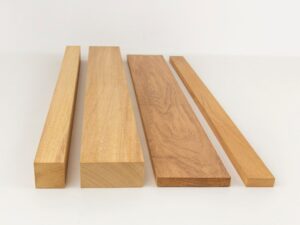
Douglas Fir Structural C24 (DF-C24) — 50x150x6000mm is a kiln-dried, grade C24 structural timber member produced from sustainably managed Douglas fir. Engineered for load-bearing construction, it is specified for structural framing, beams, joists, and general carpentry in commercial and heavy residential projects. The product delivers high strength-to-weight performance, predictable mechanical properties, and dimensional stability — reducing on-site waste and rework. Strategically, DF-C24 offers procurement teams a cost-effective, code-compliant alternative to tropical hardwoods and spruce, combining superior stiffness with reliable supply for large-scale infrastructure and modular prefab programs. -
Key Specifications & Technical Characteristics
-
Material: Douglas Fir (Pseudotsuga menziesii), visually graded and machine-straightened.
-
Strength grade: C24 (EN 338 equivalent) — documented characteristic bending and tension values suitable for structural design.
-
Dimensions: Nominal 50 x 150 x 6000 mm (custom lengths available on request).
-
Moisture content: Kiln-dried to 12% ± 2% (typical), ensuring dimensional stability and reducing shrinkage.
-
Physical characteristics: Straight grain, low knot frequency, warm pale-brown colour typical of Douglas fir; density approx. 480–550 kg/m³ (air-dry basis — confirm per batch).
-
Mechanical properties: High modulus of elasticity (stiffness), favorable bending strength, and good nail/screw holding capacity (refer to supplied test certificates).
-
Treatment: Untreated standard; preservative or fire-retardant treatments available on demand (to specification).
-
Surface finish: Planed smooth (S4S) for direct use in finish carpentry; alternative machining available.
-
Tolerances: Manufactured to industry-standard dimensional tolerances; mill-certified on request.
-
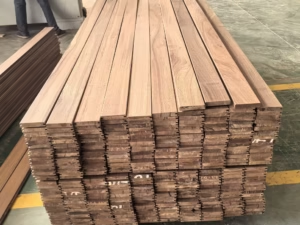
Packaging: Bundled on pallets with shrink-wrap and corner protection; export-ready packing for sea freight.
-
Shelf life: Stable when stored under covered, ventilated conditions — performance maintained indefinitely if moisture content and storage guidelines are observed.
-
Certification: Available PEFC/FSC chain-of-custody and third-party grading/certification upon contract.
-
Core Industrial Applications
-
Primary industries: Commercial construction, residential framing, modular housing manufacturers, engineered timber and joinery factories, infrastructure renovation, and formwork suppliers.
-
Specific use cases: Load-bearing wall studs; floor joists; roof rafters; lintels and beams; prefabricated panel cores and timber frame modules.
-
Performance vs alternatives: Compared with spruce/fir C24, Douglas fir offers higher stiffness and strength per cross-section enabling longer spans or reduced member sizes; compared with hardwoods, it provides significant cost and weight advantages while meeting structural requirements. Kiln-drying to controlled moisture levels reduces on-site corrective work, speeding installation cycles and lowering labor costs.
-
Commercial relevance: Ideal for large-volume procurement where predictable mechanical properties, high yield from milling, and consistent finish reduce total installed cost and schedule risk.
-
Competitive Advantages
-
Quality consistency: Factory grading and kiln-drying processes deliver repeatable mechanical properties and dimensional control for engineered designs.
-
Supply reliability: Sourced from well-managed Douglas fir inventories with scalable mill output to support multi-container orders and ongoing project pipelines.
-
Logistics capability: Export-packaged for standard 20’/40’ container loading, with experienced freight handling and documentation for cross-border shipments.
-
Price competitiveness: Strong strength-to-weight ratio allows material optimization and potential cost savings versus larger-section alternatives; competitive FOB/CIF pricing available by contract.
-
Sustainability: Option for PEFC/FSC-certified supply; lower carbon footprint per structural capacity compared with steel or concrete in many applications.
-
Technical support: Mill test certificates, grade declarations, drying certificates, dimensional tolerances, and design guidance available; custom machining and treatment services on request.
-
Risk management: Batch traceability and compliance documentation to support public tenders and regulatory audits.
-
Commercial & Supply Information
-
Minimum order quantity (MOQ): BULK 20 MT.
-
Loading capacity: Standard container loading approximately:
-
20-foot container: ~20–24 MT (depending on packaging and dunnage)
-
40-foot container: ~24–28 MT (depending on packaging and dunnage)
Exact loading plans provided per order to maximize payload and minimize freight cost.
-
Reviews
There are no reviews yet.