
Description
-
Product Overview
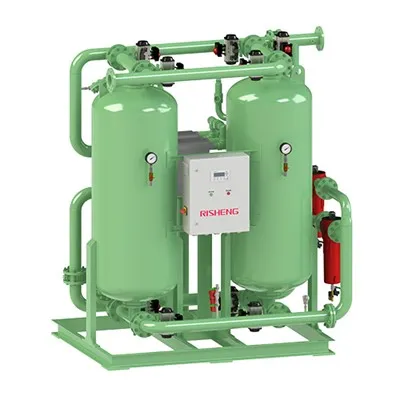
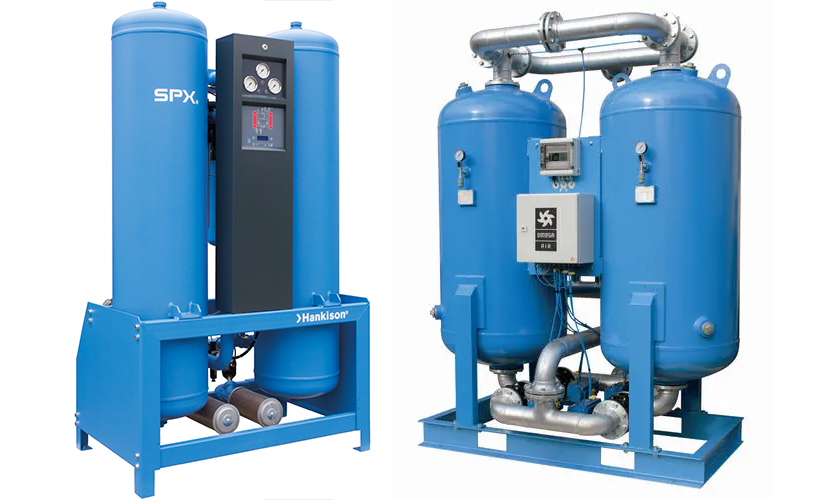
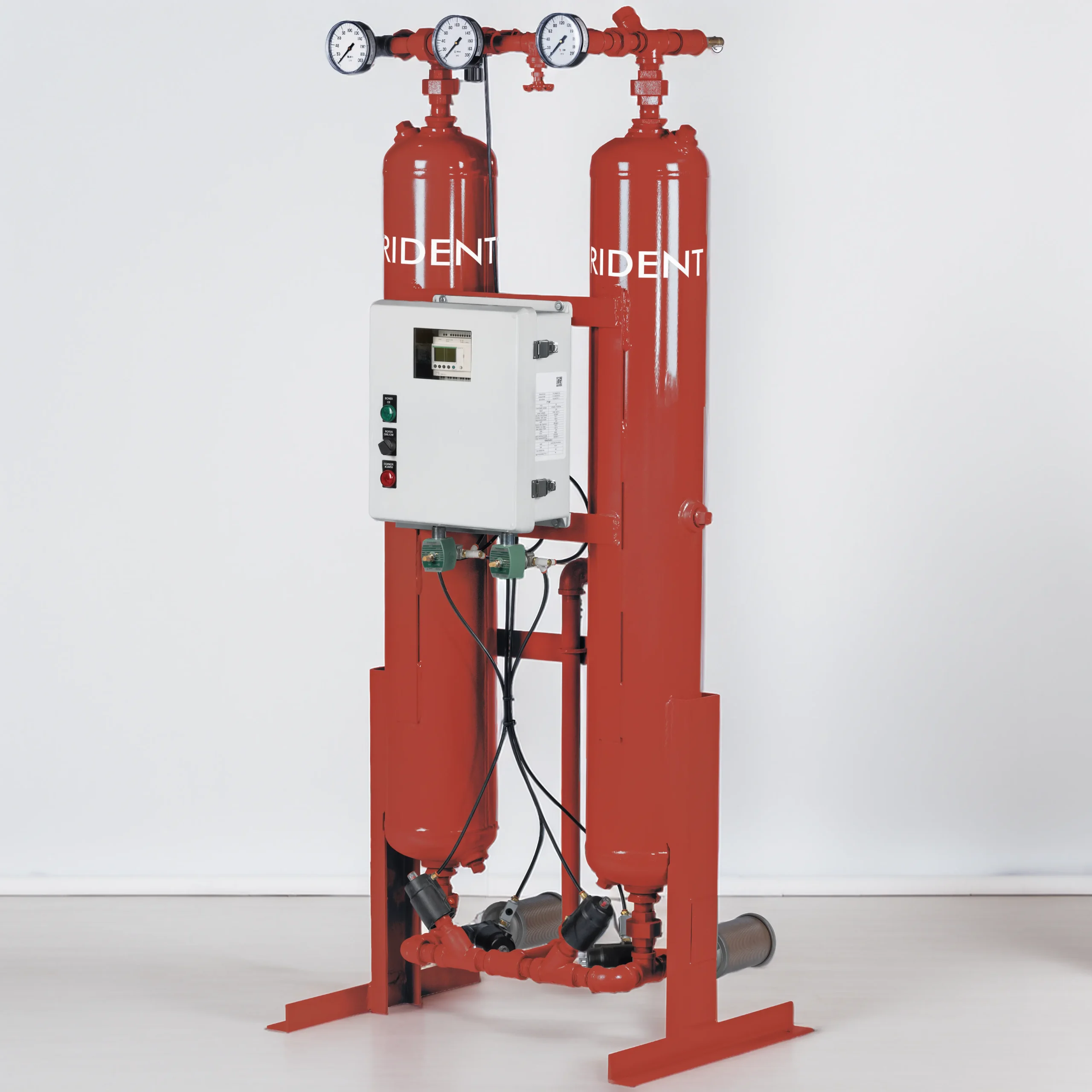
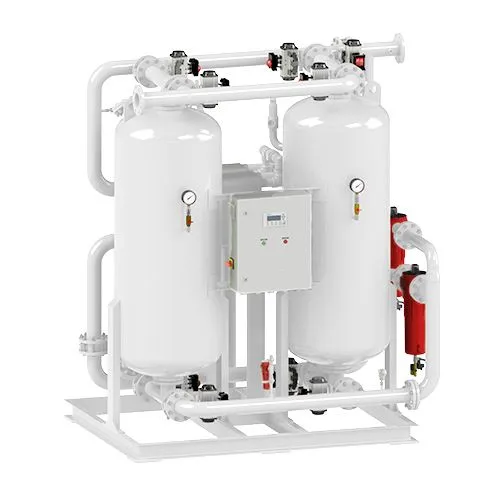
The Desiccant Air Dryer Twin Tower is an industrial-grade compressed-air dehydration system that removes moisture by alternating adsorption between two parallel towers filled with high-performance desiccant media. It is engineered for continuous, high-capacity drying of compressed air and inert gases in manufacturing, processing, and utility systems where low dew points and contamination control are critical. The unit delivers reliable, oil-free, ultralow dew point air to protect pneumatic equipment, instrumentation, and downstream processes, reducing downtime and product rejects. As a strategic asset in industrial supply chains, the twin-tower desiccant dryer minimizes process interruptions, extends asset life, and supports regulatory and quality compliance for critical production environments.
-
Key Specifications & Technical Characteristics
-
Materials and desiccant media: Activated alumina, molecular sieve (optional 3A/4A/13X), or silica gel packing; corrosion-resistant carbon steel or stainless-steel pressure vessels, welded construction.
-
Design dew point: Down to -40°C to -70°C PDP (pressure dew point), model-dependent.
-
Inlet pressure rating: Standard designs 10–16 bar(g) (150–250 psi); customizable up to 40 bar(g) on request.
-
Flow capacity range: Typical modular models available from 0.5 to 60 m3/min (custom scaling for higher flows).
-
Regeneration method: Pneumatic purge or heatless (standard), heat-regenerated or heated purge (optional) depending on energy trade-offs.
-
Pressure drop: <0.2–0.6 bar across unit under nominal flow conditions (model dependent).
-
Control and instrumentation: PLC-based cycle controller, automatic switching valves, pressure/temperature gauges, dew point monitor (optional).
-
Physical form & dimensions: Vertical twin tower vessels; footprint and height vary by capacity—skid-mounted or containerized configurations available.
-
Weight & density: System weight depends on vessel size and desiccant load; desiccant bulk density typically 0.6–1.2 g/cm3 (media-specific).
-
Surface finish and protection: Epoxy-coated external surfaces; internal linings for corrosive environments available.
-
Certification & compliance: Pressure equipment compliant with PED/ASME specifications, CE marking available; materials traceability on request.
-
Packaging options: Skid-mounted units, crate-packed for export, containerized plug-and-play modules.
-
Shelf life & desiccant replacement: Desiccant stable in sealed storage for 2–5 years; in-service lifetime 2–5 years depending on operating conditions and regeneration method.
-
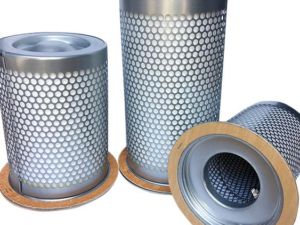
Spare parts & consumables: Valve kits, filters, replacement desiccant cartridges available as service packs.
-
Core Industrial Applications
-
Primary industries: Oil & gas, petrochemical, pharmaceuticals, food & beverage, electronics and semiconductor manufacturing, power generation, compressed-air systems in heavy industry, paint and coatings, and instrument air systems in process plants.
-
Specific operational use cases: Instrument and control air drying to prevent condensate-related instrument failure; pre-drying prior to cryogenic or gas separation units; ensuring dryness in coating and painting lines to prevent defects; protecting pneumatic actuators and valves in offshore and refinery installations; packaging and food processing where moisture control prevents microbial growth and product spoilage.
-
Why it outperforms alternatives: Compared with refrigerated dryers, twin-tower desiccant systems achieve far lower dew points and maintain dryness under variable load and higher inlet temperatures. Against single-tower or less robust adsorbents, twin-tower systems provide continuous operation during regeneration, superior adsorption capacity, and longer operational life, lowering total cost of ownership. The choice of molecular sieve or activated alumina allows tailoring to water adsorption kinetics, chemical tolerance, and regeneration energy profiles to optimize efficiency.
-
Commercial relevance: By preventing moisture-related failures, the dryer reduces maintenance costs, increases yield and plant throughput, and supports compliance with ISO and GMP standards where instrument air quality is auditable.
-
Competitive Advantages
-
Quality consistency: Engineered manufacturing and QA controls ensure predictable dew point and performance across production runs; materials traceability for critical components.
-
Supply reliability: Modular production and stocked standard configurations reduce lead times; long-term supply contracts and local stocking options in major regions support continuity.
-
Logistics capability: Skid and container-compatible designs for simplified global shipping and site installation; pre-commissioning and FAT options to accelerate start-up.
-
Price competitiveness: Configurable options (heatless vs. heated purge, media choice) allow buyers to balance capital and operating expenses; OEM service plans to lock predictable OPEX.
-
Sustainability benefits: Options for heat-regenerated designs and energy recovery reduce purge losses and improve energy efficiency; long-lived desiccant reduces waste compared with disposable alternatives.
-
Technical support: Full technical documentation, P&ID, datasheets, commissioning guides, spare-parts lists, and access to field service engineers; performance validation testing and on-site start-up support available.
-
Strategic sourcing position: The dryer is a mission-critical component whose selection reduces operational risk, makes maintenance schedules predictable, and supports supplier consolidation strategies.
-
Commercial & Supply Information
-
Minimum order quantity (MOQ): BULK 20 MT.
-
Typical loading capacity (MT per container):
-
20 ft container (max packing): approx. 18–22 MT depending on unit configuration and packaging.
-
40 ft container (max packing): approx. 24–28 MT depending on unit configuration and packaging.
-
-
Lead time: Model-dependent; standard modules typically shipped within 8–12 weeks; expedited and stocked units available subject to regional inventory.
-
Warranty & service: Standard 12-month warranty on manufacturing defects; extended service contracts and preventive maintenance packages available.
-
Payment & delivery terms: Standard Incoterms (FOB, CIF, DAP) customizable; volume pricing and long-term supply agreements negotiable.
Reviews
There are no reviews yet.