
Description
-
Product Overview
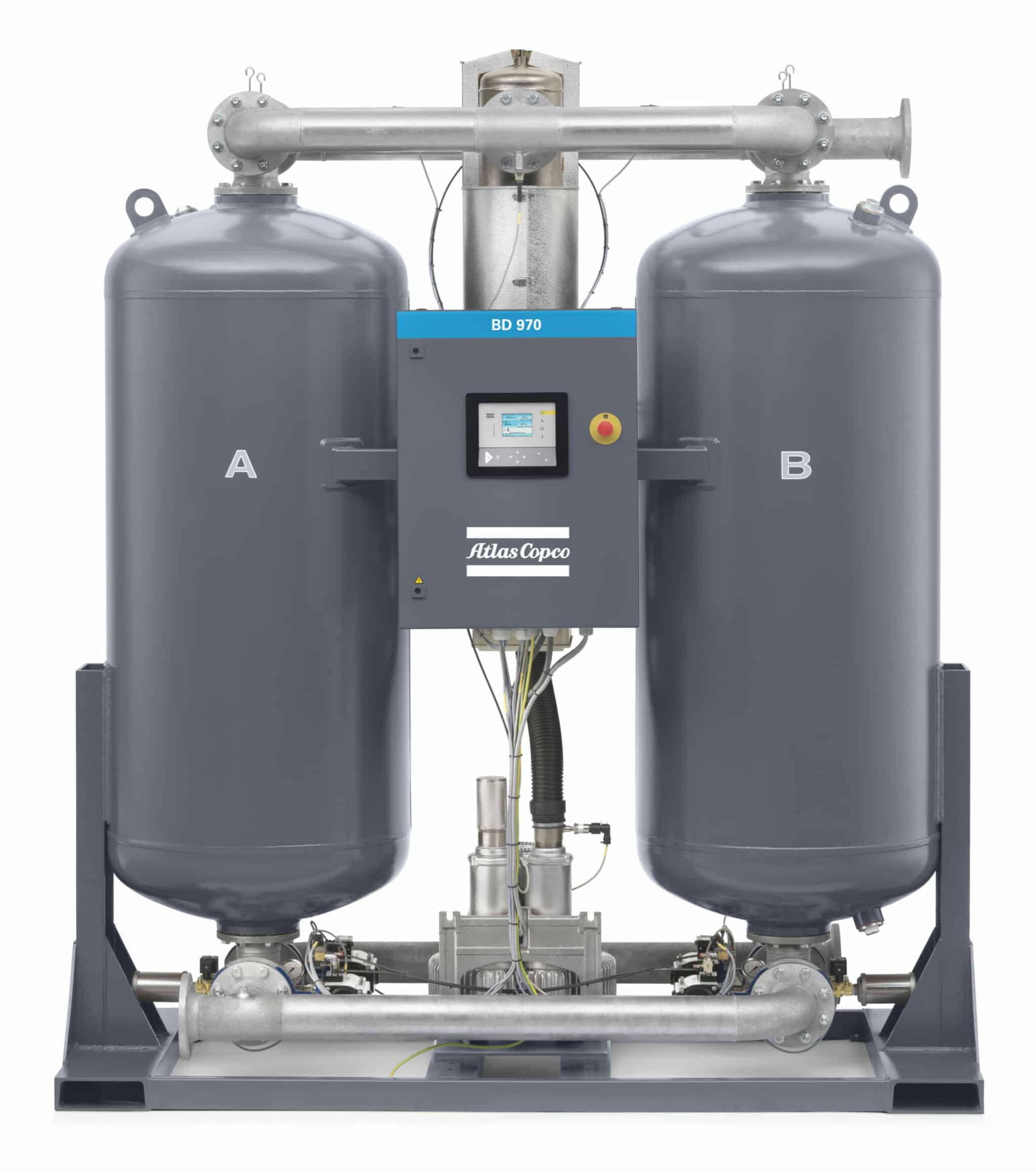
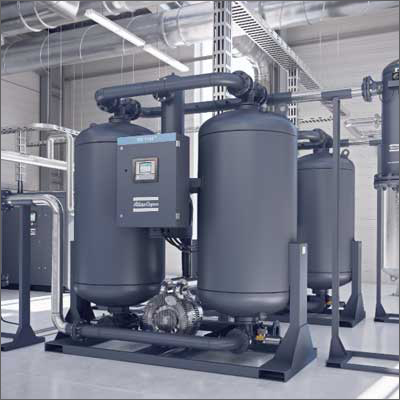
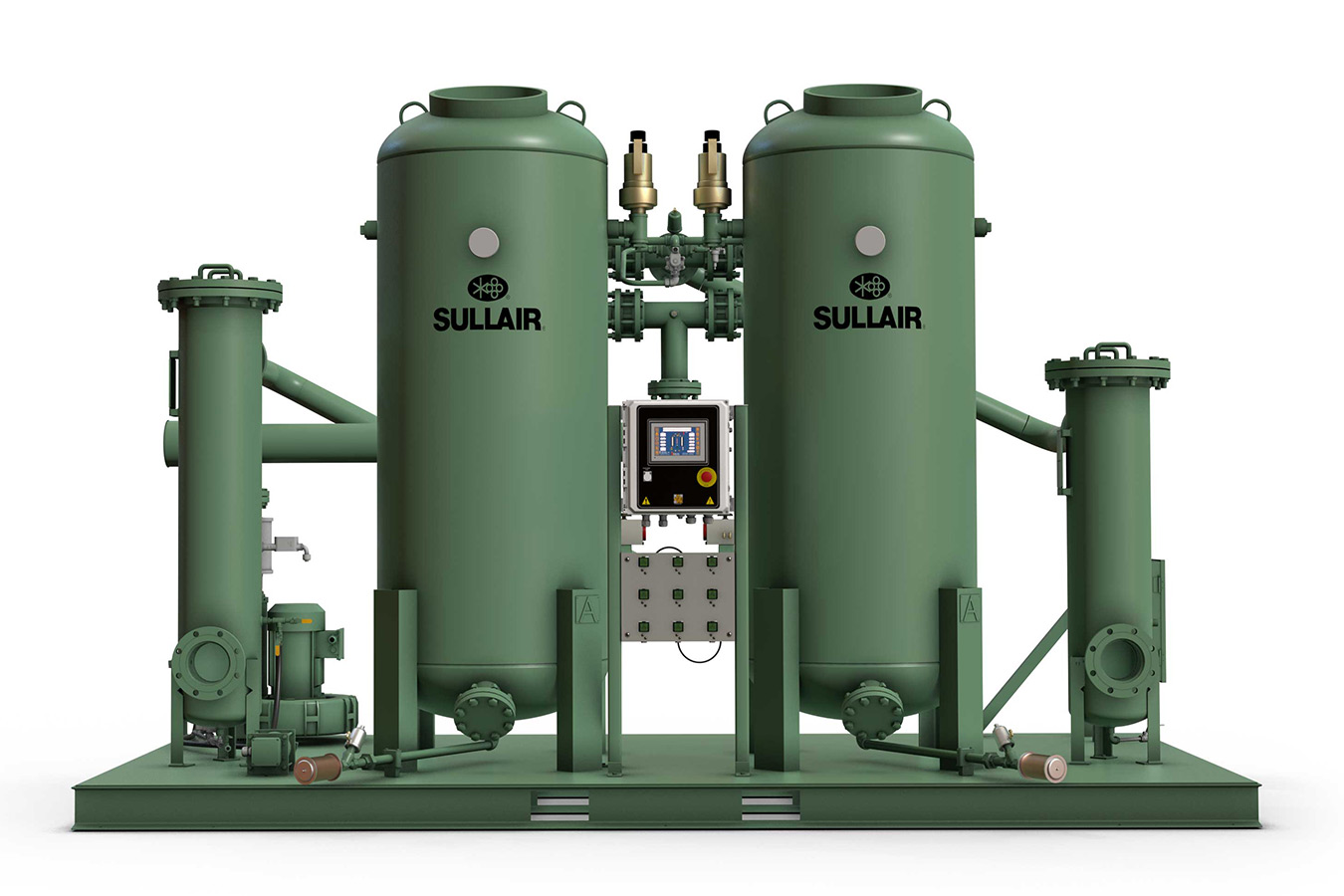
Desiccant air dryer system — an industrial-grade compressed-air dehydration solution designed to deliver ultra-low dew points for continuous production environments. Used primarily in manufacturing, petrochemical processing, pharmaceuticals, and instrumentation, the system removes moisture from compressed air and process gas streams to protect downstream equipment, improve product quality, and prevent corrosion and contamination. Key value proposition: reliable, energy-efficient moisture control with modular designs that scale from plant-level installations to multi-site rollouts, reducing downtime and yield losses caused by wet air. Strategically important because robust moisture management is a high-impact, low-visibility enabler of operational uptime, product integrity, and regulatory compliance across capital-intensive industries.
-
Key Specifications & Technical Characteristics
-
Technology: Heatless/heat-regenerated (selectable), pressure-swing, or heated-desorption desiccant configurations available.
-
Desiccant media: Activated alumina, molecular sieve (3Å/4Å/13X), silica gel options depending on application.
-
Chemical composition/materials: Carbon steel or stainless-steel pressure vessels (SS304/SS316L available), high-grade desiccant beads (synthetic zeolites or high-surface-area alumina), PTFE/Viton seals.
-
Purity/grade of desiccant: Industrial-grade molecular sieves (≥95% active zeolite content) or activated alumina (≥90% Al2O3 active fraction).
-
Operating dew point: Standard units achieve ≤ -40°C PDP; low-temperature and instrument-grade models reach ≤ -70°C PDP.
-
Operating pressure range: Standard 0.5–16 bar(g); high-pressure variants up to 40 bar(g).
-
Flow capacity range: Skid-mounted modules from 1 to 60 m3/min (or specified SCFM/ Nm3/hr options) and scalable multi-module banks for higher throughputs.
-
Pressure drop: Designed ≤ 0.2–0.6 bar across unit at rated flow; vessel internals optimized for minimal ΔP.
-
Temperature limits: Inlet temperature 1–60°C standard; high-temp options to 150°C with appropriate packing.
-
Physical characteristics: Vertical or horizontal pressure vessels, bead/packed-bed form factor; vessel dimensions depend on capacity; typical packed-bed bulk density 0.6–0.9 g/cm3 for molecular sieves.
-
Control & instrumentation: PLC-based automated switching, dew point monitor (digital, ±2°C accuracy), automatic drain, safety relief valves, remote monitoring (Modbus/OPC UA) optional.
-
Noise & emissions: Acoustic attenuation packages available; purge and vent management to meet local regulations.
-
Packaging options: Skid-mounted turnkey systems, containerized units (20ft/40ft), loose-packed desiccant for onsite packing, replacement cartridge modules.
-
Certification & standards: Designed to meet PED/ASME code, ATEX/IECEx options for hazardous areas, ISO 9001 production traceability available.
-
Shelf life/ desiccant handling: Unopened desiccant cartridges/sachets typical shelf life 12–24 months under dry storage; reactivated service options available.
-
Core Industrial Applications
-
Petrochemical & Refining: Protects pneumatic actuators, analyzers, and instrumentation; prevents hydrate formation in gas streams; enables reliable custody transfer metering.
-
Pharmaceuticals & Food Processing: Ensures dry compressed air for tablet presses, coating, and packaging lines to meet product quality and regulatory (GMP) requirements.
-
Electronics & Semiconductor Manufacturing: Provides ultra-dry air for assembly, testing, and wafer processing where trace moisture causes yield loss.
-
Air Separation & Gas Processing: Lowers dew point to prevent freeze-up and condensate-related corrosion in cryogenic and PSA systems.
-
Paints, Coatings & Powder Coating: Eliminates moisture-related defects (fish eyes, improper curing), improving finish quality and reducing rework.
-
Instrumentation & Control Systems: Maintains stable pneumatic instrument supply, minimizing failure rates and calibration drift.
Why it outperforms alternatives: Choice of desiccant media and regeneration method matched to process conditions provides lower achievable PDPs, lower purge losses, and reduced energy consumption versus generic refrigerated dryers or poorly matched desiccant systems. Modular designs enable staged redundancy, easier maintenance, and lower lifecycle cost through replaceable cartridges and predictable performance curves.
-
Competitive Advantages
-
Quality consistency: Factory-tested vessels and desiccant lot traceability with performance verification; ISO 9001 manufacturing practices.
-
Supply reliability: Global production and logistics network with regional spares depots, predictable lead times, and documented BOMs for rapid replacement.
-
Logistics capability: Containerized and skid options optimized for sea/road freight; site-install kits and commissioning support to accelerate startup.
-
Price competitiveness: Modular architecture and local service partnerships reduce TCO and spare-parts overhead for high-volume buyers.
-
Sustainability: Options for heat-regenerated systems that lower purge losses and energy consumption; recyclable desiccant disposal programs and reduced greenhouse footprint through energy-efficient control packages.
-
Technical support & documentation: Comprehensive datasheets, P&ID packages, FAT test reports, commissioning protocols, and long-term service agreements (SLA) with remote monitoring and predictive maintenance analytics.
-
Commercial & Supply Information
-
Minimum order quantity (MOQ): BULK 20 MT.
-
Loading capacity (MT per container): Typical container loading for desiccant bulk or packaged systems — 20ft container up to 18–20 MT (bulk desiccant sacks) depending on packaging; 40ft container up to 24–26 MT or two 20ft skids for packaged systems. Actual loading depends on packaging density and palletization.
Reviews
There are no reviews yet.