
Description
1. Product Overview
The Container Twist Lock is a precision-engineered cargo securing device designed for intermodal freight transport, enabling rapid, vibration-resistant locking of shipping containers to chassis, flatbeds, or vessel cells. Its primary industrial use lies in containerized freight stabilization during road, rail, and sea transit. The key value proposition is eliminating load shift-related damage and accident risk while reducing loading/unloading time by over 40% compared to lashing or chain systems. As global supply chains demand higher throughput and safety compliance, the twist lock has become a strategic non-negotiable component for logistics operators seeking ISO 3874 alignment and liability reduction.
2. Key Specifications & Technical Characteristics
-
Material components: High-grade ductile cast iron (GGG 50 equivalent) or forged carbon steel, with zinc flake or hot-dip galvanized coating (ASTM B117 salt spray ≥720 hours).
-
Purity / grade: Structural Grade 8.8 (bolting elements) / Casting Grade EN-GJS-500-7.
-
Physical characteristics:
-
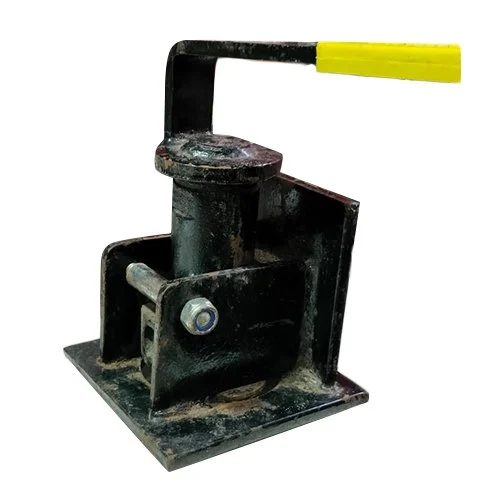
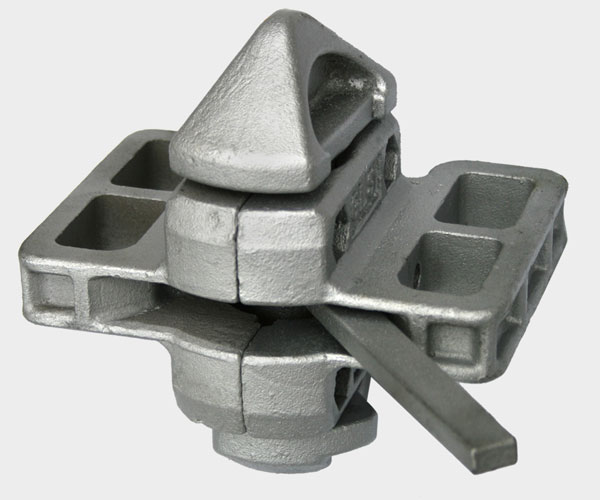
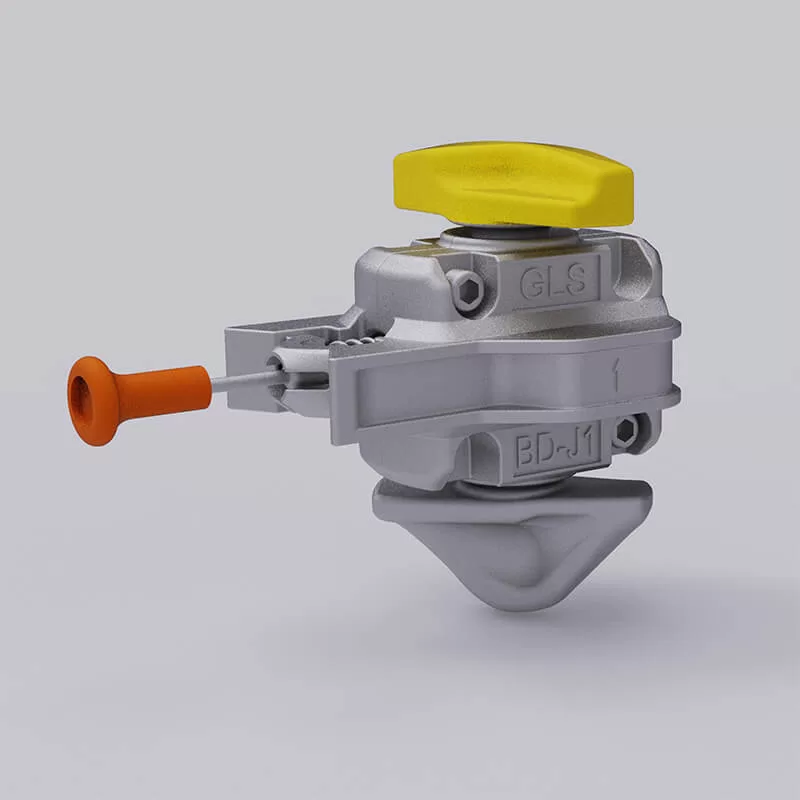
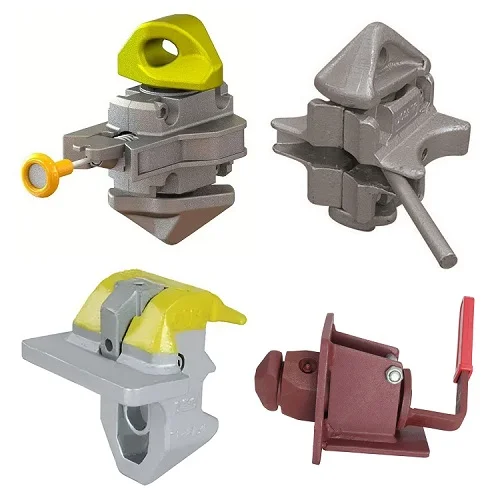
Form: Semi-automatic or manual rotary lock with cone and cam mechanism.
-
Color: Silver / zinc grey (coated) or yellow/red for high-visibility variants.
-
Dimensions (standard): Base plate 190×140 mm; cone height 45–55 mm; weight 2.8–3.6 kg/unit.
-
Working load limit (WLL): 17–25 tonnes per twist lock (depending on configuration).
-
-
Packaging options: Industrial palletized cartons (200 units/pallet) or bulk steel bins (500 units/bin) with anti-rust VCI liners.
-
Shelf life: 10 years (indoor storage, dry environment); coating integrity guaranteed for 5 years under normal use.
3. Core Industrial Applications
-
Primary industries: Intermodal shipping lines, road freight carriers, rail logistics operators, military supply chain, and port terminal operators.
-
Specific operational use cases:
-
Securing 20ft, 40ft, and 45ft ISO containers on semi-trailer chassis (road transport).
-
Locking containers in container vessel cells (sea transport – vertical and horizontal stacking).
-
Temporary flatbed securing for project cargo (heavy machinery within containers).
-
-
Why this product performs better than alternatives:
-
Vs. chains / straps: No retensioning required during transit; zero slippage under dynamic braking or swell.
-
Vs. twist-lock pins (manual): Semi-automatic designs allow locking from platform side, reducing fall risks.
-
-
Efficiency / durability advantages: 500,+ operating cycles without failure; ≤2 seconds per lock/unlock; compatible with automated terminal handling systems.
4. Competitive Advantages
-
Quality consistency: ISO 9001:2025 certified production with 100% magnetic particle inspection (MPI) on all load-bearing castings and proof-load testing per EN 12195-3.
-
Supply reliability: Dual-sourced raw material supply chain with 98.7% on-time-in-full (OTIF) track record over 36 months.
-
Logistics capability: Dedicated stock hubs in Rotterdam, Singapore, and Houston – 48-hour emergency dispatch available.
-
Price competitiveness: Tier-2 pricing (10–15% below European premium brands) without compromising WLL or coating standards.
-
Sustainability: Fully recyclable steel/cast iron; galvanizing process with zero liquid discharge (ZLD) water treatment; comply with EU REACH and conflict mineral regulations.
-
Technical support: Full CAD models (STEP/IGES), torque specs, inspection checklist, and 24/7 engineering helpdesk included with bulk orders.
5. Commercial & Supply Information
-
Minimum order quantity (MOQ): 500 units (mixed sizes/types allowed)
-
BULK 20MT loading capacity: Approx. 5,800–6,200 units per 20FT container (depending on packaging density and variant weight)
Reviews
There are no reviews yet.