
Description
1. Product Overview
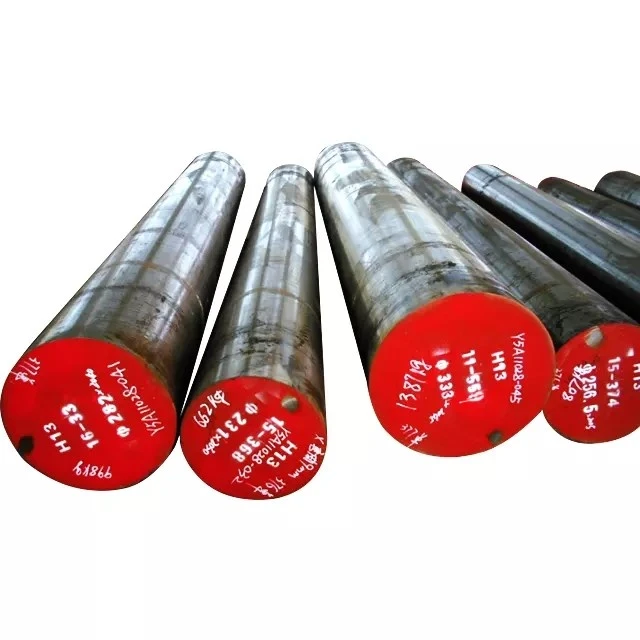
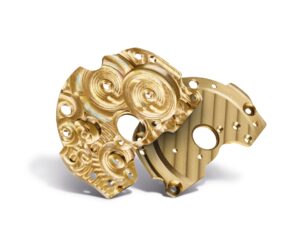
This precision-engineered P20 mold insert is a high-hardness, pre-hardened tool steel component manufactured via advanced CNC machining for dimensional accuracy and surface integrity. Primarily used in plastic injection molding and die-casting tooling, it enables manufacturers to produce complex, high-volume parts with minimal downtime. Its strategic value lies in balancing wear resistance, machinability, and thermal stability—reducing lead times by up to 30% compared to post-machined hardened steels. For industrial buyers, this translates directly into lower cost-per-part and faster time-to-market for automotive, medical, and consumer goods production.
2. Key Specifications & Technical Characteristics
-
Material Composition: P20 tool steel (equivalent to DIN 1.2311 / AISI P20) – Cr-Mo alloyed steel with 0.35–0.45% C, 1.4–2.0% Cr, 0.3–0.55% Mo
-
Hardness Grade: Pre-hardened to 280–320 HB (approx. 30–34 HRC), uniformity ±10 HB across the insert
-
Physical Characteristics:
-
Form: Precision-machined block or custom 3D geometry
-
Surface roughness: Ra ≤ 0.8 µm (machined), optional Ra ≤ 0.4 µm (ground)
-
Dimensional tolerance: ISO 2768-m (or better, per drawing)
-
-
Packaging Options:
-
VCI anti-corrosion paper + foam-lined wooden crate
-
Individual plastic clamshell for precision inserts
-
Bulk industrial cartons (max 25 kg per carton)
-
-
Shelf Life: Indefinite when stored in dry (≤60% RH), non-corrosive environment (no oxidation risk)
3. Core Industrial Applications
-
Primary industries: Automotive (interior trim, lighting housings), medical device molding (syringe barrels, diagnostic casings), consumer electronics (enclosures, connectors), and industrial equipment covers
-
Specific operational use cases:
-
Injection mold cores/cavities for 500k–1M cycles
-
Slide cores and lifters requiring uniform hardness
-
Rapid tooling inserts for bridge production (low-to-mid volume)
-
-
Performance advantages over alternatives:
-
Outperforms S50C or 420J2 in cycle life (3–5x longer before rework)
-
Better polishability than 4140 pre-hard for gloss-finish parts
-
CNC machining eliminates EDM finishing costs on flat/contoured surfaces
-
-
Efficiency/durability gains: Reduced mold assembly time (interchangeable inserts); fewer polishing hours; stable cavity dimensions reduce flash and part rejection by ~15–20%
4. Competitive Advantages
-
Quality consistency: ISO 9001:2015 + IATF 16949 certified; 100% CMM inspection on critical dimensions; hardness tested per ASTM E18
-
Supply reliability: Dual-source raw material stock (EU & Asian mills); safety stock of 500+ standard blanks; 7-day emergency resupply option
-
Logistics capability: Export-worthy packaging; 48-hour dispatch for standard sizes; door-to-door tracking via major forwarders (DHL, Kuehne+Nagel)
-
Price competitiveness: 12–18% below German/Japanese equivalents for same tolerance class; volume pricing available for repeat orders
-
Sustainability & compliance: REACH, RoHS, and conflict mineral compliant; 98% steel scrap recyclability; low-waste CNC process (chip recycling program)
-
Technical support: Free DFM review; 3D model-to-toolpath verification; hardness certificate + material mill test report included
5. Commercial & Supply Information
-
Minimum Order Quantity (MOQ): 10 units per unique part number (or equivalent ≤ 50 kg total weight)
-
Bulk 20MT loading capacity: 1,200–1,500 standard mold inserts (depending on geometry; approx. 18–22 MT net per 20’ dry container)
-
Loading per container (20’ standard): Max 22 MT net; typical load 20 MT (palletized, 2 layers, strapped + blocked)
Reviews
There are no reviews yet.