

Description
-
Product Overview
Citric Acid (E330) is a high-purity, food- and industry-grade organic acid (2-hydroxypropane-1,2,3-tricarboxylic acid) supplied in crystalline powder form for large-scale industrial use. It functions as a pH regulator, chelating agent, sequestering agent and buffering compound across food processing, chemical manufacturing, water treatment, pharmaceuticals and detergents. The key value proposition is consistent, specification-driven performance that reduces process variability, improves product stability, and lowers total cost of ownership through reliable supply and predictable handling. Strategically, Citric Acid (E330) is a foundational commodity chemical whose quality and continuity directly impact product yield, compliance, and operational risk across multiple industries. -
Key Specifications & Technical Characteristics
-
Chemical name: Citric Acid, monohydrate (E330).
-
CAS number: 77-92-9.
-
Chemical composition: C6H8O7·H2O (monohydrate) or anhydrous as specified on order.
-
Purity/grade: Industrial/Food-grade available; typical assay ≥ 99.5% (dry basis) for food-grade; industrial grades per buyer specification.
-
Impurities: Heavy metals (Pb, Cd, As) controlled to industry limits; residual solvents negligible.
-
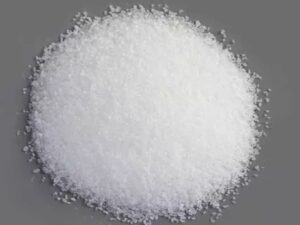
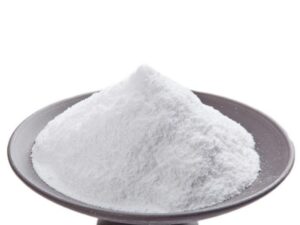
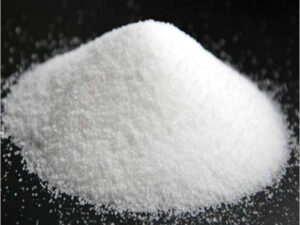
Physical form: Free-flowing crystalline powder or granules.
-
Color/appearance: White to off-white crystals.
-
Particle size: Typical D50 150–500 µm (custom sieving available on request).
-
Bulk density: 600–800 kg/m3 (packed); tapped density options upon request.
-
Solubility: Highly soluble in water; neutral pH effect when buffered per application.
-
Moisture content: Typical ≤ 0.5–1.5% (grade dependent).
-
pH (1% aqueous solution): ~2.2–2.6.
-
Packaging options: 25 kg multi-ply kraft bags with inner PE liner; 500 kg–1,000 kg FIBCs (bulk bags); 20 MT bulk palletized loads; ISO-tanker or flexitank for liquid variants.
-
Shelf life: 24 months in unopened, original packaging stored in cool, dry conditions; re-test after 24 months recommended.
-
Compliance: Manufactured under GMP/IH standards for food-grade; certificates of analysis (CoA), certificate of origin (CoO), MSDS, and HACCP documentation available on request.
-
Core Industrial Applications
-
Food & Beverage: Acidulant, flavor enhancer, preservative, and acidifier in beverages, confectionery, dairy, sauces and canned foods; provides consistent titratable acidity and flavor stability vs. alternative acids.
-
Detergents & Cleaners: pH adjustment and scale/corrosion control in formulations and automatic dishwashing agents; enhances surfactant performance and prevents residue.
-
Pharmaceuticals & Personal Care: pH regulator, chelating agent, and crystalline excipient for tablets and topical formulations; supports consistent API stability and dissolution profiles.
-
Water Treatment & Descaling: Descaling agent, metal chelator and pH adjuster for boiler, cooling systems and reverse-osmosis pre-treatment; safer handling and biodegradable advantage relative to many mineral acids.
-
Chemical Manufacturing & Metal Processing: Buffering, complexation and process acidification in metal finishing, electroplating, and polymer production; offers controlled reaction kinetics and reduced by-products vs. stronger acids.
Why it outperforms alternatives: -
More controllable acidity and chelation behavior than mineral acids, reducing corrosion and enabling precise process control.
-
Biodegradability and lower environmental handling costs versus phosphates and some synthetic chelants.
-
High solubility and predictable impurity profile deliver consistent batch-to-batch performance, reducing rework and quality rejects.
-
Competitive Advantages
-
Quality consistency: Stringent in-house and third-party QC testing, full CoA per lot, tight assay and impurity tolerances to minimize process variability.
-
Supply reliability: Large-scale inventory, secured upstream supply contracts, and regional distribution hubs to ensure continuity for long procurement cycles.
-
Logistics capability: Flexible packaging and loading options (FIBC, palletized bags, flexitank) plus expertise in bulk containerization enabling optimized freight and reduced handling risk.
-
Price competitiveness: Economies of scale and streamlined logistics deliver market-competitive landed cost while preserving margin predictability for buyers.
-
Sustainability: Produced with process controls to minimize waste streams; readily biodegradable and preferred over phosphorus-based agents in environmentally sensitive applications.
-
Technical support: Application-focused technical datasheets, formulary guidance, stability testing support, and access to regulatory documentation to expedite qualification and scale-up.
-
Commercial & Supply Information
-
Minimum order quantity (MOQ): BULK 20MT.
-
Loading capacity (MT per container):
-
20-foot container (bulk palletized bags/FIBCs): up to 20 MT.
-
40-foot container (palletized/loose bulk): up to 24–25 MT depending on packing configuration.
-
Flexitank/ISO-tanker options available for liquid or slurry supply, capacities per container specification.
-

Reviews
There are no reviews yet.