

Description
1. Product Overview
Alkylaluminum Residue is a high-value secondary stream derived from organoaluminum production and polymerization catalyst processes. Its primary industrial use is as a concentrated feedstock for aluminum recovery, specialty chemicals synthesis, and downstream catalyst recycling. The key value proposition lies in delivering cost-effective aluminum content with consistent reactivity for metallurgical and chemical upgrading operations. Strategically important to the market, it supports circular economy objectives by converting process waste into critical raw materials, reducing reliance on primary aluminum and stabilizing supply chains for aluminum-dependent sectors.
2. Key Specifications & Technical Characteristics
- Chemical Composition: Complex mixture of alkylaluminum compounds, aluminum oxides, partially hydrolyzed species, and trace polymerization residues. Typical Al content: 25%–40% by weight.
- Purity Level / Grade: Industrial recycling grade. Moisture-controlled and stabilized for transport. Custom assay available per batch.
- Physical Characteristics:
- Form: Viscous liquid to semi-solid sludge
- Color: Grey to dark brown
- Density: 0.95–1.15 g/cm³ at 20°C
- Flash Point: >60°C when stabilized
- Packaging Options: 200L UN-rated steel drums with inert gas blanket, 1000L IBC totes, ISO tank containers for bulk
- Shelf Life: 6 months under nitrogen blanket, dry storage at <30°C. Reactivity retained when sealed.
3. Core Industrial Applications
- Primary Industries: Non-ferrous metallurgy, catalyst manufacturing, specialty chemicals, aluminum smelting, waste-to-resource processing
- Specific Use Cases: Feedstock for aluminum recovery via thermal treatment, raw material for aluminum salt production, activator in select chemical syntheses, precursor for alumina-based refractories
- Performance vs Alternatives: Higher aluminum yield per MT compared to low-grade bauxite or dross, with lower energy input for recovery. Residual alkyl groups provide additional calorific value in thermal processing.
- Efficiency / Cost Advantages: Reduces raw material cost 30%–50% vs. virgin organoaluminum. Enables in-process recycling for polymer producers, lowering waste disposal fees and ESG liabilities.
4. Competitive Advantages
- Quality Consistency: Batch-level GC-MS and ICP-OES analysis with full Certificate of Analysis. Segregated sourcing from Tier-1 petrochemical partners.
- Supply Reliability: Structured offtake agreements ensure 500–2,000 MT monthly availability. Dedicated inventory allocation for contract buyers.
- Logistics Capability: ADR/IMDG certified handling. Global shipping from bonded warehouses in EU, Middle East, and Asia. ISO tank fleet available.
- Price Competitiveness: Indexed pricing against LME Aluminum with recycling discount. Long-term contracts hedge volatility.
- Sustainability Benefits: Diverts hazardous waste from landfill/incineration. Each MT processed avoids ∼4.2 MT CO₂e vs. primary aluminum. Compliant with Basel Convention documentation.
- Technical Support: SDS, TDS, REACH pre-registration data, and process integration support provided. On-site handling consultation available.
5. Commercial & Supply Information
- Minimum Order Quantity (MOQ): BULK 20MT
- Loading Capacity: 20MT per 20ft ISO tank container; 16MT per 20ft FCL in drums
Product Name: [ Heavy REE Recovery Residue ]
1. Product Overview
Heavy REE Recovery Residue is a concentrated secondary material sourced from rare earth separation and magnet recycling circuits, rich in dysprosium, terbium, and other heavy rare earth elements. Its primary industrial use is as an upstream feedstock for HREE oxide refining, permanent magnet alloy production, and strategic metal stockpiling. The key value proposition is secure, non-primary access to geopolitically sensitive HREEs at a fraction of the cost of virgin concentrates. Strategically important in the market, it directly addresses supply chain risk for defense, EV, and wind energy sectors facing HREE shortages and export restrictions.
2. Key Specifications & Technical Characteristics
- Chemical Composition: Mixed rare earth oxides, oxalates, and fluorides. Typical TREO 15%–35%, with HREE distribution: Dy 5%–12%, Tb 0.8%–2.5%, Ho–Yb trace. Balance: Fe, Al, Si gangue.
- Purity Level / Grade: Hydrometallurgical feed grade. Radioactivity levels monitored and compliant with IAEA transport thresholds.
- Physical Characteristics:
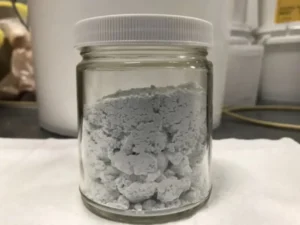
- Form: Fine powder to granular cake
- Color: Light brown to off-white
- Particle Size: D50 20–75 µm
- Moisture: <8% after filter pressing
- Bulk Density: 1.2–1.6 g/cm³
- Packaging Options: 1MT FIBC jumbo bags with PE liner, 25kg woven bags on pallets, moisture-proof wrapping for sea freight
- Shelf Life: Indefinite if kept dry. No degradation of REE content under proper storage.
3. Core Industrial Applications
- Primary Industries: Rare earth separation, NdFeB magnet manufacturing, phosphors, defense electronics, catalysts, national stockpile programs
- Specific Use Cases: Leach feed for solvent extraction circuits targeting Dy/Tb, blending material to upgrade light REE streams, direct feed for selective precipitation of HREE oxalates
- Performance vs Alternatives: Higher HREE/TREO ratio than monazite or bastnaesite concentrates. Lower thorium/uranium content reduces licensing burden vs. primary ores.
- Efficiency / Cost Advantages: Cuts leaching acid consumption 20%–35% due to pre-processed matrix. Shortens SX stages required to reach 99.5% Dy₂O₃. Reduces CAPEX for new HREE capacity.
4. Competitive Advantages
- Quality Consistency: XRF and ICP-MS assay per lot. Strict segregation by Dy+Tb content bands. Full traceability to source refinery.
- Supply Reliability: Contracted volumes from 3 operating magnet recycling plants. 200–600 MT monthly throughput with expansion capacity.
- Logistics Capability: Class 7 exempt packaging where applicable. Experienced in transboundary movement under Basel codes B1120/GC020. Global freight forwarding partners.
- Price Competitiveness: Sold at 40%–60% discount to FOB China Dy oxide equivalent. Long-term pricing linked to SMM HREE index minus processing credit.
- Sustainability Benefits: Enables urban mining of end-of-life magnets. Each MT processed recovers HREE that would require 80–120 MT of hard rock mining. ESG audited supply chain.
- Technical Support: Full metallurgical test reports, leachability data, and impurity profiles provided. Joint development agreements for custom tolling.
5. Commercial & Supply Information
- Minimum Order Quantity (MOQ): BULK 20MT
- Loading Capacity: 20MT per 20ft container in FIBC bags



Reviews
There are no reviews yet.